
 |
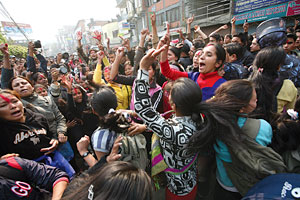
For the past week Kathmandu has been rent with the beat of drums, revolutionary songs, speeches and slogans around college campuses. There were banners everywhere, the streets were littered with student union pamphlets.
Students came out in large numbers to listen, talk and understand the process, using acronyms such as ANNISU, NSU and ANNISU-R quite comfortably. The elections were finally held on Thursday.
Historically, students unions were formed in Nepal as a form of resistance against the Panchayat system and worked with the people in the democratic struggle to overthrow it. The NC-affiliated Nepal Student Union's roots go back to 1971. The UML-affiliation All Nepal National Free Student Union was started in 1965 and has survived many splits and alliances over the years.
Young students who were leaders in the 1970s and 80s went on to become powerful party leaders. Sher Bahadur Deuba, Govinda Raj Joshi, Ram Chandra Poudel all emerged from student politics. Student union elections is where future politicians cut their teeth.
Senior political party leaders exploit the young students to extend their party's reach. During a banda, it is the affiliated student union that is mobilised to make the strike 'effective'. So powerful are the student unions that they can close down colleges, postpone exams and re-schedule sessions. For a political party, students are effective cadres: they have hope, they believe in radical change, they are creative, restless and highly ambitious. Classes may not run in colleges, schools may shut down for days, but there is always some political mileage to be made.
"It is easy to think that revolution is more important, and education can wait when you don't have to worry about where the next meal is coming from," says a former student union leader in the 1990s.