
|
|
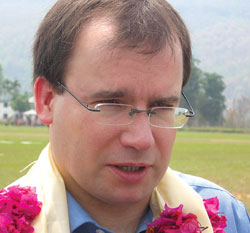
When Gareth Thomas, Britain's minister of International Development arrived in Kathmandu for a four-day visit earlier this month, his first stop wasn't to see ministers or politicians. Instead, Thomas headed out to Sankhuwasabha to see a DfID-supported community forestry project. On the trip, he spoke with Nepali Times about the challenges ahead for the country, the peace process, and increased British aid to Nepal.
Nepali Times: What impression will you take away from Sankhuwasabha?
Gareth Thomas: You really see Nepal only when you go out of Kathmandu. We spoke with people in the districts about their priorities and hopes for development. The most positive aspect of the trip was that the political parties were united and presented a single joint agreement to us. Our impression is that the people in the villages, the chief district officer, the political leadership in the villages, the entrepreneurs all want better roads, irrigation facilities, electricity, good education, and health services.
Do you think British aid has been put to good use here?
One can't generalise, but in Sankhuwasabha's Dhungedhara community forest, the user groups have made wood available to local schools, some schools are running scholarship programs, others have brought in teachers. There are more options to earn income in the region, and the community-centred program has helped improve living conditions of the local people considerably. These are all positive signs.
Some British-assisted projects, such as the Chainpur-Nunkhadi road, have been stop-and-go. Where do you see British aid going now?
During the conflict we cut back on the number of assistance programs. The road was supposed to be 20km long and 40 percent of the work had already been completed when work on it stopped, because our focus was narrowed to education and health. Programs will resume when the elections take place and there is agreement from all sides.
The most important thing is good governance. Political parties should let the people lead-their demands have to be met. The sphere of taxes needs to be increased; this is the only way to create revenue. Donors support national priorities. We want the peace process to move ahead and political parties to clarify their development plans and priorities. In the last few days I have really come to understand how important assistance is to these rural parts, and we are trying to increase our total assistance. I cannot decide alone on these matters because I have to talk to bureaucrats in Kathmandu.