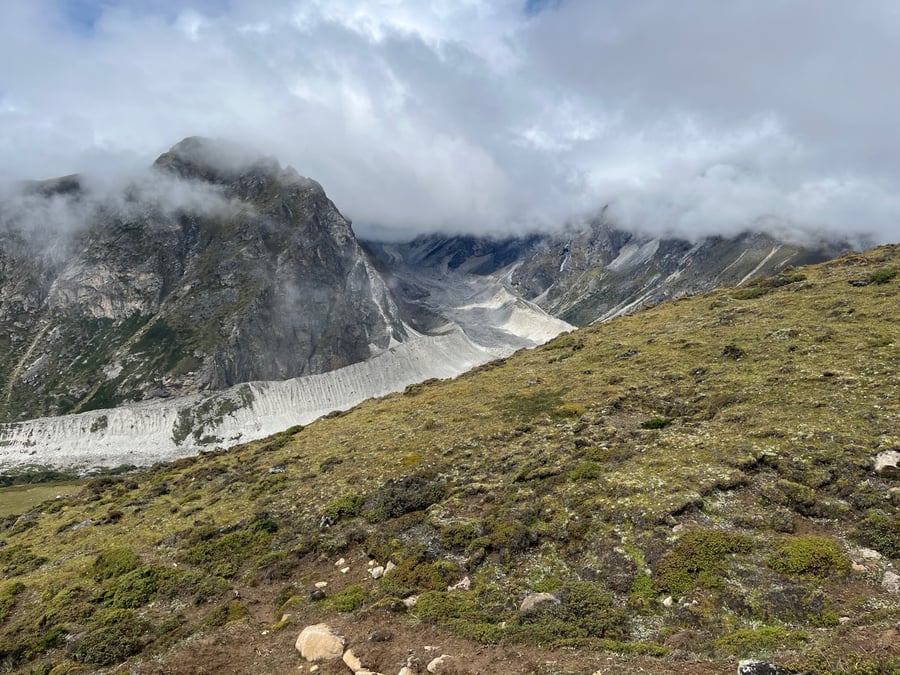
Kangshung Glacier flowing off Mt Everest. Photos: ADAM STERN
In 1972, my father gave me 'Everest: The West Ridge' by Thomas Hornbein, about the American Everest Expedition ten years previously.
The book inspired a lifelong passion to learn about the world’s tallest mountain. Dad wrote in the book, ‘Adam, when you want to go on your own, this will show how it was done in the old days.’
Neither of us could have predicted how prophetic this would be. Those words motivated me to make three treks to the Everest region: via Nepal in 1983 and 2018 and from China in 2025.
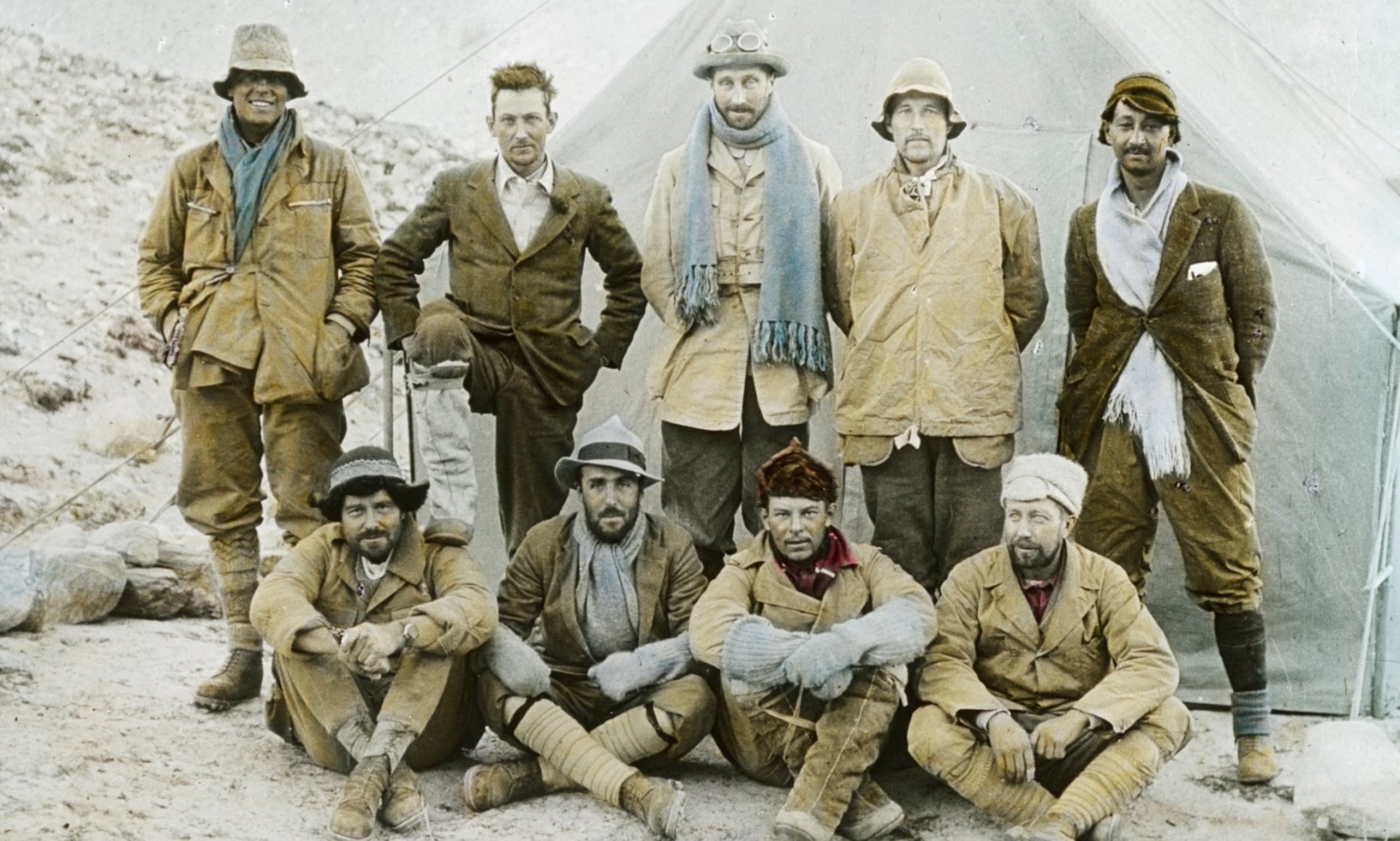
Last year’s trek to Kharta Valley on the east side of Everest followed the footsteps of British mountaineers who explored the region in 1920 and 1921 to find a plausible route to the top.
Kharta is also where Namgyal Wangdi grew up — before he was renamed Tenzing Norgay by a monk in Khumbu. In the movie, Tenzing, the boy is shown meeting George Mallory, although he did not.
George Mallory first caught my attention while researching my history thesis at Yale in 1982. He was educated at Cambridge, served in the British Army in World War I, and became a schoolteacher.
He took to rock climbing and by his early 20’s joined trips to Wales and the Swiss Alps. More climbing achievements in Europe made Mallory a compelling choice for British expeditions to Everest in 1921, 1922, and 1924.
Photo: ROYAL GEOGRAPHICAL SOCIETY
From Renzo La at 5,350m during a trek in 2018 I could see four of the world’s six tallest peaks: Everest, Lhotse, Makalu, and
Cho Oyu. The Tibetan Plateau beyond was also visible, and that prompted the trip to Kharta Valley.
Planning was not easy. There are fewer travel companies on the Chinese side of Everest. My childhood friend Eric Beatty and I researched options online.
In 2025, we heard many reasons why such a trip was not possible. Few had trekked there since Covid, larger teams were necessary and securing a Chinese visa and travel permit were not guaranteed. We had to find a window between the end of the monsoon and early autumn snowstorms. At age 66, we were fit but too old.
Finally, we found a firm in Lhasa to fix a 15-day Lhasa & Kharta Valley Trekking Tour. And on 5 September 2025, Eric and I left San Francisco on a nonstop flight to Wuhan, connecting to Chongqing where our Tibet permits awaited.
We flew on to Lhasa and stayed there at 3,660m elevation to acclimatise. A surprisingly modern hotel featured oxygen in the rooms.
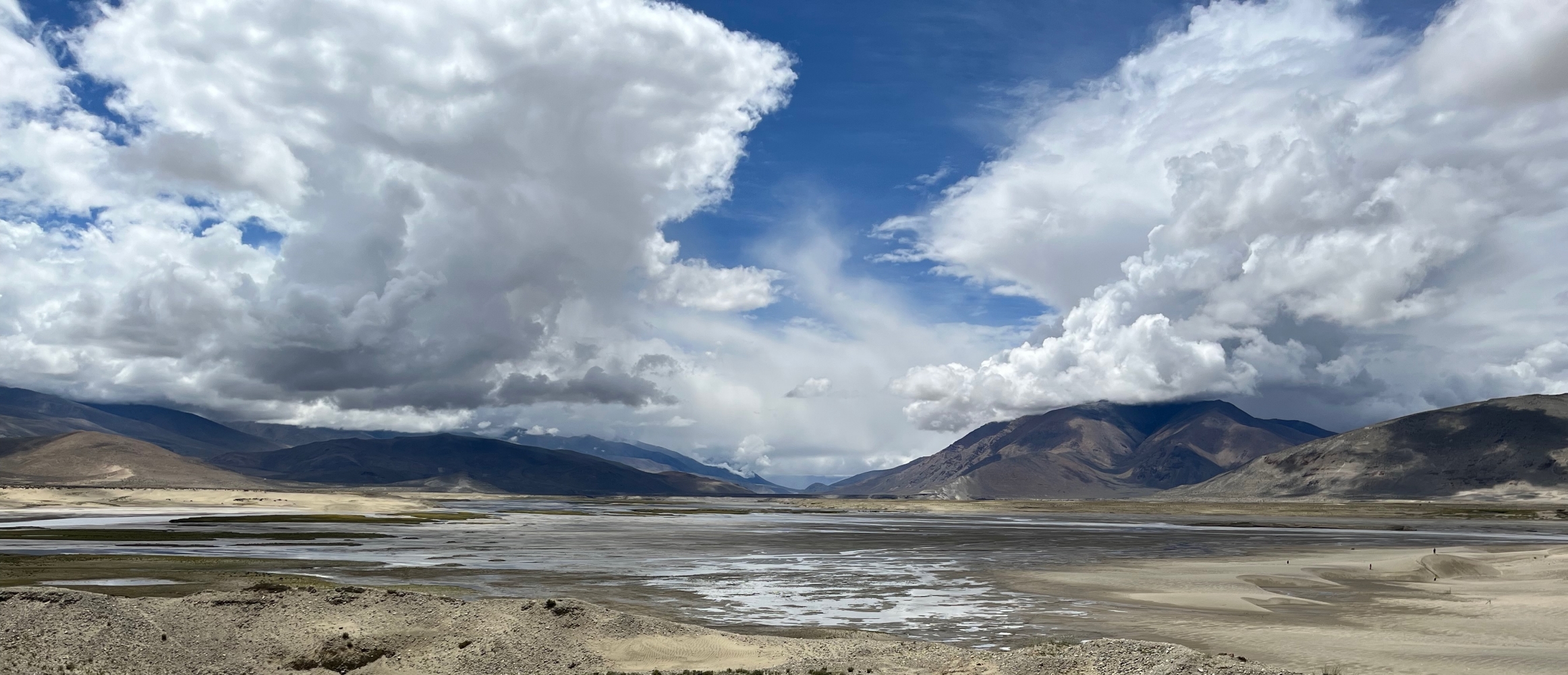
We met our trekking support team, an English-speaking guide, van driver, and cook and drove two days across the Tibetan Plateau, a vast, dry landscape with Himalayan peaks to the south. Every few hours we stopped at security checkpoints to have our passports and travel permits inspected.
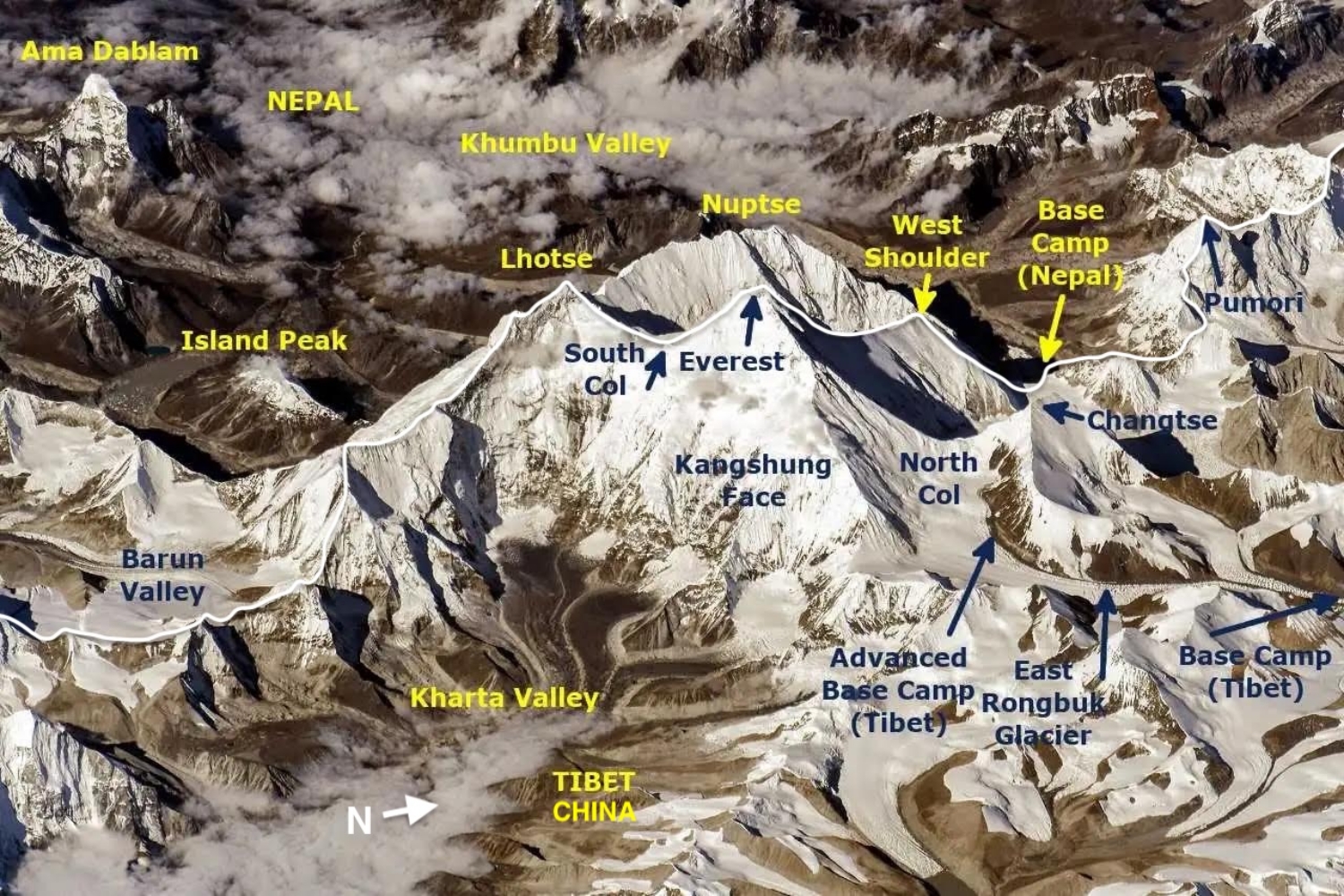
Mountains got bigger and the panorama even more dramatic. On day two, the highway which had been mostly straight, turned into long stretches of switchbacks over steep terrain. Remarkably, Google Maps worked on our cell phones and revealed our proximity to Nepal. Everest was only 40km away to the southwest.
The highway ended at the small town of Chutang at 4,200m. The only hotel served a dinner of noodle soup with vegetables and yak meat. In the morning, we packed our gear and drove a dirt road past the entrance to Chomolungma National Nature Preserve.
Chomolungma National Nature Preserve
HITTING THE TRAIL
Two herders weighed our gear and determined that we needed six yaks, and loaded up the animals. With our guide leading, we headed out for six days of trekking.
The trail was uneven and not well-marked, so we relied on the yaks which left piles of fresh dung on the trail to know where to go. It was hard to settle into a hiking rhythm, the altitude tested our lungs.
Eventually, we crossed several passes, hiking six hours a day and camping near rivers and lakes. The weather was overcast and chilly. There were not many long views, but every so often the skies would brighten and remind us we were near some of the tallest mountains in the world.
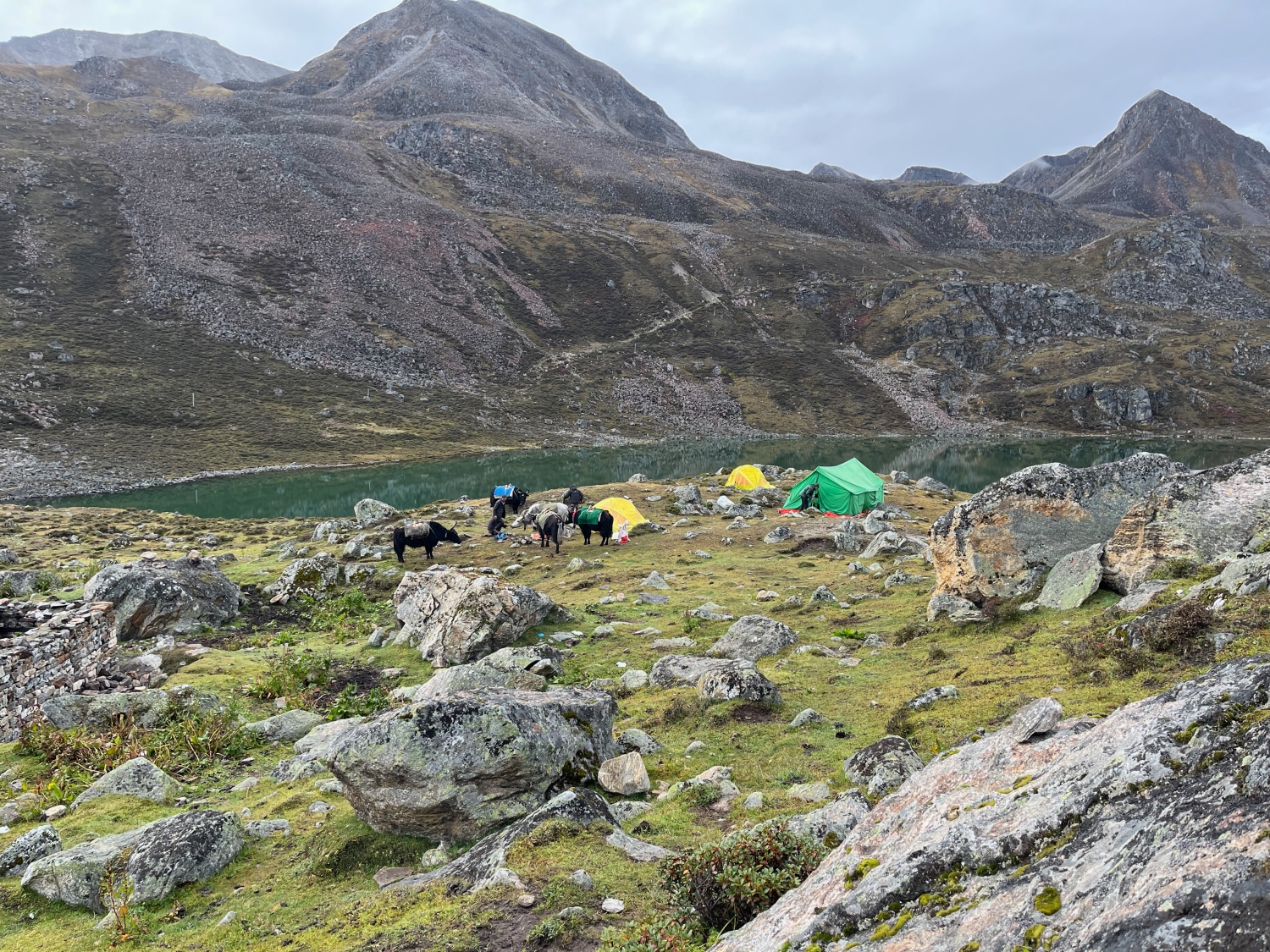
Campsite in Kharta Valley.
On day three, we entered the Kharta Valley along wind-whipped, precipitous green and brown slopes. Below was the Kangshung Glacier below the east face of Everest (above, left). The mountain was there, obscured by clouds. There was a power about the place where Mallory had been a century ago.
We caught a glimpse of Makalu (8,485m) the fifth tallest mountain in the world, which seemed to hang majestically from the heavens. Finally, on day six, the guide shouted, “Look! Look! Everest!” The view of the summit ridge in the sky lasted just 30 seconds before the clouds moved in again.
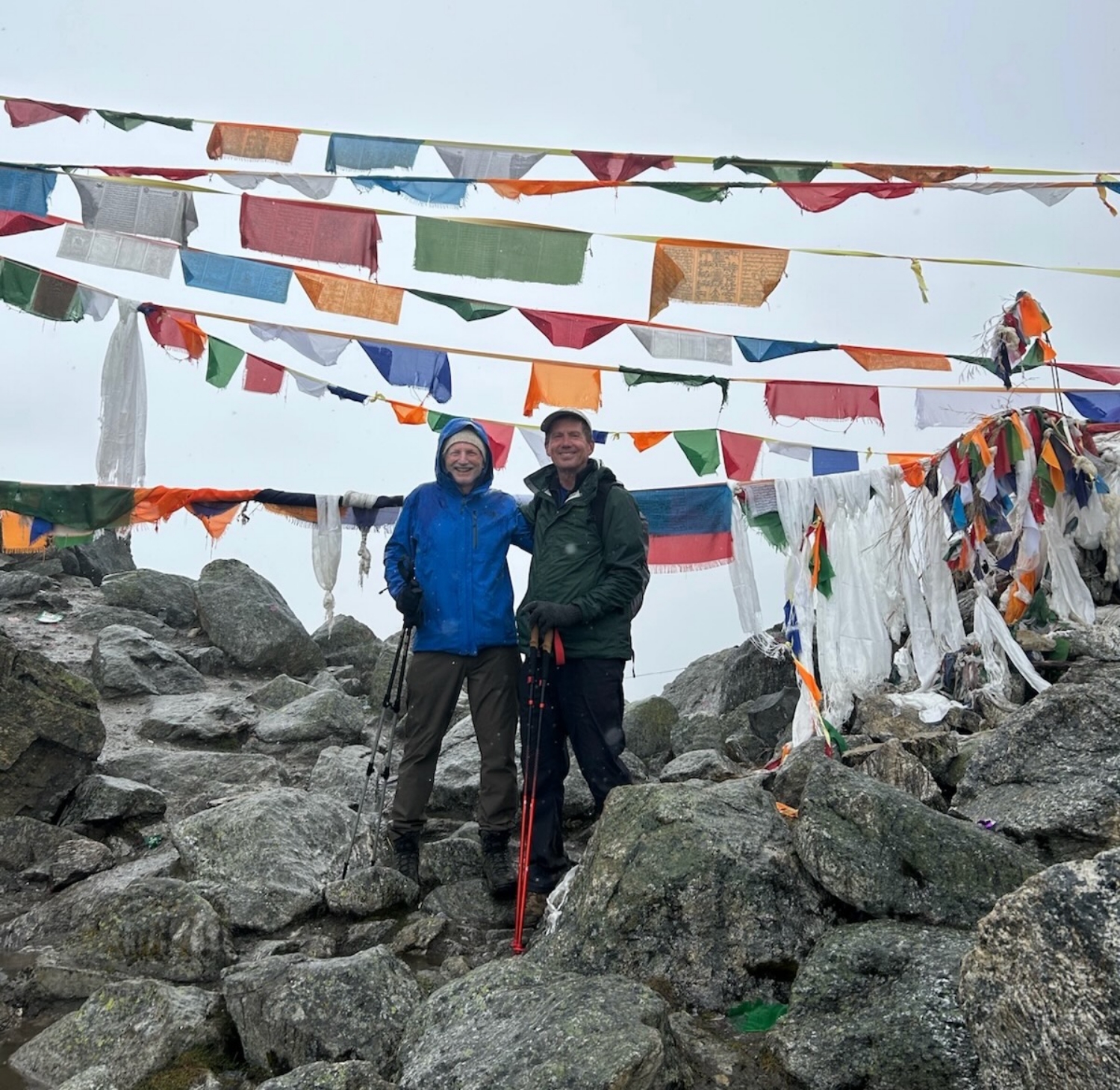
Climbing up to Langma La at 5,303m, it was a struggle to breathe. Turning around was not an option. The yaks were already over the pass and headed downward into the next valley. The sight of colourful prayer flags at the pass propelled me forward even though my legs and lungs were spent.
Eric and I celebrated at the top (pictured, left). Not bad for two guys who had been warned they were too old for this trek. After four hours of steady downhill, the waiting van took us back to town.
The next day we drove to Rongbuk Valley, the Everest approach where Mallory and others on the British expedition set up base camp in 1924. The weather improved dramatically and we saw Everest’s north face, 3,000m vertical feet of sheer rock, snow, and ice.
It was emotional to remember Dad, who died in 2020, and how he would have enjoyed hearing about the trip or being there with me.
We drove on to Nyalam to the Nepal border at Zhangmu/Kodari, walked across the Sino-Nepal Friendship Bridge and took a jeep for the 5-hour drive to Kathmandu. Nepal had just gone through its GenZ movement, but felt peaceful.
The words of George Mallory rang in my ears: “People ask me, ‘What is the use of climbing Mount Everest?’ … If you cannot understand that there is something in man which responds to the challenge of this mountain and goes out to meet it, that the struggle is the struggle of life itself upward and forever upward, then you won’t see why we go. What we get from this adventure is just sheer joy.”
Adam Stern is an American clean energy leader based in California.