
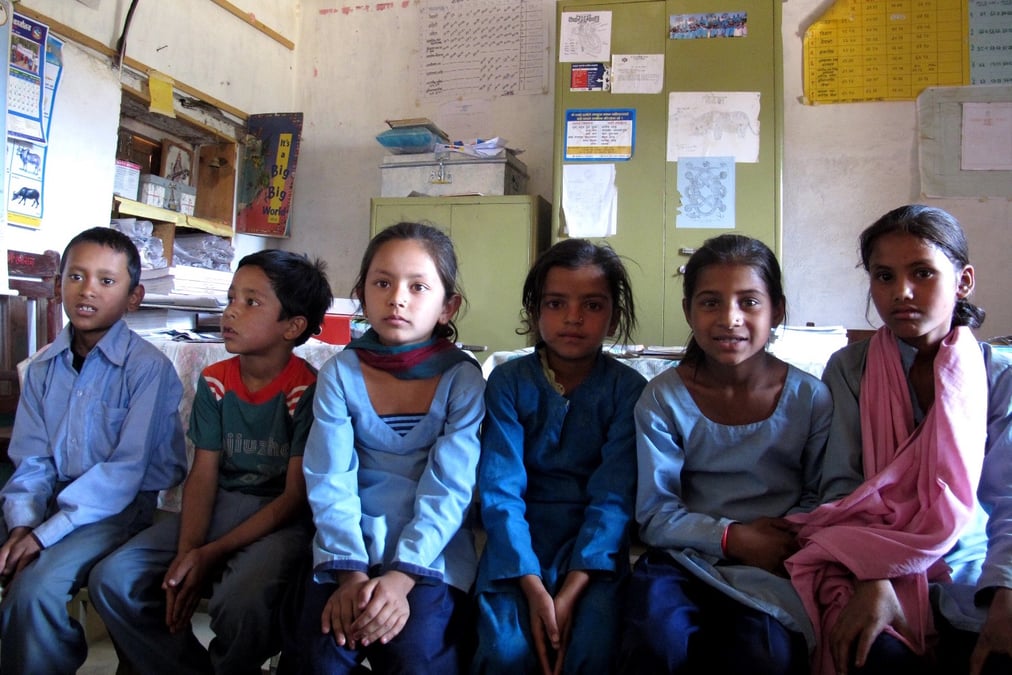
The government of Prime Minister Balendra Shah hit the ground running by announcing a slew of measures to improve schools. A month later this week, it sent bulldozers out to raze entire riverbank neighbourhoods including at least four community-run schools.
Entire blocks along the banks of Manohara and Bagmati looked like a war zone, with ruins of school buildings whose floors were tilted at crazy angles. In one school, the local ward office was using ICRC tents from the 2015 earthquake to conduct classes in salvaged desks and chairs.
Young students from Grades 1-8 looked traumatised, and could not understand why their school was torn down. The teachers had no answers. The government said it would resettle those made homeless, and asked private schools to take in displaced children.
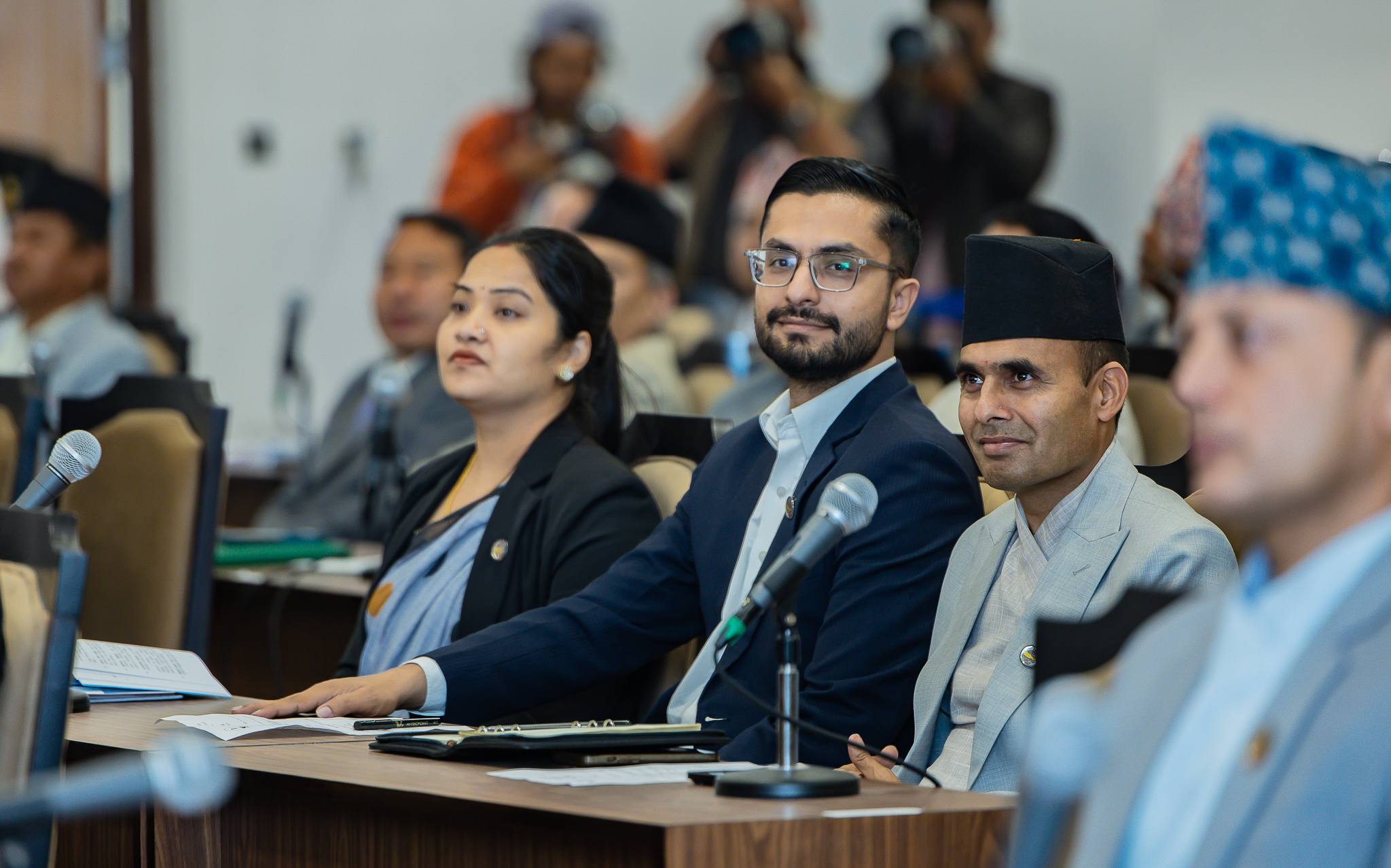
Away from the bulldozed neighbours, schools throughout the country are in confusion after Education Minister Sasmit Pokharel (pictured in Parliament, far right) took a series of decisions soon after assuming office last month.
He banned entrance preparation courses for students after the Secondary Education Examination (SEE), then ruled that students till Grade 5 would no longer have to take annual exams to advance to higher classes. He also decreed that students spend less time in classrooms and more outdoors.
BOOK-FREE FRIDAYS
Minister Pokharel was an adviser to Balendra Shah when he was mayor of Kathmandu, and the architect of the ‘Book-free Fridays’ initiative to encourage students in Kathmandu to learn hands-on skills and creative pursuits like art, music and farming.
To be sure, there is a logic behind his decisions. The ‘bridge’ courses for colleges were over-commercialised with students having to pay hefty fees to prepare for entrance exams. Parents had complained that their primary school children were stressed about annual exams. And mandating outdoor activities is designed as an alternative to rote learning.
The plan to dismantle all party-affiliated teacher and student unions in universities has been widely welcomed because they were political party fronts blamed for disrupting college calendars.
The Education Ministry’s move to publish SEE results within one month (instead of the usual three months), removing the mandatory provision of citizenship for admission until the Bachelor’s level, and stipulating a 10% student scholarship in private schools have also got much applause.
But Minister Pokharel, who is also the RSP government’s spokesperson, has since withdrawn or partially revoked some decisions, leaving faculties confused. Adding to this is the refusal by municipality councils, which are controlled by old parties, to follow the federal ministry’s new instructions because they see local schools as being in their jurisdiction.
“Despite good intentions, the decisions are ad hoc, piecemeal and hard to implement,” says Kiran Nepal, former chair of Teach for Nepal. “If there is no examination anymore, what is the basis or mechanism to evaluate children?” (See op-ed, below)
Others say that the new government’s fiats were too hurried and half-baked. Teachers need more training to evaluate children without exams, or make them learn outside the classroom.
There was fierce opposition to Minister Pokharel’s decision to ban bridge courses because public schools did not prepare students enough to enrol in colleges on their own. Indeed, while nationwide SEE results have improved from a 48% pass rate in 2024 to 62% in 2025, progress is not equally distributed among schools across the country.
Experts say the priority should have been to concentrate on backstopping work that non-profits are doing in the districts to upgrade faculty training and to motivate teachers in government schools.
“Although most public school teachers are formally trained, they require periodic retraining through refresher courses to keep their skills current and effective,” says Kedar Mathema, former Vice-Chancellor of Tribhuvan University.
Nearly 75% of Nepali children go to government schools, which tend to be underfunded and understaffed, and teachers rely on rote memorisation. Because the facilities and quality of state-run schools are not up to mark, most parents seek more expensive private schools. However, in districts with better government schools, there is less enrolment in private ones.
“Public schools play a vital role in building a cohesive and tolerant society,” adds Mathema. “They bring together children from diverse economic, ethnic, and caste backgrounds and educate them side by side.”
Many students in rural Nepal have difficulty completing their education, and the dropout rate among girl students is still high due to child marriage and menstruation taboos. Many parents send their daughters to government schools, and sons to private ones.
At the same time, rural schools are emptying out as more and more families opt to send children to better schools in the cities. Experts estimate that Nepali households spend 6.8% of their monthly expenses on school fees, compared to 1.3% in developed nations.
“In our country, many families feel compelled to send their children to private schools in search of quality education, often at considerable financial strain,” says Mathema. “Improving the quality of public schools would reduce this burden, allowing families to rely less on fee-paying private institutions and save a significant portion of their income.”
IMPLEMENTATION GAPS
The literacy rate in Nepal has risen to 80%, and there is nearly full enrolment of all children in many districts. However, the quality of instruction has not kept pace. Every new government in the past 50 years has come up with well-intentioned plans to improve quality and ensure equality by upgrading curricula and training teachers. But these were either abandoned half-way, or not properly implemented.
It seems that successive governments identified the problems in the education sector, and even set aside budget lines for reform, but somewhere along the way, implementation failed.
Challenges lie in political inadequacies, absence of follow through on plans, scanty monitoring and evaluation of what has worked and what has not. In the past, political instability and frequent changes in government affected school instruction.
“The gap between the government and schools creates a gap in implementation of any decision,” says Kiran Nepal.
The hope is that the RSP’s two-thirds majority will mean better implementation. Minister Pokhrel also announced a two-day holiday for schools and decided to cut the winter vacation and other public holidays to complete the course load. This was a correct decision, but educators said the decision came after the annual school calendar had already gone out.
Last week, PM Shah’s ordinance removed 1,500 politically appointed functionaries in government -- among them faculty and boards of universities and education agencies.
The big challenge now is to fill the vacancies with qualified appointees, and to ensure that one set of officials appointed by the previous dispensation will not be replaced by RSP-affiliated ones.
The new government is a big proponent of digitisation, and it could use technology to leapfrog in improving the quality of classroom lessons. It should also collaborate with national and international partners with experience in the field to improve quality.
The School Sector Reform Plan and the School Sector Development Plan which made primary education free could be a good place to start, but by reducing over-reliance on foreign aid.
Says Kedar Mathema: “The priority should be to invest in enhancing the quality of government schools. It is equally important for the new government to strengthen the capacity of local governments to effectively manage and supervise the schools under their jurisdiction.”
This article is brought to you by Nepali Times, in collaboration with INPS Japan and Soka Gakkai International, in consultative status with UN ECOSOC.
