
|
|
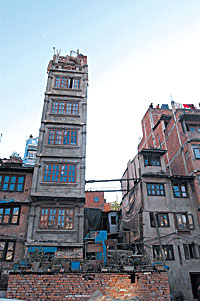
Kathmandu has ranked first in a study of cities most vulnerable to earthquakes, followed by Istanbul, Delhi, Quito, Manila, and Islamabad.
When it comes to earthquakes, a magnitude 6.0 rumble in San Francisco may shake the same as a 6.0 in Delhi. But you're far more likely to die in India. Blame that mortality spread on exponential population growth, increasing poverty, and lax or non-existent building codes. In short: poor nations run far greater risk of fatalities than rich ones.
GeoHazards International, a nonprofit research group aiming to reduce suffering due to natural disasters, measured the lethal potential of seismic disasters facing small and large cities in Asia and the Americas-areas most at risk for seismic calamity. The sample cities spanned both developed and developing countries. Variables measured: building frailty, potential for landslides and fires, and the rescue, firefighting and life-saving medical abilities of local authorities.
The only first-world cities on the list were in Japan: Tokyo, Nagoya and Kobe. Fatalities in these cities were estimated in the hundreds, not the thousands.
Events since then show the estimates to be fairly accurate, if not low. The magnitude 7.6 quake that struck the Kashmir region of Pakistan in October 2005 killed more than 73,000 people, many in remote parts of the country, not dense urban centers like Islamabad. Geohazard's study predicted a 6.0 hit on Pakistan's capital would kill 12,500 people.