
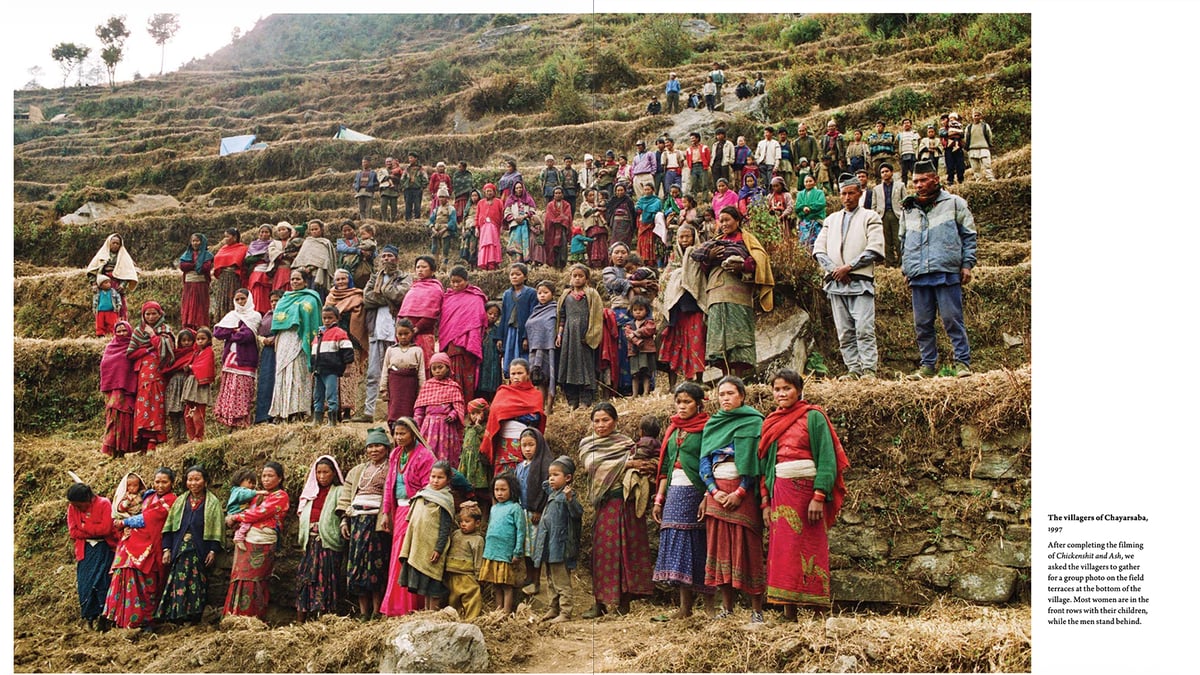
When Gabriele Tautscher was a young student at St Mary’s School in Kathmandu, she became close to her family’s household help from the Tamang community. That connection inspired her to return to Nepal in the 1980s to start work on her PhD on the Tamang people.
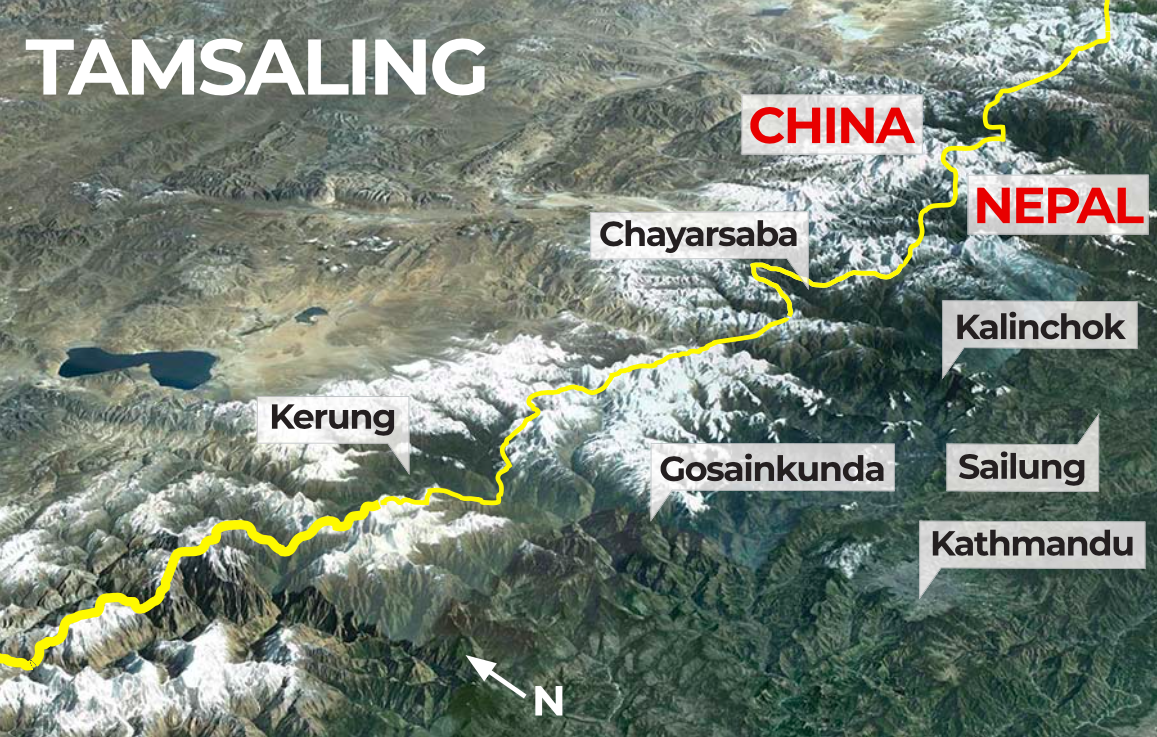
Tautscher could have decided to study the Tamang settlements at the periphery of Kathmandu Valley, but the Austrian student chose the remotest village: Chayarsaba on the northern tip of Dolakha district near the Chinese border.
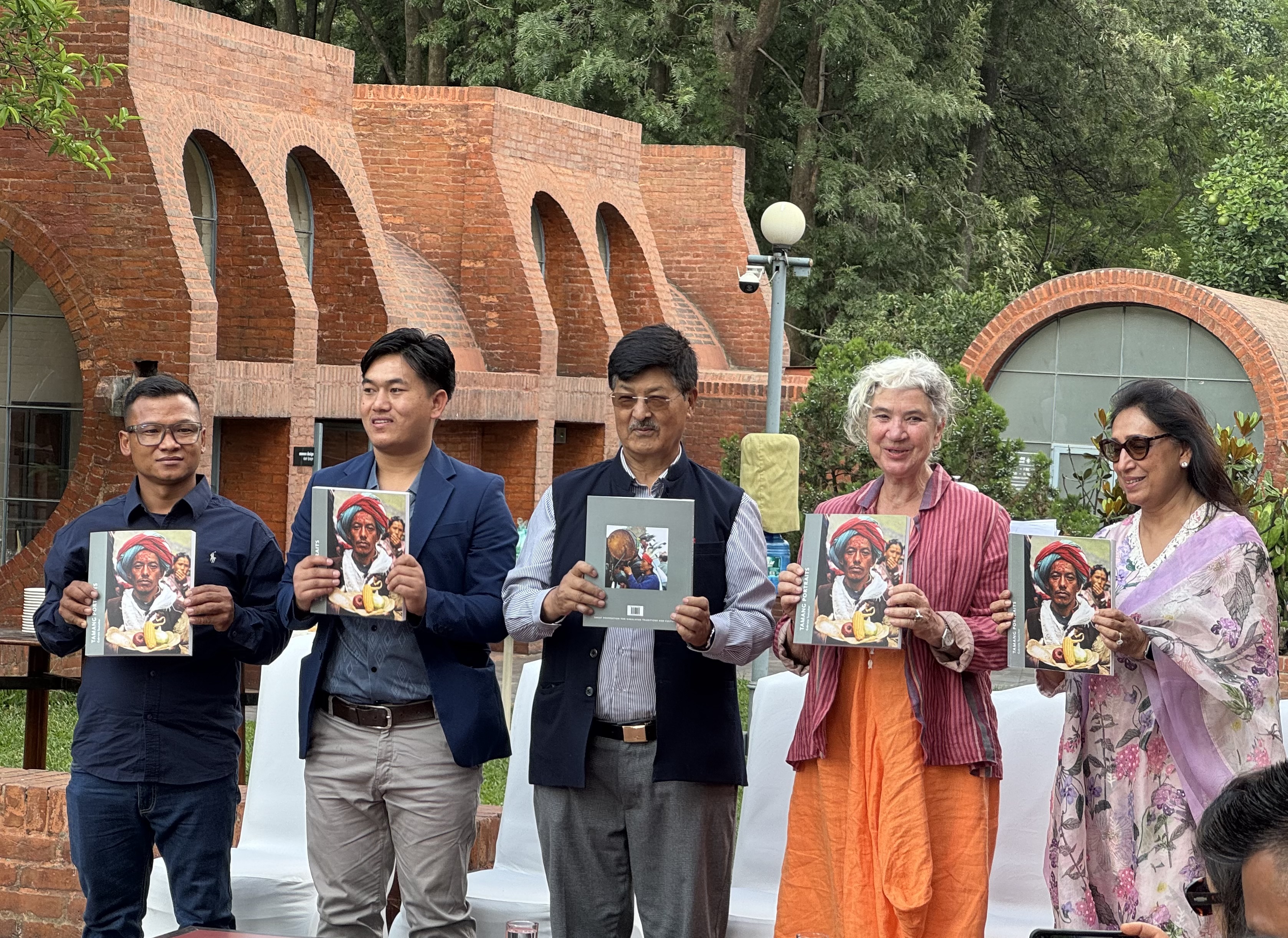
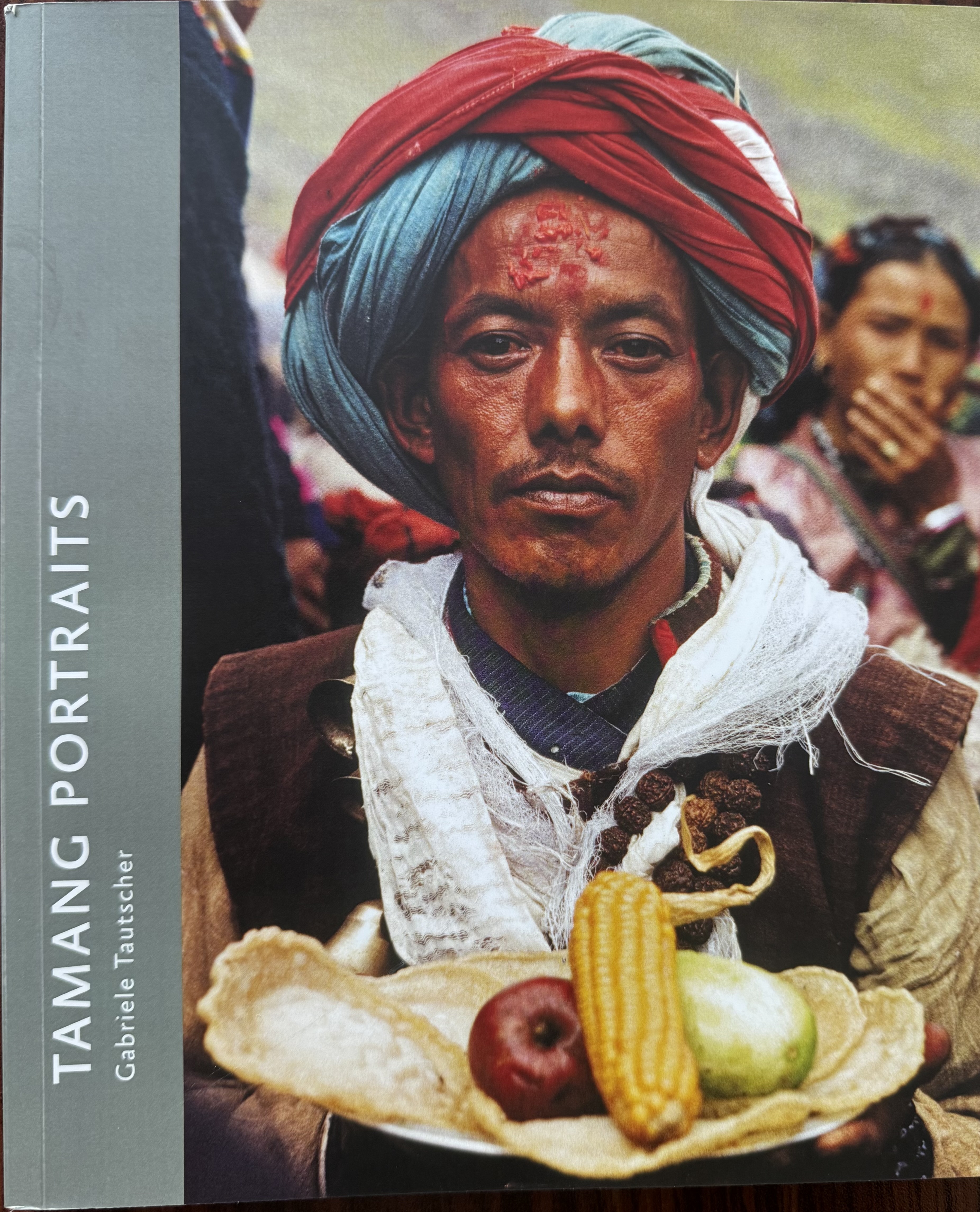
In over three decades of anthropological research, Tautscher travelled across the Tamang homeland of Tamsaling, and her latest book, Tamang Portraits, was launched on Sunday at Taragaon Next (pictured below). It is an album of photographs she took from 1980-2004 in Chayarsaba, and during full-moon festivals on Sailung, Kalinchok and Gosainkunda.
The Tamang make up Nepal’s largest ethnic group, forming about 6% of the country’s population, with the diaspora now scattered across northeastern India, Malaysia, Japan, Korea and Europe.
Although Nepal’s 25 April 2015 earthquake is officially called the ‘Gorkha Earthquake’, its ethnic epicentre was in and around Kathmandu Valley. An investigation by this paper in July 2015 showed that of the 8,844 killed in the disaster, 3,012 people (34%) were from the Tamang community — half of them in Sindhupalchok.
Anthropologist Mukta Singh Lama told us at the time the reason was that despite living so close to the capital, the Tamang were historically neglected. They lived in unsafe stone and slate houses located in landslide and flood-prone areas.
There are different theories about the origins of the Tamang people, but most agree that they crossed the Himalaya from Tibet along with the Tamu (Gurung) and branched off to settle to the north and east of Kathmandu Valley. Through the centuries, their language, faith and way of life evolved in central Nepal, shaping the Tamang civilisation.
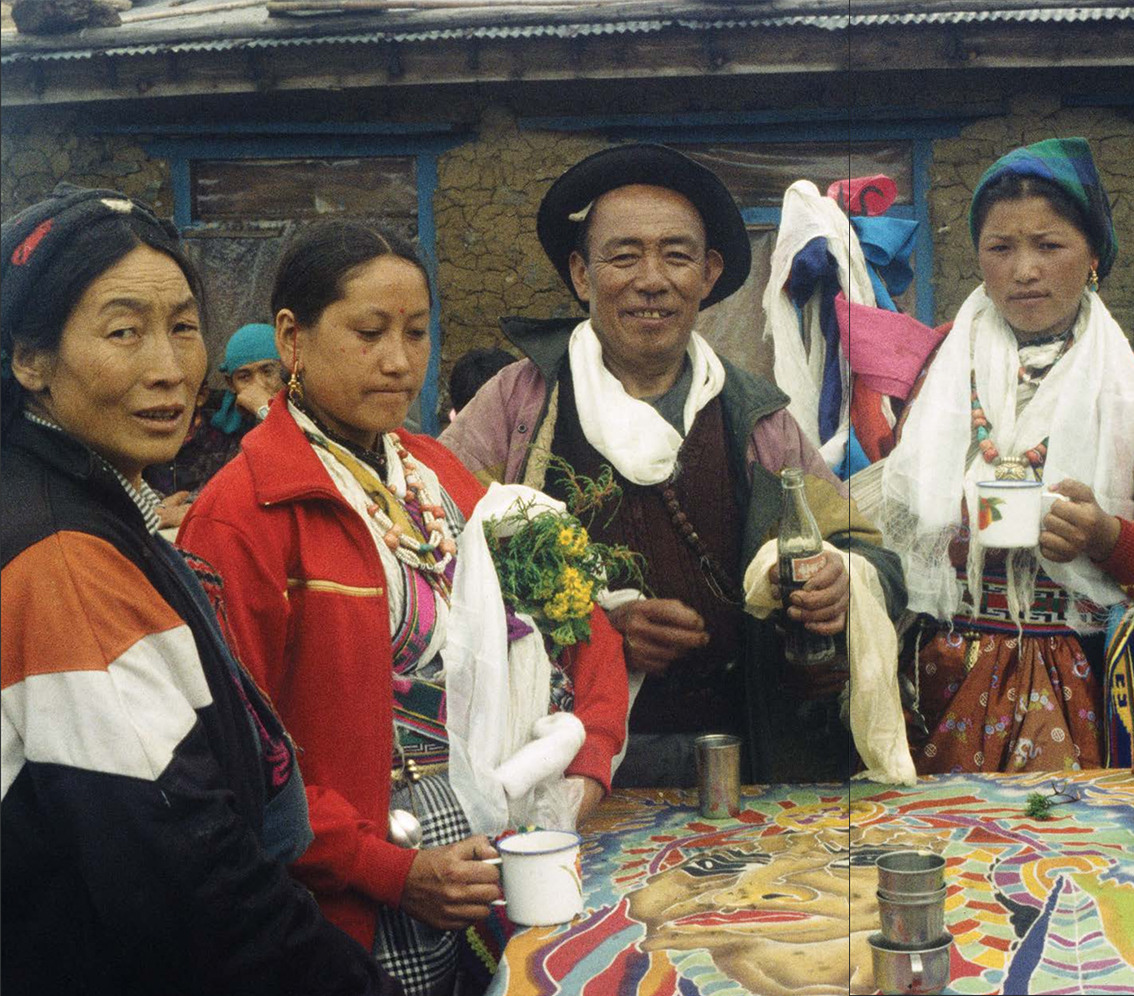
Parshuram Tamang of the Nepal Tamang Ghedung explains in his Foreword to Tautscher’s book: ‘The Tamang village (namsa) is a socio-political entity, and its life and agriculture are guarded by spiritual forces that inhabit their houses, villages, agricultural fields, mountains, forests, rivers, lakes, and burial grounds, and these spirits may be either benevolent or malevolent.’
Tamang festivals, rituals and beliefs are intimately linked to their daily lives, and this is why Tautscher’s lifelong work to document them is so important at a time when connectivity, communication and globalisation force assimilation.
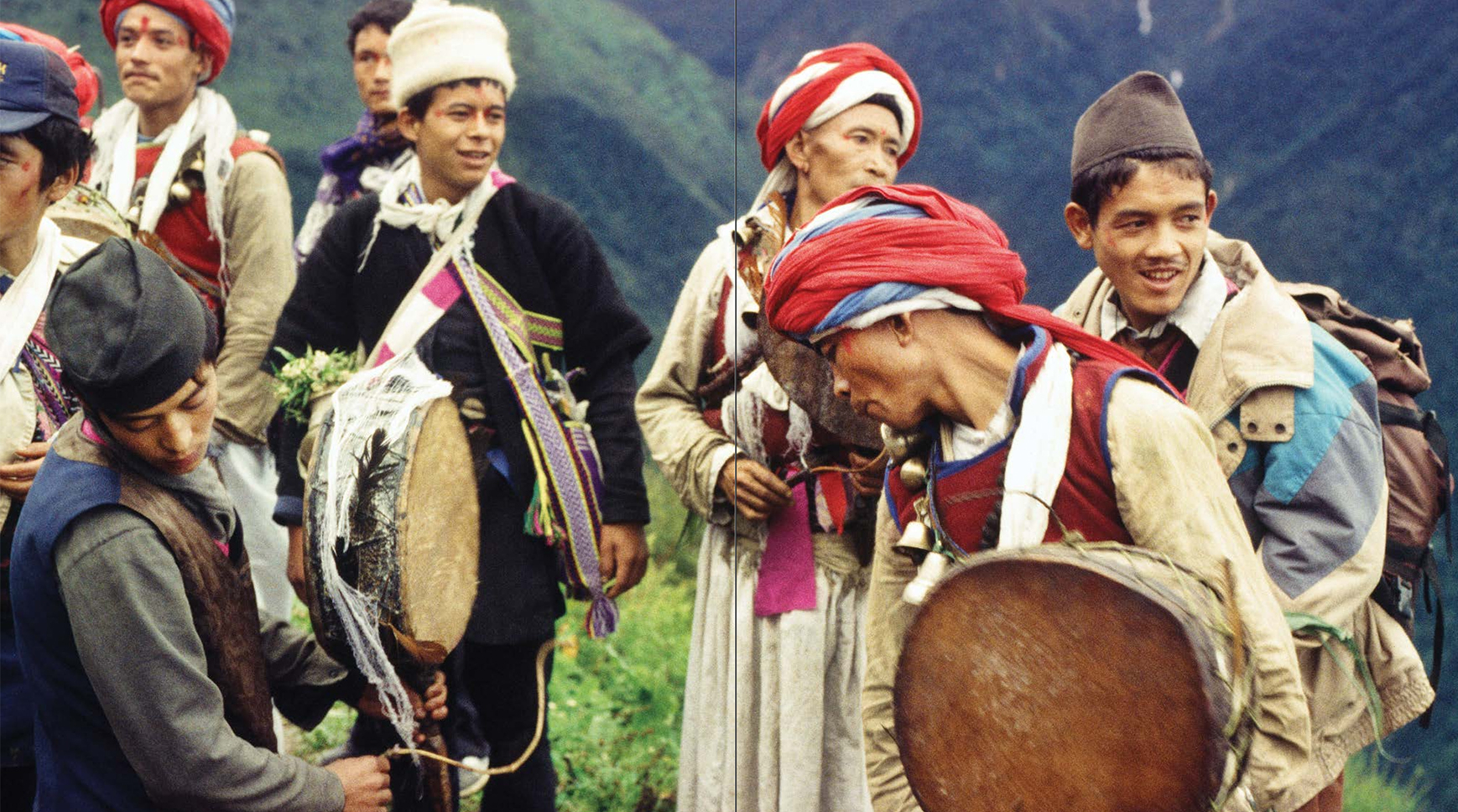
The photographs are accompanied by testimonies and portraits of people and families the author interviewed over the years, together with chapters containing meticulous descriptions of the festivals at those sacred locations, peeling off layers of original shamanistic rituals overlayed by Hindu and Tibetan Buddhist rites.
Tamang Portraits is nuanced visual anthropology, documenting not just the orthodoxy of the ceremonies, but also how historical events like the closure of the border with Tibet and demographic trends within Nepal have shaped and are shaping Tamang society.
The most poignant part of the book is where the people of Charaysaba spoke to Tautscher in 1986, their testimonies describing the hard life of subsistence farming in the steep mountains. In phrases that resonate with Kesang Tseten’s 2007 documentary We Corner People that was about the Tamangs of Rasuwa, a father of three tells Tautscher: ‘This corner is not seen by anyone … Even our king does not see it.’
A grandfather 40 years ago holding his granddaughter says, ‘We plough, we dig, we produce manure, we bring fodder, look after cattle, we eat. That’s how it is. Without hard work, there is nothing to eat.’
A mother tells Tautscher: ’Happiness means not having to work in the field, not carrying heavy loads, going to an easier place to raise children ... I would like to live in an easier, more joyful village.’
It seems the only comfort from the struggle to survive are family bonds and faith. Which is why the book’s photographs and descriptions of the full moon festivals in Sailung, Kalinchok and Gosainkunda hold such significance. The Sibda/Mabun/Janai Purnima pilgrimages show how Shamanism, Shaivism and Buddhism mix while retaining their own identities and practices in sites sacred to the Bon, Hindu and Buddhist belief systems.
RITES OF PASSAGE
Every life event has its own rituals from the cycles of birth, adolescence to marriage and death. Tautscher records intricate descriptions of the rites and their significance. The practice of ‘wife-takers’ returning to the village of the ‘wife-givers’ bearing gifts, the skull-bone of a dead relative kept wrapped for 21 days in an altar after cremation, reverence of the ‘tripartite world’ of mountain peaks (gods), forests and farms (people), and rivers (spirits) in which the shaman plays the intermediary between temporal and spiritual realms.
Tautscher introduces us to the pre-Buddhist concept of ‘local binding’ ingrained in Tamang culture that propitiates ancestral and local protector deities to consecrate the land. This reverence of nature links individuals to the creator, sanctifying terrace farms, rocks, mountains, rivers and lakes of their villages.
Writes Tautscher, ‘Nature is imbued with spiritual, transcendent meaning and value, and in the Himalayas a geomorphic up-and-down cultural model of space where sacred mountains are prominent.’
This is a sequel to Tautscher’s earlier book Himalayan Mountain Calls and the 1998 documentary Chickenshit and Ash – A Visit to Paradise which got mixed reviews with critics calling it ‘condescending reverse anthropology’ for filming two Chayarsaba residents in Europe. Many of the protagonists in the film also appear in the book, Tamang Portraits.
In her epilogue, Gabrielle Tautscher returns to Chayarsaba in 2022 to find signs of progress: households have water taps, toilets, electricity, and Kathmandu is only a day’s travel away by road. But along the way the rivers are desecrated by sand-mining, bulldozers have clawed at sacred mountains, there is a local Tiktok Queen, villages are emptying, the local primary school has shut because there are no students.
The meadow of Kori below Kalinchok has a cable car terminal, and the shrine has become a selfie spot. Sailung and Gosainkunda are also more accessible, and attract many more pilgrim-tourists. "Lhasso phyaphulla," is a common greeting spanning ethnicities.
Tautscher is obviously worried about these trends, and writes: ‘Only interventions that are not dislocated from local contexts and local people can lead to more sustainable livelihoods with rich self-determined cultures. Such efforts require the active involvement of both local youth and local governments.’
Tamang Portraits
by Gabriele Tautscher
Himalayan Traditions and Culture Series, no. 19
Saraf Foundation for Himalayan Traditions and Culture, 2026
Rs 4,000 248 pages