
Before any account of temples and shrines lost to the Rasuwa–Nuwakot flood can be written, we must say that far more than monuments were lost.
We lost neighbours, friends, and collaborators who had opened their homes and memories with us at the Nepal Heritage Documentation Project. Our teams worked closely with local families, priests, caretakers, and elders.
They shared historical photographs pulled from attics and family albums, pointed us to archives and unpublished manuscripts. They walked us through rituals and processions, explained the meaning of masks and images, and passed on mythological narrations that exist nowhere in writing — carried orally from one generation to the next.
Some of these people and their loved ones were taken away by the terrible flood. Their knowledge, voices, and very presence in this world are gone.
On a scientific level, the one consolation is that documentation now exists that may help support any future reconstruction of these cultural sites, even though it is far too early to speak of rebuilding.
CIVILISATIONAL CORRIDOR
Rasuwa and Nuwakot sit along ancient trade routes that once linked India, Nepal, and Tibet. Its cultural fabric reflects that history: predominantly Hindu, but home to Buddhist communities, with shamanic and folk practices woven through both traditions.
The river that carried the great flood down from the mountains carried deep cultural weight of its own. Hindus cremated their dead along its banks, which is why so many temples, shrines, and gathering places cluster along the water. The very geography that made the region sacred is what made it vulnerable.
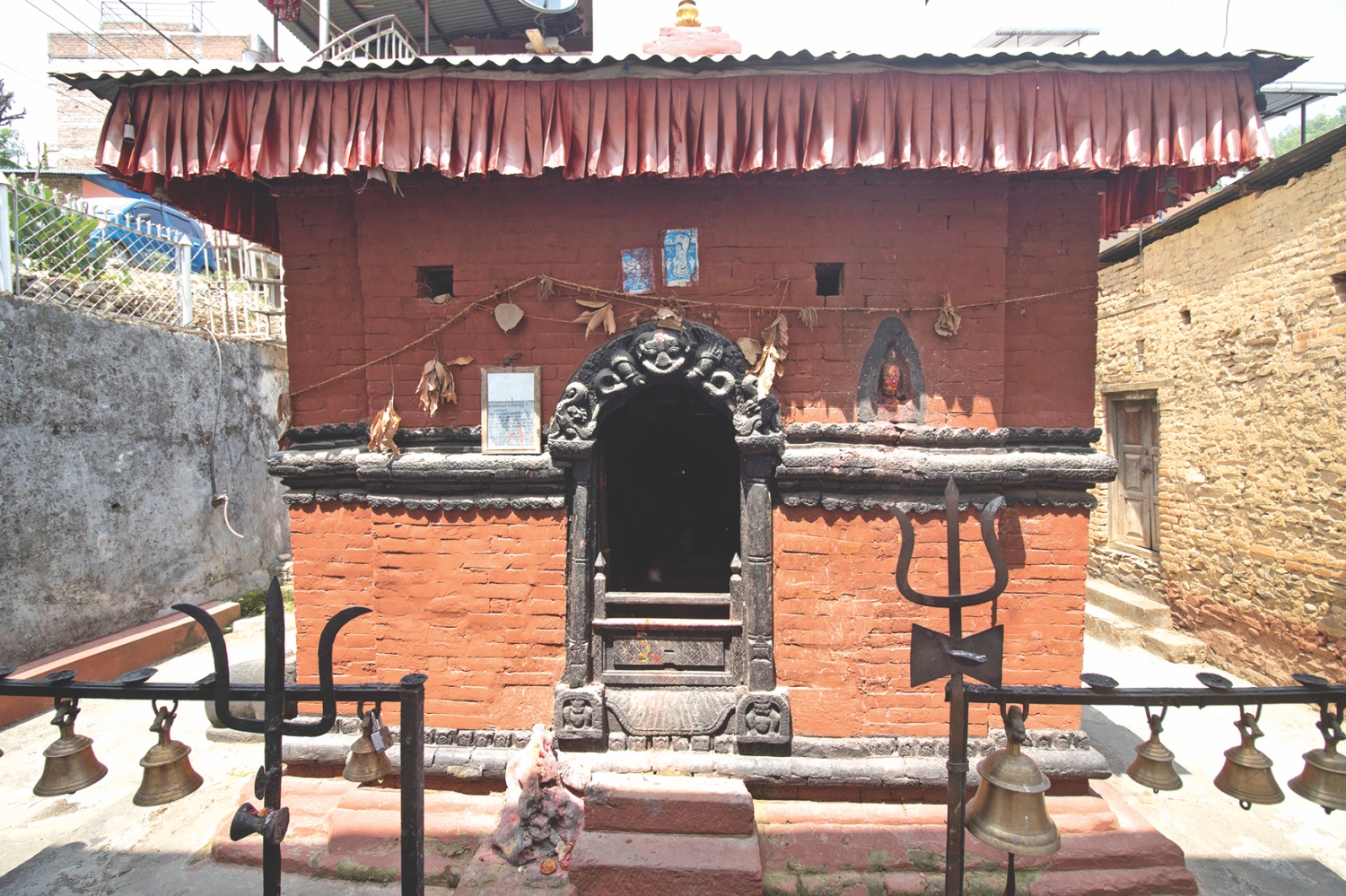
It is easy to think of heritage as something static: old stone, old wood, old paint, catalogued and admired. In Rasuwa and Nuwakot, as across much of Nepal, this could not be further from the truth. The temples that lined these valleys were not museums, they were, and are, houses of deities — dwellings where gods and goddesses are worshipped daily through offerings, lamps, songs, and processions that structure life’s rhythms.
The ghat along the rivers are where protective deities are believed to protect towns and villages around them. This is where the dead are sent onward through rites that have been performed in largely unbroken form for centuries.
To lose a ghat or a shrine in a flood is not just structural, it means losing the physical anchor of a community's relationship with its gods, its ancestors, and its dead.
This is why heritage in this part of the world, is also a method of caring for people in trauma. In the aftermath of disaster, the resumption of ritual life — lighting a lamp at the accustomed hour, carrying a deity in procession along its original route, performing the rites owed to the dead — offers a small but real measure of reassurance.
It means: ‘something of what we knew still holds’. Many death rituals central to grieving in this region are themselves tied to specific monuments, ghat and shrines. When those places are swept away, the rituals that depend on them are left without a home at precisely the moment communities need them most.
In Nepali households, private deities are venerated daily and treated almost like family members. And when the flood left bodies unrecoverable, families in the region asked whether an effigy woven from sacred grass could stand in for the missing dead at the funeral pyre, so that the departed could still be released into their next state.
It is a small ritual improvisation, but a telling one: proof that even when the physical anchors of mourning are gone, communities find ways to keep the rites moving forward. I also recall the account of a man who survived nine days trapped in a collapsed tunnel by reciting mantra without pause — a reminder of how deeply religious practice runs through the way people in this region endure catastrophe, not only mourn it.
LOST HISTORY
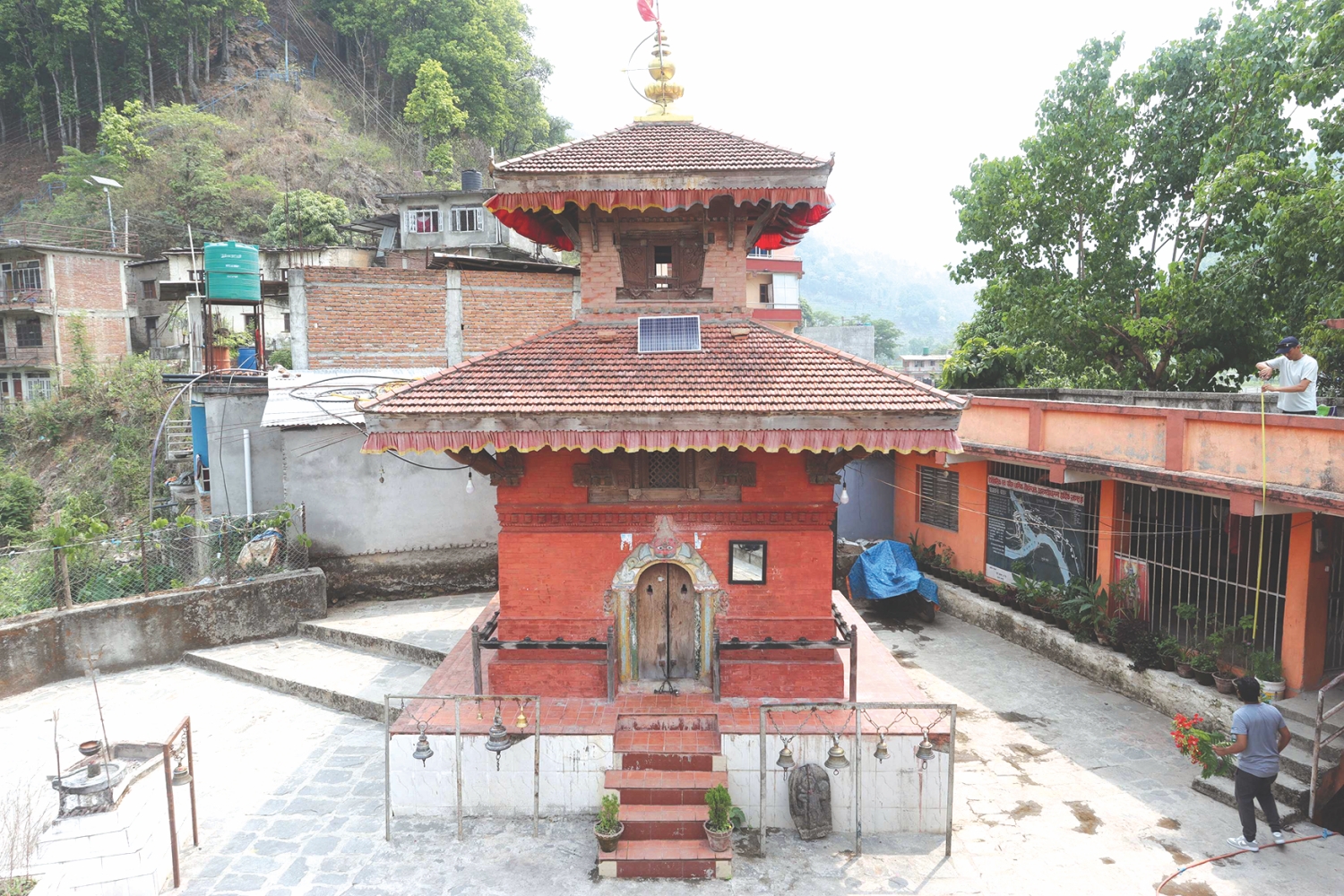
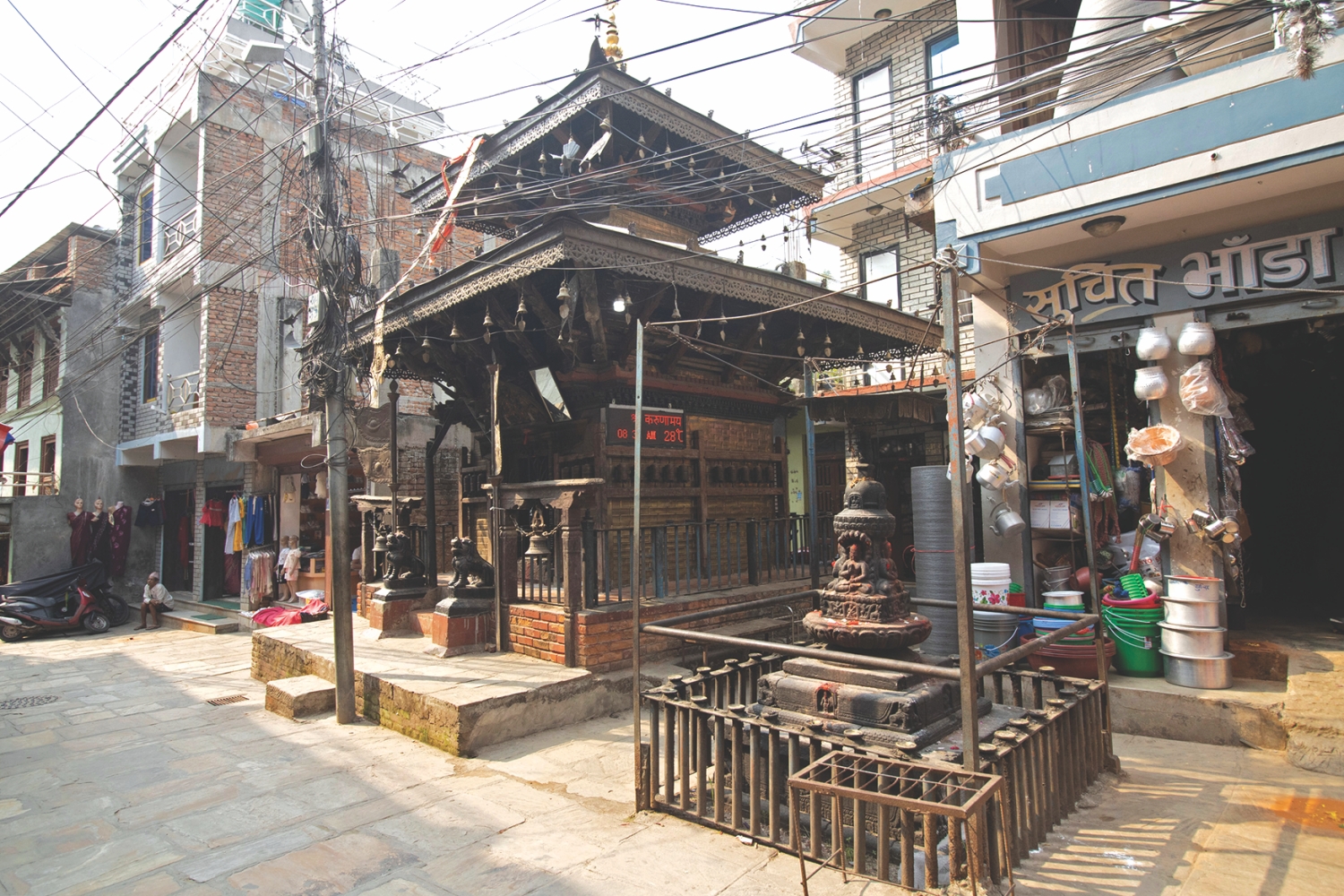
The Nepal Heritage Documentation Project had documented more than 80 temples, shrines, and cremation sites along the river. Of these, 21 were completely destroyed by the flood. Many more stand damaged, their foundations undercut, their courtyards buried under silt and debris.
The Rasuwa–Nuwakot documentation is part of a larger effort that followed the 2015 earthquake and backed for eight years by the UK-based Arcadia, in coordination with UNESCO. The Nepal Heritage Documentation Project run jointly by Heidelberg University, in cooperation with the Department of Archaeology and the Saraf Foundation documented more than 2,000 monuments across Nepal in response to earthquake risk, but some of them are now lost due to a flood catastrophe attributed to climate change.
In cooperation with the Department of Archaeology and the Saraf Foundation, the Nepal Heritage Documentation Project had already prepared detailed field documentation of the condition and intangible heritage of the area. It is now the only surviving record of much of what stood there.
The Nuwakot Museum has already begun planning to match recovered objects — statues, ritual items, fragments carried far from where they once stood — back to their original sites. It is delicate, deliberate work, carried out jointly with the museum and the Department of Archaeology.
It was made possible because the project's database holds not only dates and photographs but also records of the religious practices, cult groups, and living traditions tied to each site. In much the same way that recovered bodies are being matched against the missing, recovered fragments of heritage are now being matched against a record of what once stood. The two parallel efforts, are racing against loss.
When the time for rebuilding does come, this detailed documentation will be indispensable. It will help identify where each site once stood, where each deity was housed, and where other artefacts — images, ritual objects, inscriptions — that were swept away by the flood may be traced or, if recovered, correctly returned to their place and context.
What has happened in Rasuwa and Nuwakot is, among other things, a stark argument for more comprehensive heritage documentation across Nepal — not as an academic exercise, but as an act of care for future generations.
History, recorded with sufficient care and detail, serves as memory for the future's own making: for the communities who will one day rebuild, for the children who will grow up asking what once stood where, and for a country whose sense of itself is woven through with sites like these.
The flood that struck Rasuwa and Nuwakot took lives that can never be replaced, and it took places that will now exist chiefly in memory, in photographs, and in the field notes of projects like this one.
Both losses deserve to be memorialised. Both are reasons enough to keep documenting carefully, patiently, and in close partnership with the communities whose heritage it truly is.
Rajan Khatiwoda is co-director of the Nepal Heritage Documentation Project at Heidelberg University in cooperation with the Department of Archaeology, Nepal, and the Saraf Foundation.