
|
|
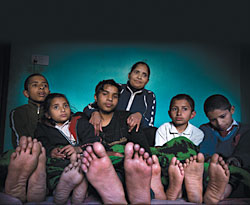
The day in December 2003 started just like any other for Sabitri Regmi (pictured). She said goodbye to her husband, Amrit, principal at a local school in Bhurti, Dailekh district, and set off for work. Maoists came to his school that afternoon, sent the children home and abducted Amrit. Villagers found his body two days later, bruised and sliced open down the side, with nails hammered between his fingers, and his left arm hacked off.
The Maoists had threatened Sabitri's family before. They had robbed her small shop and at night they used to demand food. More recently they had accused Amrit of being an informer. "I was scared for his life and for the safety of my family, but he believed that we had nothing to hide," remembers Sabitri.
For a while after his murder, Sabitri and her six children received protection from the small army camp nearby. "A few months later, the officers came and said they could not protect me in the village any more," she said. "I didn't even have time to pack, I grabbed my children and ran to the place where the army chopper was waiting for us to bring us to Kathmandu."
Today she shares a dingy, cramped room with her children. They eat and sleep, and the children do their homework, in the small congested space which is mostly filled by two rickety beds. The building they now call home is full of families displaced by the war. Sabitri has received compensation of Rs 165,000 from the state, and she knows the government passed legislation last year to assist internally displaced people like herself, but she does not know the details.
In fact, although the published policy is fairly comprehensive-covering registration, medical treatment, housing, employment and counselling-it remains worthless until the government approves directives on how to implement it, says Suresh Pandit of the Norwegian Refugee Council. The Ministry of Peace and Reconstruction says the directives are at the final approval stage, but the NRC complains that every day of delay means added hardship for victims from both sides of the conflict, and delays in their rehabilitation and safe return home.