
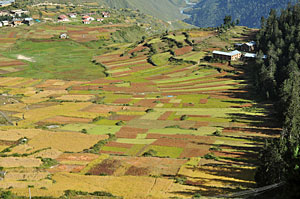
 PICS: GORAKH BISTA Millet, buckwheat and Cheeno grows aplenty in Simikot, Humla |
Despite decades of food assistance from the government and aid agencies, little seems to have changed in the Karnali region. Food shortages are as bad as ever, and there are claims that dependency on subsidised rice has meant what little was left of cultivation has faltered. The general impression is that the dry and rocky terrain of the mid and far west region cannot sustain wide-scale agriculture and that there is no alternative to trucking in food from the outside. But is this really necessary? Documentary film-maker Gorakh Bista of Srinagar, Humla, doesn't seem to think so.
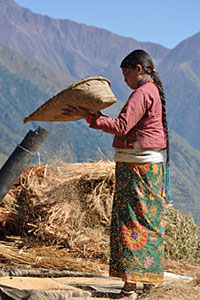
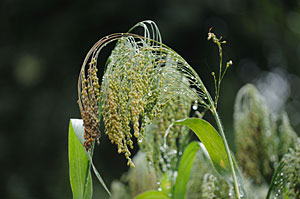
Karnali already has the crops it needs to feed itself, he says. "If we grow the right crops, there is no reason we can't produce enough food for ourselves," says Bista. He cites the example of Cheeno, or Proso millet, a crop that grows readily in Humla. Cheeno is one of the major winter crops in Karnali but is not as extensively farmed as wheat or paddy. "If we can get people to grow Cheeno instead of the low yielding wheat or rice, there would be enough food for everybody," Bista claims. Resham Amgai, scientist at the National Agriculture Research Council (NARC), cannot agree more. "Cheeno grows well in a dry and cold climate; it does not need much water and can be cultivated from the lowlands to the highlands, making it perfect for places like Humla."
|
|
|
But the ultimate challenge may be to get the locals interested in these crops. Says Pantha: "In many places we saw people growing millet as fodder for cattle. The government has to introduce policies to prioritise the production and consumption of these crops."
Wholesome
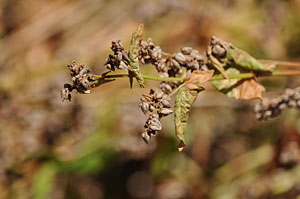
Although looked down upon as lowly food, most hill crops are powerhouses of nutrition. Millet is a good source of iron and magnesium with the highest iron content for any grain barring Amaranth and Quinoa. It has also high protein and carbohydrate content compared to rice. Buckwheat has high levels of protein and the amino acid lysine. It is rich in calcium, magnesium, phosphorous and Vitamin B. Barley is rich in soluble fibre, niacin and iron and is known to reduce cholesterol levels. Amaranth, probably the most neglected of the crops in Karnali, has the highest level of lysine among all grains and a high fibre content.
Read also:
The West is hungry, NARESH NEWAR