 PICS: ANURAG ACHARYA |
Bilaspura BK and Kali Pariyar rise every morning, and equipped with a scale they go from house-to-house weighing newborns in the village of Daha. They advise pregnant and nursing mothers about nutrition and immunisation.
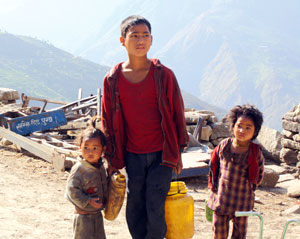
This systematic approach to healthcare in Kalikot is transforming this once-neglected and remote district. Until recently, many families in Kalikot were severely malnourished. Infant and maternal mortality rates were at sub-Saharan levels, and the district's mean life expectancy was only 46, compared to the national average of 63.
During the war, thousands of impoverished villagers from Kalikot walked for days to the Indian border to flee the fighting and find jobs. Locals remember how the Indian border guards harrassed them, saying they were aiding Indian Maoists. Those who migrated faced ruthless exploitation. Many were cheated and cruelly exploited.
With peace, fewer people migrate. And the government's investment in health and nutrition programs is improving the living standards in Kalikot. Under-five child and maternal mortality rates have dropped. With UNICEF, the government has implemented its Decentralised Action for Children and Women (DACAW) in 23 districts including Kalikot.
Social mobiliser Kali says the main reason for the improvements is the presence of a health clinic in her village, but she says there are still huge challenges. "The district still has high incidences of uterine prolapse and malnutrition among young mothers," she says, "they are made to work too hard at home and in the fields and do not get nutritious food, which also affects the health of their babies."