
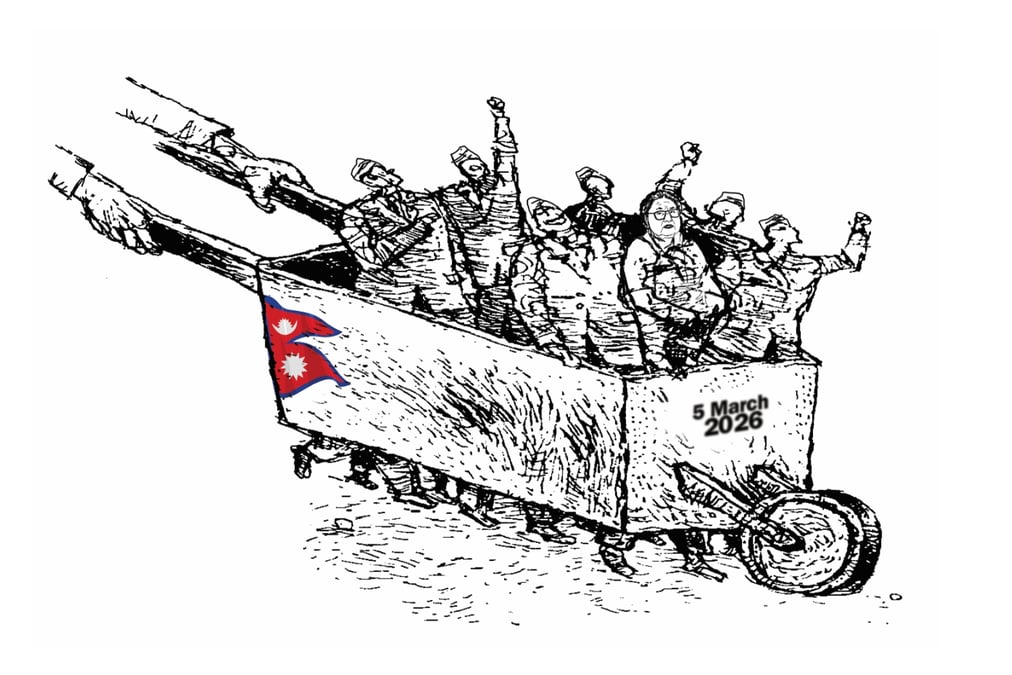
With the holidays over and elections only four months away, Nepal’s interim government led by Prime Minister Sushila Karki is trying to get down to brass tacks. But it is not easy.
On Wednesday, Karki held the first three-way meeting between GenZ representatives, political parties and the government. Despite some acrimony, there was near unanimity about creating the environment for elections on 5 March.
Only the UML is holding out, still not taking responsibility for the 8 September massacre, and calling for the reinstatement of Parliament. GenZ delegates poured their wrath on the unrepentant UML, but were themselves talking at cross purposes on the demand for a directly-elected executive.
Karki was on the defensive, her exasperation spilling over: “How do we undo the damage done by corruption, exploitation, and discrimination over the last 35 years in a single month?”
She is reported to have added, “There is a tendency to not allow this government to work, and then turn around to criticise it for not achieving anything. We are trying our best, and will fulfil our goal of elections no matter what.”
The Wednesday meeting does seem to have turned the attention of old parties towards elections, and spurred the GenZ and others with political ambition to form parties.
With the deadline for party registration looming, several like-minded individuals and collectives are coalescing, or trying to. The Election Commission is already reviewing applications from more than a dozen new political parties.
Kathmandu Mayor Balen Shah has held talks with RSP members, but his popularity on social media is not matched by public visibility and accessibility. Intriguingly, Shah and his supporters on social media have been publicly asking for the resignation of Home Minister Om Aryal for not arresting members of the UML-NC government for the 8 September killings. Aryal used to be Mayor Shah’s legal adviser.
Sudan Gurung of GenZ, ex-RSP Sumana Shrestha, and Energy Minister Kulman Ghising are all shopping for existing or new political parties to join.
The RSP with its alternative anti-corruption agenda would be the logical choice, but there is a question mark over the role of its head Rabi Lamichhane, who is back in jail on charges of embezzlement.