
 DIWAKAR CHHETRI |
An article in this newspaper in 2000 (#4) bemoaned the fact that Nepal bordered India's poorest state and asked: 'Is Nepal going the Bihar way?'
Bihar used to be a pejorative word, a collective noun that encapsulated everything that was wrong with India: inequality, injustice, insurgency and indigence. It was synonymous with crime, corruption and caste. Nepal was in the same boat, but somewhere deep inside we felt superior because we thought there was a place worse off than us. This was proven by the numbers of beggars on Thamel sidewalks, the scavengers on our dumpsites, the barbers from Darbhanga, vegetable vendors from Motihari and plumbers from Muzaffarpur.
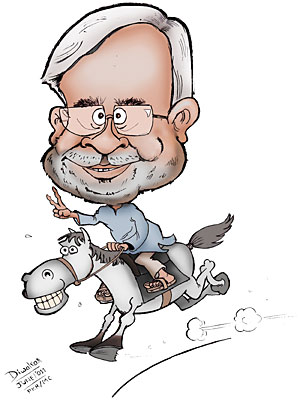
How tables have turned. Unbeknownst to most Nepalis, Bihar is being rapidly transformed after the election of reformer chief minister Nitish Kumar in 2005. One indication of this is that the barbers, traders and plumbers have gone back to Bihar, not just from Kathmandu but from other parts of India as well. Haryana farmers now line up at railway stations in the harvest season with sacks of cash to grab Bihari farmhands as they get off trains.
After hitting bottom, Bihar had nowhere to go but up. For the past five years, the state has posted an annual 11 per cent growth even though its mineral-rich south had broken away. Nitish Kumar, a chela of great Indian socialist Jaya Prakash Narayan, has taken a four-fold path to uplift his state: crime, education, healthcare and roads. Massive investment in infrastructure has created jobs, and also improved connectivity to remote villages so that farm produce now has access to markets.
Because the best rate of return on investment is in educating girls, he is heavily subsidising female enrollment. He has ensured basic health services even in remote areas and is now working on a state-wide health insurance scheme. And he has taken crime and impunity head-on with a carrot-and-stick approach of cleaning up the judiciary and police.
