 |
Tourism already indirectly employs 548,000 Nepalis, and it's not hard to see that it will continue to grow. But if Nepal's tourism assets are to benefit future generations and drive socially equitable economic growth, poverty alleviation and conservation, then sustainable best practices must be implemented.
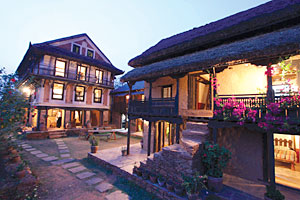
SNV Nepal (in partnership with UNEP and the Nepal Tourism Board, with EC support) is working with a range of operators to do just this. Ghalegaun Village Resort, for instance, has been involved in community-based ecotourism for eight years, taking five groups a year to remote Gurung villages to visit traditional honey hunters. Since taking part in the SNV programme, the resort has provided training in sustainable practices, the environment and tourism for 15 honey hunters, who are encouraged to only harvest from about 40 per cent of hives indentified, so the endangered honeybee (and the native plants that depend on it) remains protected.
Everyone's heard of The Last Resort, which has one of the world's highest bungee jumps. But how many know of its responsible practices? Sales and marketing manager Bhuwan Sharma says," When people ask why we are more expensive, we explain about our community development program and that staff are paid legal wages and get overtime. The whole community is developing in line with our resort. Ninety per cent of our clients come back precisely because of this."
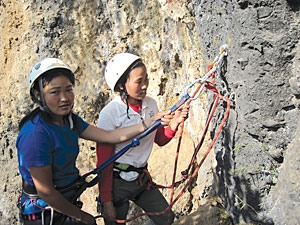
Of course, examples of sustainable 'best practice' within Nepal's tourism community remain the exception rather than the rule. Many feel they have no choice but to survive by maximising profits – usually by exploiting natural resources and workers. Others operate differently, but haven't yet understood that 'responsible travel' can actually be an asset. 3 Sisters Adventure Trekking has made a huge contribution to women's equality and education, enabling women from poor, mountainous regions to become confident and self-sufficient through guiding and portering (rock climbing training, above). "We were doing all these 'responsible' things but had no idea they had a business value that we could promote," says Lucky Chhetri, one of the three siblings who runs 3 Sisters. "The marketing program gave us a sense of business. Client numbers are up by 10 per cent."