
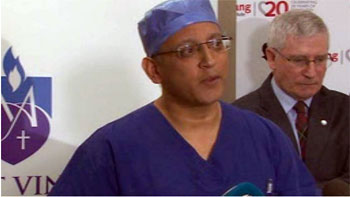
Kumud Dhital: It is quite important because DCD (Donation after Circulatory Death) transplants had not been attempted before. It involves taking the heart and other organs out immediately after the heart stops beating, putting it into a machine to provide it with the necessary nutrients, and the heart starts beating again. We monitor how well the heart is working, and only if it is working well do we prepare a recipient and transplant it. We have now done this three times. In that respect, taking the heart that had stopped beating, transporting it to another hospital in a machine and transplanting on a patient had never been tried before.
How quickly do you have to perform the transplant?
Within 30 minutes of the heart beat stopping, we should already have preserved the heart in the nutrient fluid, otherwise that heart won’t work. Only then do we put it in the machine for transportation. DCDs had been tried in transplantation of kidneys and lungs, but we are the first ones to have tried it on hearts.
Is this going to make it easier to address the problem of donor shortage, or are there complications that we have to be aware of?
Our first patient got the transplant three months ago, the second got a heart two weeks ago and are being discharged from hospital, and the third only a few days ago. So far they are doing well. And we think the outcome will be the same as with transplants from brain dead donors. As you say, this technique will make it possible to increase the number of potential donors from the DCD pool at a time when there is a real shortage of donors. For those wait-listed for transplants, this is going to make a big difference. Some patients die waiting for a heart.