

To plot the trajectory of the downfall of Nepal Airlines, you have to go back to the 1990 pro-democracy movement. People power may have been good for the country, but it spelt disaster for the airline. The two main political parties of the time competed to milk the cash cow until it ran dry.
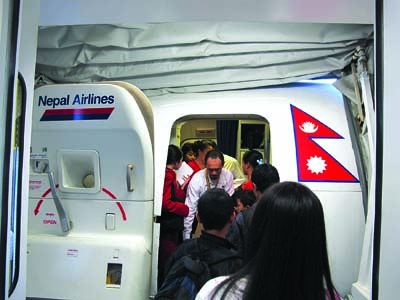 KUNDA DIXIT |
Nepali Congress was in power for longer, so it had more time for mischief. Corruption, mismanagement and interference destroyed a once proud airline that was known for its viable international service that subsidised domestic air travel.
The list of scandals is long, but three stand out: the Lauda Air lease, the Dhamija scam, and the unfortunate sale of two perfectly good fully depreciated 727s that we hear are still flying in South Africa. UML learnt from NC and tried to get kickbacks on later aircraft deals as well. It got to a point where politicians, when they couldn't pocket kickbacks from inflated purchase prices, started skimming off the over-invoiced hourly lease rate of jets. Obsolete aircraft like 737-100s were leased just because the payoffs to politicians were heftier.
Today, the pickings have become so slim and the greed so insatiable that politicians and their appointees in the airline try to cheat even on engine maintenance contracts and other purchases. Just this month, someone actually stole the Fly Away Kit that always has to be on board a 757.
Nepal's flagship, which once had four jets and 11 Twin Otters, now has just two 757s and three airworthy Twin Otters, and even these are grounded most of the time. The four million Nepalis who work in India, the Gulf, Malaysia, Korea and Japan have to use the airlines of other countries to come home. While Qatar Airways has 21 flights a week between Kathmandu and Doha, Nepal Airlines can barely manage two to service the half a million Nepalis who live in Qatar. Nepal Airlines would be viable if it did nothing else but just flew Nepali workers back and forth. But because the airline was never allowed to grow and respond to that demand, Nepali passengers have to pay premium tariffs to foreign airlines. Most of the money our workers save through their blood and sweat doesn't even stay here with a Nepali airline. What could be more tragic than that?