
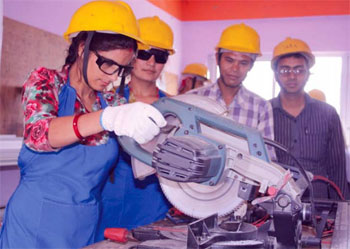
Women are learning to do jobs like cutting aluminium, repairing bikes, cars, televisions, cell phones and computers. They are also making furniture, shoes and glass, and working as drivers and security guards and at construction sites fitting houses with plumbing, electric wires, and marble floors.
“Earlier, when we told them we were training women, they used to ignore us and tell us to get their brothers and husbands instead,” recalls Balram Poudel at Helvetas which supports technical schools in Kapilbastu, Rupandehi and Nawalparasi.
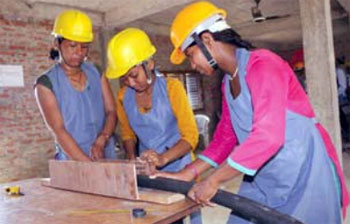
“We’ll open a shop to sell aluminum products and take jobs to fit sites and homes,” says Khanal, now determined to become an aluminum fabricator.
At the Butwal Technical Institute in Butwal, Krishna Kumari Thapa is learning to operate a mechanical feeder. With each hit of her hammer, others around her are affected by her enthusiasm. She is here not because she wants a tough job but thinks she can earn more with the new skills.
“People told us women weren’t cut out for this job but we showed them otherwise,” says Mina BK. Her classmates Mina Aryal, 20, Rita Kumal, 19, and Anita Subedi, 20, are among scores of young women who have signed up at Butwal Technical Institute.
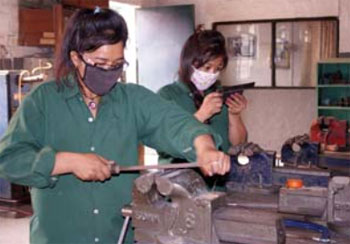
Locals are also happy that their women can now solve household problems that were normally delegated to men. Jyoti Chaudhari, 19, Ram Krishni Tharu, 21, and Mina Kumari Tharu, 31, who were three women in a class of 20 learning plumbing in Gajheda of Kapilbastu, want to go back after training and bring piped water to their homes.
In Nawalparasi, Khushbu Mahato wants to learn how to farm mushrooms. She is among five other women who are learning agricultural skills. All of them now want to open up a cooperative after training finishes and share profits.