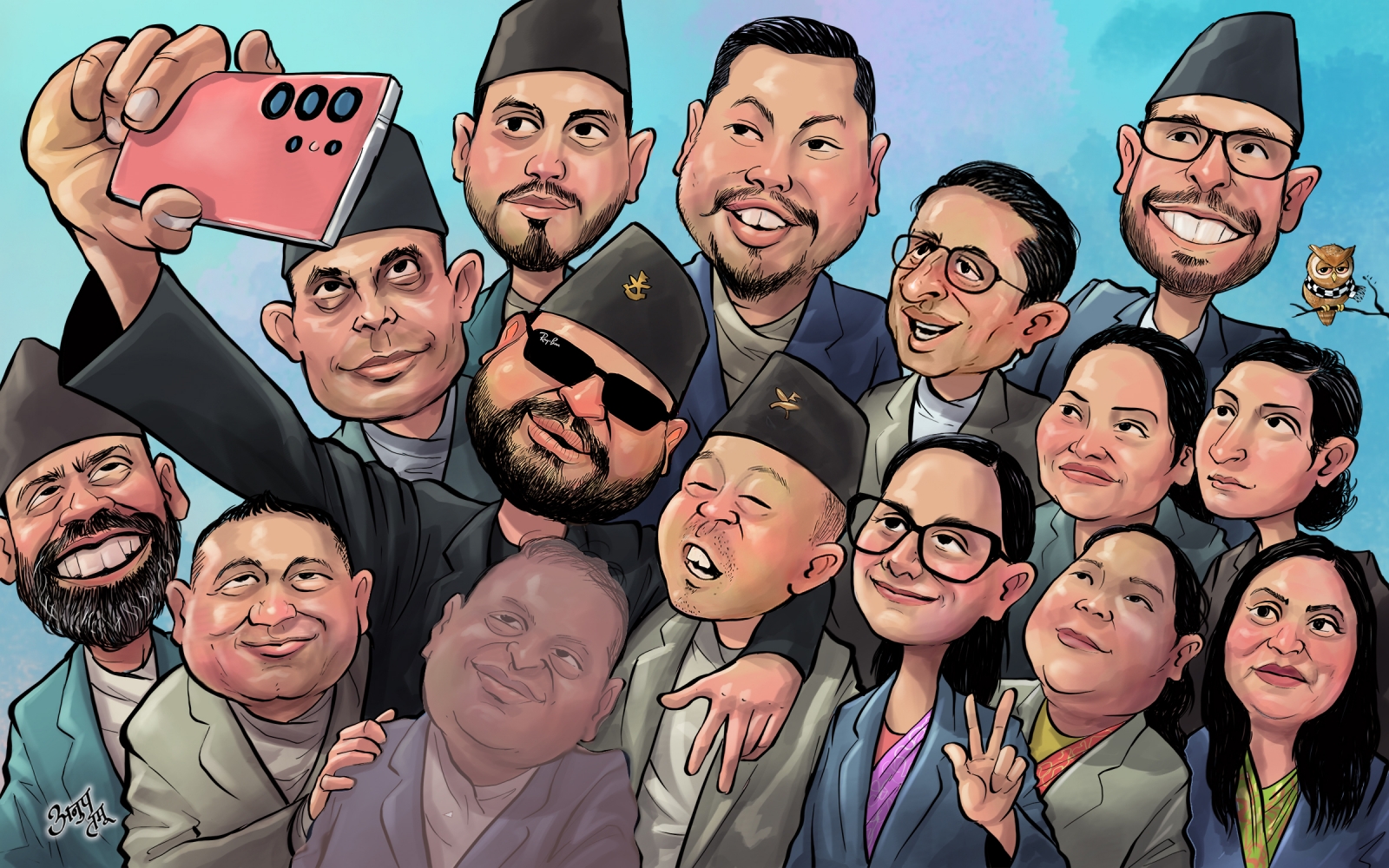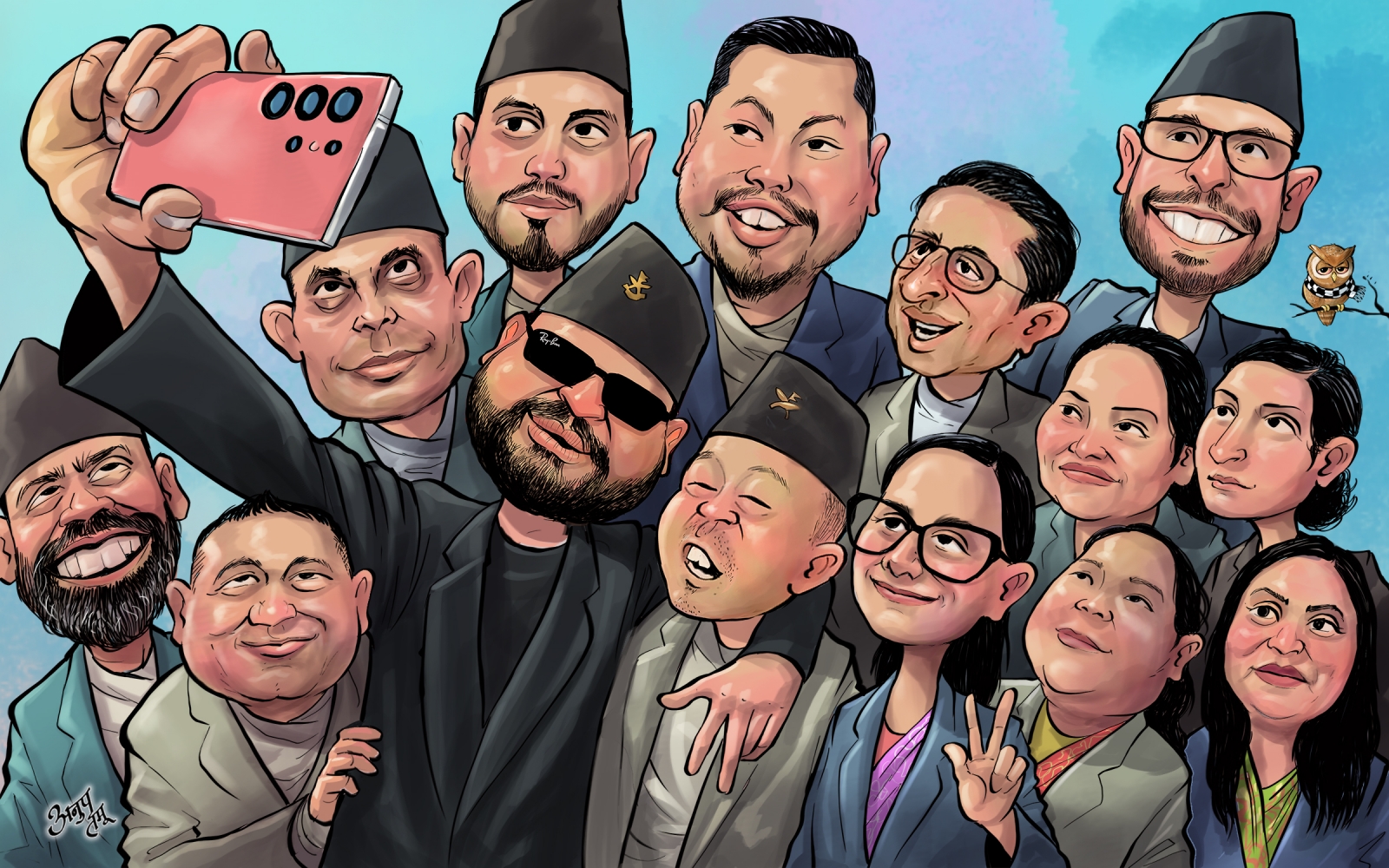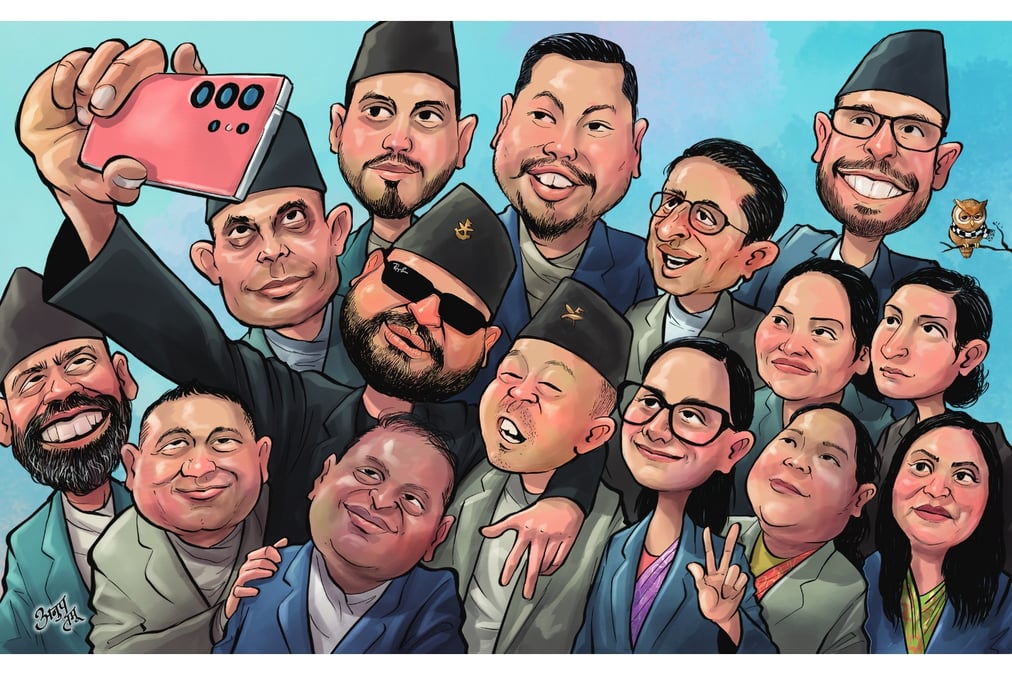
Shisir Khanal
Minister of Foreign Affairs
Shisir Khanal returned to Nepal after completing grad school in the USA and founded Teach for Nepal in 2012, that mobilised young graduates to ensure education for all, and improve quality of instruction in public schools in five districts.
Fourteen years later in 2026, Khanal was appointed Foreign Minister in Nepal’s youth-led Cabinet under Prime Minister Balendra Shah. At age 47, he is one of the older members of the Cabinet and has gone from the grassroots to the global stage.
Before returning to Nepal, Khanal, volunteered for Sri Lanka’s Sarvodaya Shramadana Movement in relief efforts in the aftermath of disasters in Sri Lanka and Haiti. He has a Bachelor’s degree in International Political Economy and Diplomacy from the University of Bridgeport and a Master’s degree in Public Policy from the University of Wisconsin-Madison.
Khanal entered active politics in 2022 by joining the RSP, and contested the election for the first time from Kathmandu-6. He ran against former Chief of Nepal Police Sarbendra Khanal of the UML and former Defence Minister Bhimsen Das Pradhan of NC, winning by a comfortable margin.
As an MP, he served as a member of Parliament’s International Relations and Tourism Committee and also headed the RSP. In January 2023, Khanal served a 19-day stint as the Minister for Education in the Pushpa Kamal Dahal-led coalition government in which the RSP’s Rabi Lamichhane was Home Minister.
In 2026, Khanal contested the election once again from Kathmandu-6 and was re-elected after receiving 27,719 votes, defeating his nearest NC contender by 21,072 votes. In the lead-up to the election, he led efforts from within the RSP to bring Balendra Shah under the RSP banner alongside Rabi Lamichhane.
Much of the public and political discourse in Nepal centres around the influence and interference of neighbours, and Western nations in national affairs. Nepal’s foreign policy remains reliant on antiquated doctrines that fall short in the current geopolitical landscape.
In an interview during his 2026 campaign, Khanal noted that Nepal’s diplomacy is still dependent on 19th and 20th century frameworks, and pointed out the Foreign Ministry’s low institutional capacity — from the lack of expertise on China to economic diplomacy for migrant worker safeguards. Nepal needs to reimagine its place in a multilateral world, he added, to reflect the rapidly changing geopolitical context.
For the RSP, the diplomatic reboot involves ‘development diplomacy’ to steer the country away from traditional aid towards economic partnerships and foreign investments without any strings attached. As the Minister, it is now up to Khanal to implement his ideas. His experience as a public education reformist, which has brought about quantifiable change in public schools, will help select priorities for foreign partnerships.
With the West Asia war, there are more urgent things on his plate. As Nepal’s top diplomat, Khanal has said that there is no immediate pressure on Nepalis to return home, but he has sent two relief flights to Dammam and Dubai to bring back those who want to.
Sobita Gautam
Minister of Law, Justice and Parliamentary Affairs
One of the most anticipated outcomes in the 5 March election after the Balendra Shah vs K P Oli contest in Jhapa-5 was Chitwan-3 where Sobita Gautam was up against former mayor and daughter of Pushpa Kamal Dahal, Renu Dahal.
The RSP candidate who was also the youngest directly elected lawmaker in Nepal’s federal parliament in 2022 from Kathmandu-2 won comfortably with 59,277 votes over Dahal’s 20,615 despite the latter's achievements in improving urban management of Bharatpur.
A trained lawyer with an LLB from Tribhuvan University, 30-year-old Gautam specialises in constitutional and administrative law. She is currently pursuing a LLM in international law and has an undergraduate degree in Development Studies from Kathmandu University.
Gautam’s academic years were also marked by her participation in youth advocacy, student leadership, and discussions on civic engagement, social justice, and democratic governance, leading to her formal entry into politics. She is a founding central committee member of the RSP. Before joining politics, Gautam hosted the health awareness television show Swasthya Sarokar on Nepal Television for over four years.
In 2023, she was named one of One Young World’s Politicians of the Year and elected as a member of the Health Committee of the Inter-Parliamentary Union (IPU) at its 150th Assembly, representing Nepal on a global platform for health policy and governance. .
Constitutional amendment is among the demands of GenZ activists following the September 8-9 uprising, and this is where the RSP will have to use all of its bargaining power. The party has no representatives in the National Assembly without whose approval constitutional amendment is not a possibility. It will be interesting to see how Gautam maneuvers this minefield when the time comes.
Biraj Bhakta Shrestha
Minister for Energy, Water Resources and Irrigation
The new Minister for Energy, Water Resources and Irrigation holds a bachelor's degree in business administration, and worked in development projects and hospitality sector before he got involved in social work.
In the aftermath of the 2015 Nepal earthquake, Biraj Bhakta Shressta, then 24 years old, led a volunteer team that conducted relief operations and health camps in remote areas like Mustang and Bardibas. As a RSP candidate from Kathmandu-8 he beat his nearest competitor, cultural activist Suman Sayami of the CPN.
Shrestha founded Force Nepal and led environmental campaigns such as One Tree – My Responsibility that strengthened his grassroots engagement. He gained more popularity through his involvement with Newa organisations in heritage conservation, including urging a family to return a stolen idol from Chapagaun.
He also set up a residential post for six police officers for the security of the Swayambhu area, and initiated the construction of security walls to protect green parks in Kathmandu Ward 15. Shrestha was also involved in upgrading in Kathmandu including Birendra Marg in Dallu Awas and Simana Marg at Chauni Cantonment.
As much as his voluntary work, his easy-going nature made him popular and gain much support. He was often seen hanging out with locals around in Basantapur.
As the former Minister of Sports under Pushpa Kamal Dahal government in 2024, Shrestha formalised the inclusion of e-sports, introduced the course of sports science in collaboration with Kathmandu University, and signed an agreement with Qatar government for the development of youth and sports. The Anti-Doping Agency was made fully functional employing full time staff during his short tenure.
Like other RSP candidates, Shrestha was associated with Bibeksheel Sajha party, had close ties with the late founder Ujjwal Thapa and won a seat in the Bagmati Provincial Assembly in 2017. He later left the party due to a rift with Rabindra Mishra over their opposing views on monarchy.
Shrestha is an avid guitarist and singer, and posts clips of himself performing on social media.
It was after joining the RSP in 2022, that his political career reached really took off. As an MP, he continuously advocated for matters of public concern and pressed for accountability and good governance. Now as the minister of energy, one of the most important portfolios to fulfil his party's 100-point delivery thorugh governance blueprint, he has his work cut out.
Although it holds great promise for Nepal's future economic growth, the hydropower sector has been under control of political patronage and cronies. Freeing the sector from their control is not going to be easy. He will need to also ensure energy diversification as well as manage Indian interests in Nepal's water resources and balance that with Chinese involvement in infrastructure contracts.
Shrestha recently implemented a ban on single-use plastics which demonstrates a practical, hands-on approach to his leadership. But at least three governments in the past implemented a similar ban only to yield to powerful plastic lobbyists. A lot will rest on Biraj Bhakta Shrestha's ability to show short-term results as well as implement policy reforms for the longer term.
Sita Badi
Minister for Women, Children and Senior Citizens
Sita Badi is the first person from her Dalit community to become a minister. A native resident of Birendranagar in Surkhet, Karnali Province, she has spent a lifetime in social work and activism, becoming a strong voice for marginalised groups.
As a Dalit, Badi faced difficulties completing her studies due to societal ostracisation. She spent her childhood as a labourer with her parents hauling sand for construction contractors along the Bheri River. Her family continues to live at Jhuprakhola along the banks of the river.
Sita Badi moved to Kathmandu at age 12, and with the support of a local organisation completed her bachelor’s degree in social work and eventually a master’s in political science. She has since been working through her own activist group Sunda Sahaj Neal, and now through politics to uplift underprivileged communities all over Nepal.
She has also set up the Badi Sustain Company to work towards improving the livelihoods of people from her community. She launched a small enterprise in Chunikhel in Kathmandu, where women sell handicrafts, allowing many women facing exclusion gain financial independence.
On the personal front, she married Suresh Purkuti, and her father-in-law is a member of the National Dalit Commission. She lives in Budhanilkantha with her family and remains committed to end all caste-based discrimination and other forms of inequalities in Nepali society.
Despite laws, higher literacy and empowerment, the Badi community continues to suffer from stigma and exclusion. There are challenges including protection and social safety net for children and the elderly, shelters for the vulnerable.
As minister, her Facebook has pictures of her in the maternity ward of hospitals monitoring the status of pregnant women, and posting a QR code for any complaints or suggestions for the ministry.
It was Sita Badi’s interest in activism and commitment to improve status of the marginalised that led the RSP to pick her as a proportional representation candidate in last month's election. Badi’s ministership is not just a symbolic gesture of tokenism, it is recognition of her past commitment and work on behalf of Nepalis who are exclused from the mainstream where decision-making is dominated by men from powerful caste groups.
Sasmit Pokharel
Minister of Education, Science and Technology / Minister of Youth and Sports
One of the youngest MPs at 29, Sasmit Pokharel has the swankiest personal websites of all the ministers in the RSP government.
As a close colleague of Prime Minister Balendra Shah, he has been given the responsibility of not just Minister of Education, Science and Technology, but also Minister of Youth and Sports, as well as being the government spokesperson.
Earlier, he worked with Prime Minister Shah for three years when he was Kathmandu mayor as Associate Expert in the City Planning Commission, and as an Adviser on Education and Urban Planning.
After spending his formative years in high school in the United States he returned to his roots to become a lawyer. He holds a BBM-LL.B from Kathmandu University School of Law and is currently pursuing a master’s degree on governance and anti-corruption policies.
He was only 18 when he joined the Bibeksheel Sajha Party, and like many other RSP colleagues was inspired by its founder Ujjwal Thapa. He led the Sajha Youth Organisation and became a Central Committee member. After Bibeksheel fell apart, he contested the 2022 provincial elections as an independent, but lost.
In the 2026 election, Pokharel contested from Kathmandu-5 and defeated three heavyweight politicians, including the NC’s Pradip Paudel, the Ishwar Pokhrel of the UML, and RPP Chair Kamal Thapa.
Immediately after taking office, Pokharel banned bridge entrance preparation courses for students applying to +2 or A levels following their SEE exams, saying they were too commercial. After an outcry, the decision appears to have been rescinded, and again reapplied although there is confusion about the status.