
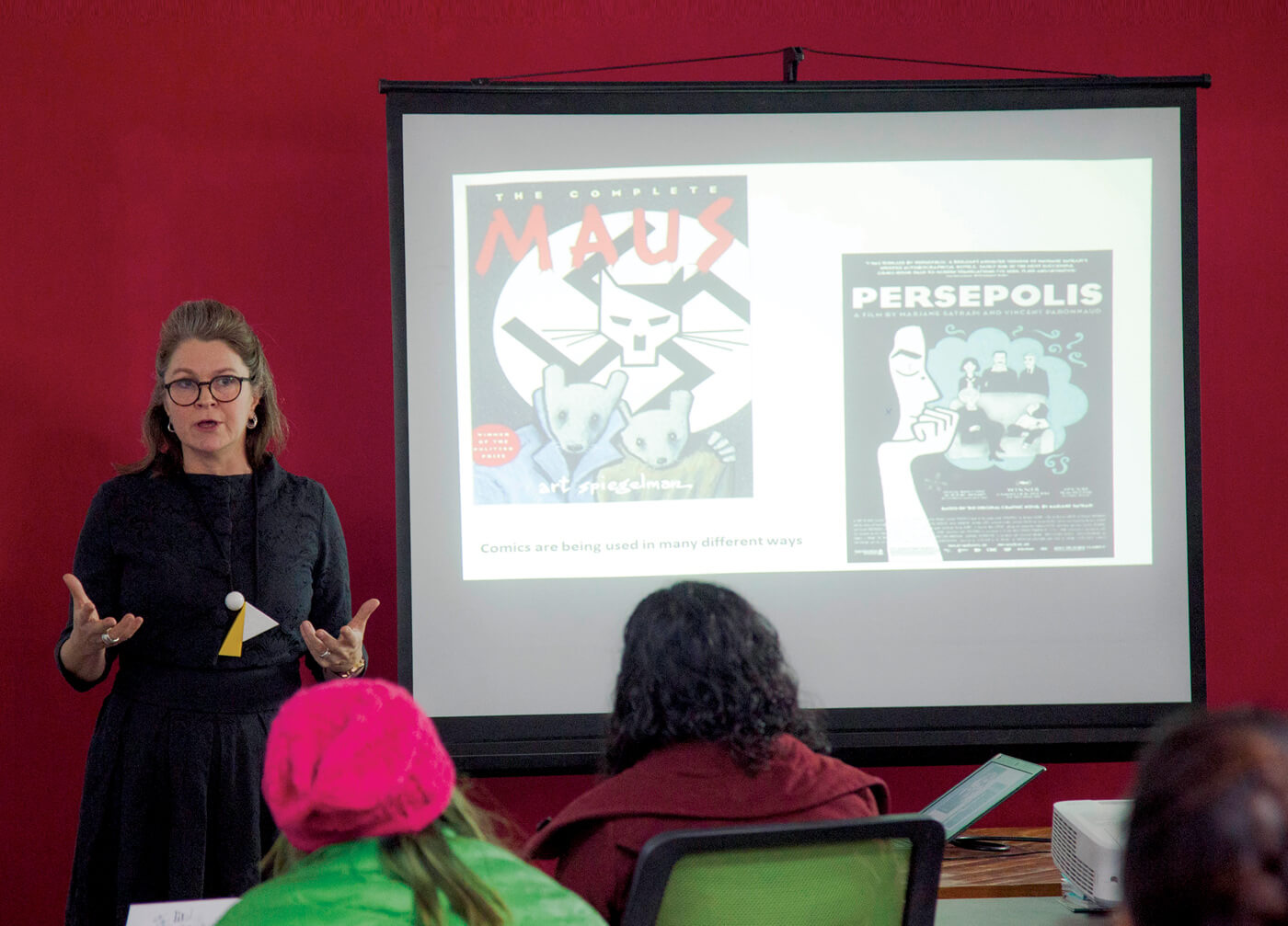
Nicola Streeten asked a roomful of people in Kathmandu who their heroines were. Most named their mothers and grandmothers. The reasons: strength, endurance, staying positive and struggling against adversity. To which the British graphic novelist and historian of women’s cartoons asked: “So how come they barely ever make it to print when it comes to heroic tales?”
Streeten was speaking at the British Council on Tuesday, and will be facilitating a three-day workshop for artists and illustrators on creating heroines at the Nepal Literature Festival in Pokhara this weekend.
“When we think of the word ‘hero’, it brings to the mind a conquering man, and historically, men’s autobiographies have fit into that mould. When women started writing about their lives, especially after the 1970s, their books were called ‘memoirs’, in a sort of lessening or trivialising manner. Women’s experiences do not fit into the mould of the ‘hero’, which is full of gender stereotypes,” she says.
Streeten was also in Nepal in February 2018 for a workshop for South Asian illustrators. The result was a zine showcasing stereotype-free conceptualisations of heroines. The idea, eventually, is to have such standalone artworks develop into graphic novels and reach out to more people, including through school curricula.
“If more people can access stories of everyday heroines, it helps those who are going through similar experiences feel less alone, and more confident about speaking up about their own experiences,” Streeten says, accepting that graphic novels still struggle for acceptance.
When creating her graphic novel Billy, Me and You (2011) about the grief of losing a child, Streeten faced questions about why she wanted to use the format for such a serious subject. Streeten’s response: for easy accessibility. Pictures with words are easier to understand than a long novel or modern art. That is the reason she conducts workshops for making simple sketches.