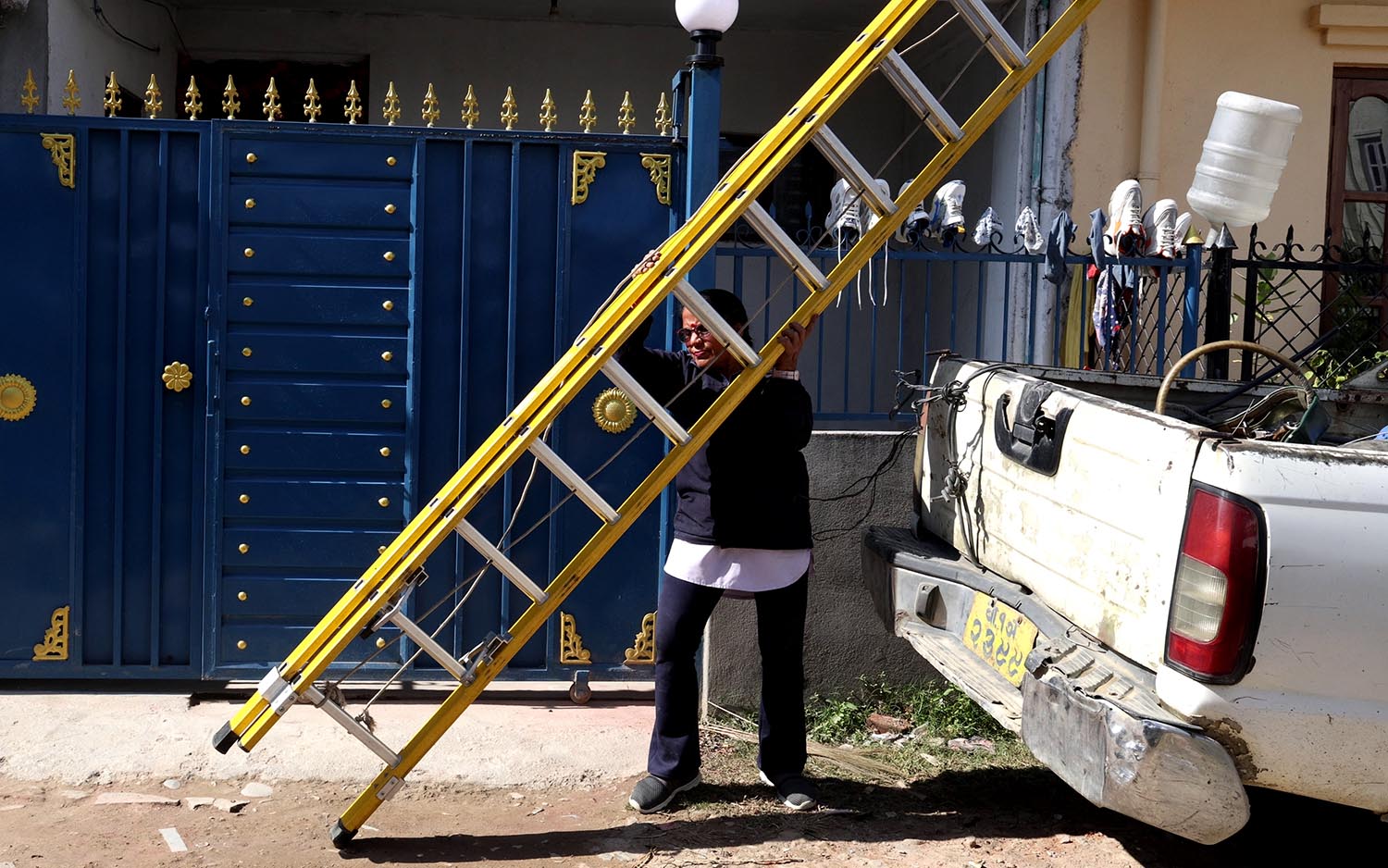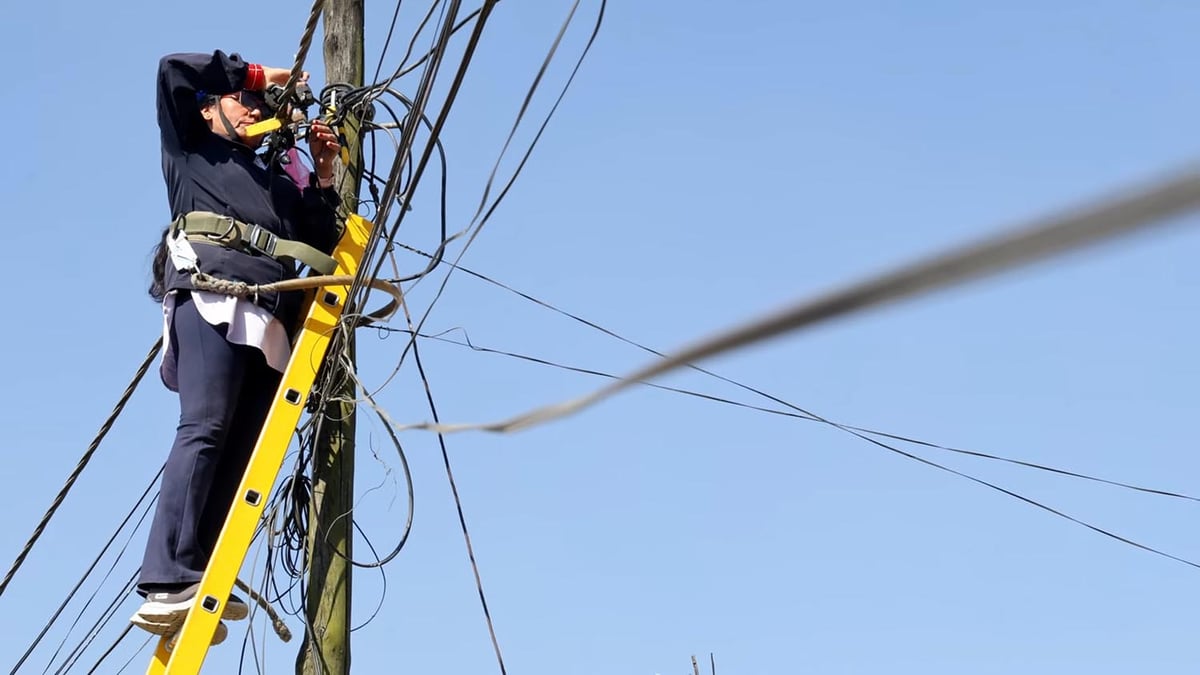
Dhak Kumari Poudel tightens her blue helmet, fastens her safety harness, and wrench in hand, climbs the 8m ladder up a transmission pole in Bhaktapur.
A crowd forms nearby to watch. Passing motorcyclists stop to stare at her high above the ground as if it is a free roadside circus with a woman performing a high wire act.
“It is really surprising to see a woman climb up poles to do electrical maintenance work,” marvels someone in the crowd to no one in particular. Another onlooker nearby agrees: “I had only ever seen men do this kind of work before.”
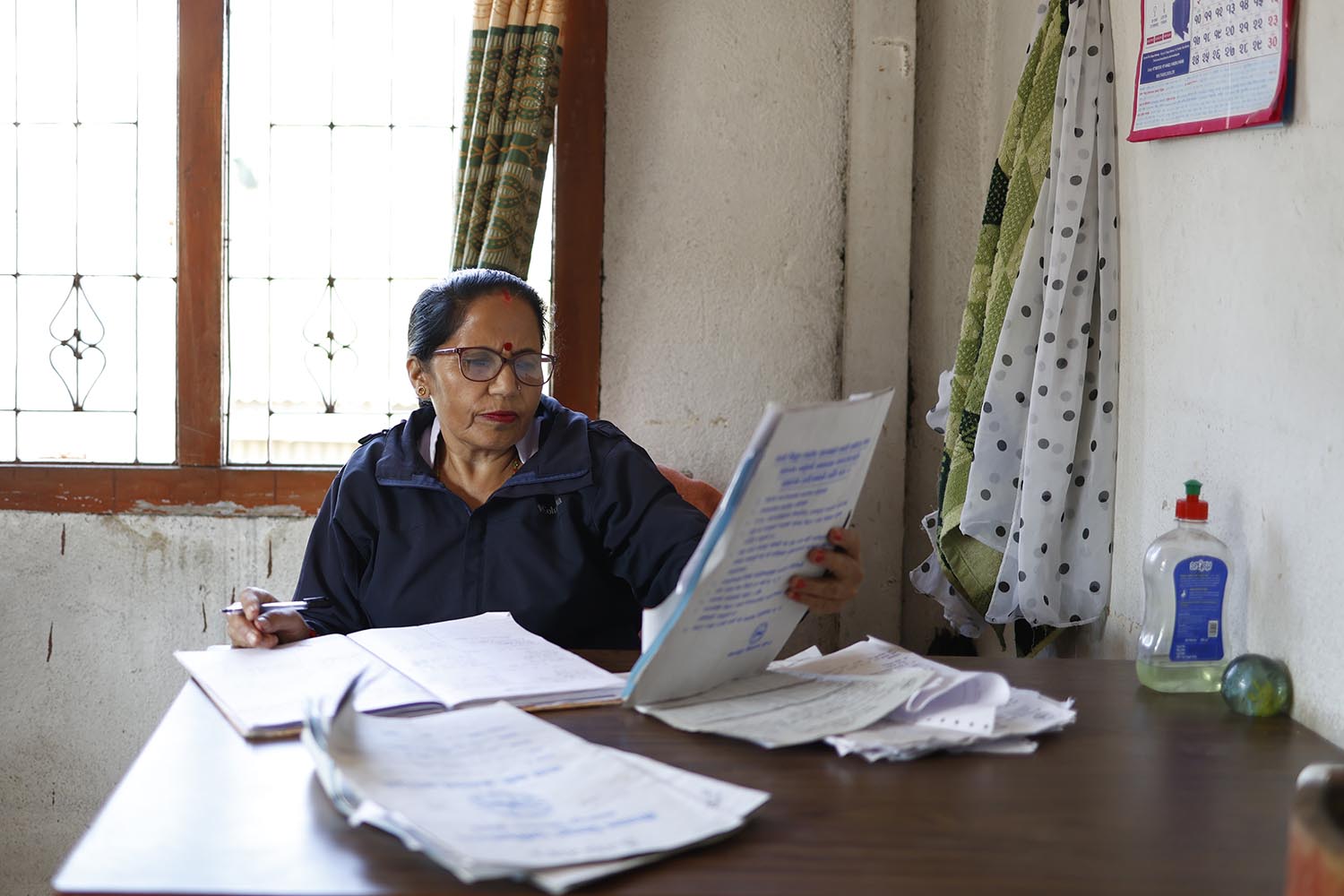
Poudel can hear some of these comments, but has become used to it in the 16 years that she has been working as an electrical maintainance worker with the Nepal Electricity Authority (NEA).
Her everyday schedule involves climbing up to the transmission lines to disconnect those pilfering electricity with hooks, installing new meters, or increasing the capacity of transmission lines.
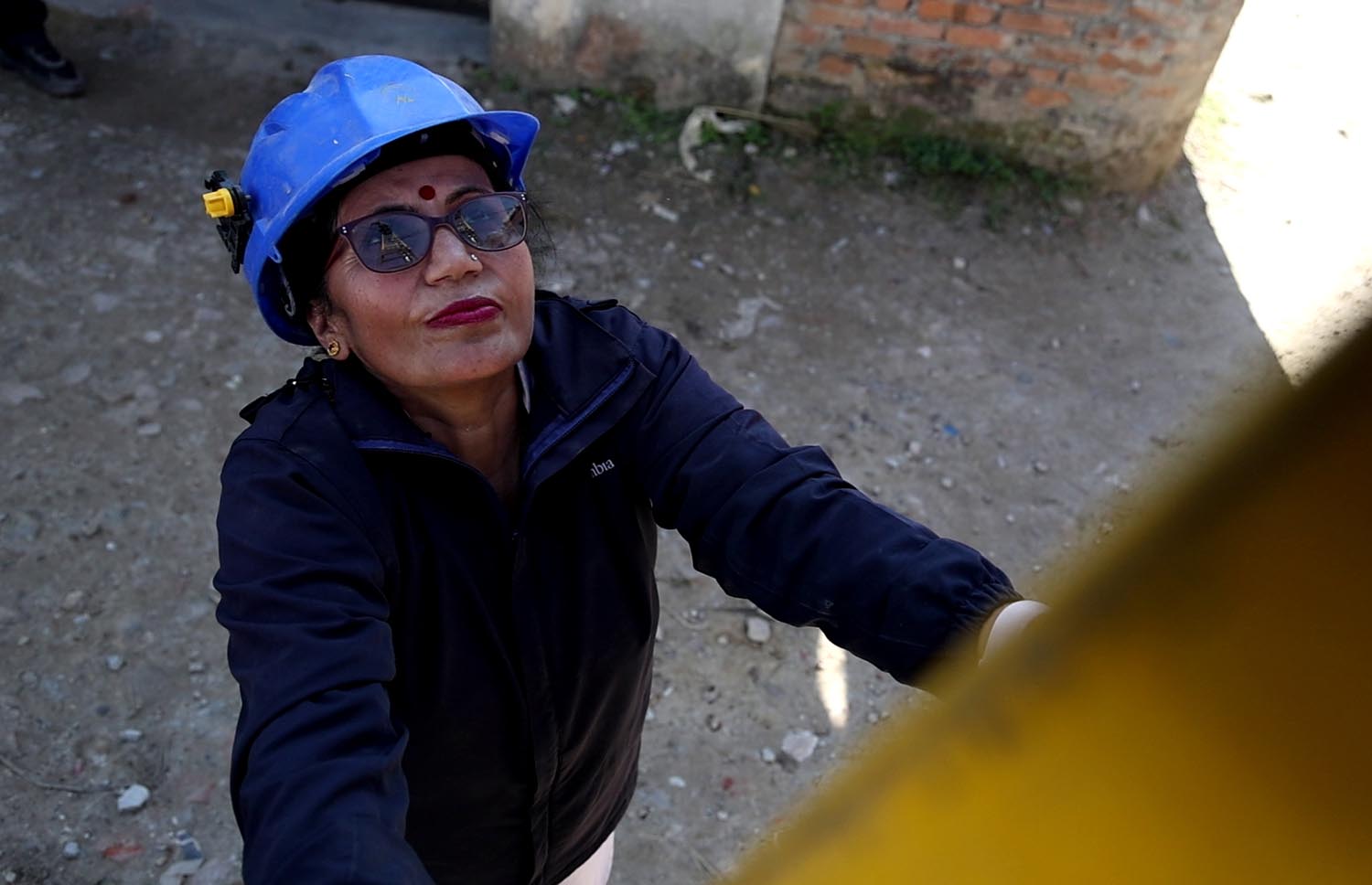
“People will keep looking up and talking, I have stopped paying attention,” says the 56-year-old grandmother, who is currently with the NEA’s Bhaktapur Distribution Centre. “It is just another job for me, like anything else.”
Poudel was married at 22 and had two boys by the time she turned 25. Her husband worked in the tourism sector in Bhaktapur, and she would often travel from their home in Dolakha to visit him in the city.
During one such trip in 2007, Poudel participated in a vocational training class on electrical wiring. She got a job at the Thimi division of the NEA connecting houses to electricity.
Some time later, her boss sent Poudel to attend additional ‘A’ and ‘B’ level courses at the Council for Technical Education and Vocational Training (CTEVT). Poudel was 36, the only woman and most of her classmates were half her age.