
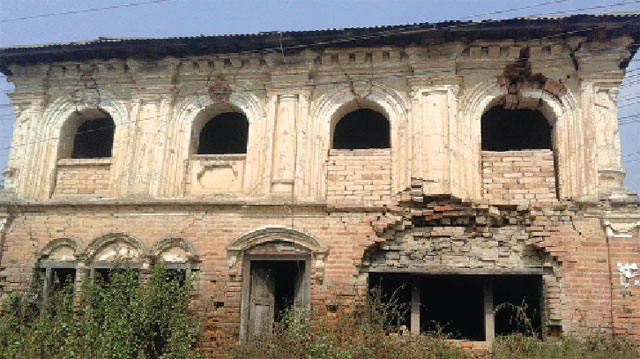
Min Bahadur Khadka, 85, remembers travelers walking to Kathmandu from the east spending the night in the small, white, lime and mortar rest house in Banepa. Porters would rest their loads, light a fire by the rest house and tuck in before they resumed their journey to Kathmandu the next day.
When the Arniko Highway was built in the 1960s, workers including Khadka lived in the house. During hot summer days, Khadka would cool off on the top floor. The rest house was forgotten as the highway replaced the foot trail. Today, the building is in a dilapidated condition, further damaged by the 2015 earthquake. The wood on the doors and windows have rotted, it is over-run with weeds inside and outside. But the roof, the stucco decorations and structure are still intact and if restored it could serve as a museum.
Built by a local businessman Hari Bhakta Bade and his brother Krishna Bhakta Bade 105 years ago, the two-storey rest house is called Setopati (white resting place). Some even call it Putalipati after the two female figures on the corners of the front facade.
“It provided shelter to a lot of people at the time. The beautiful and modern design made it the identity of Banepa,” says historian Gyan Kaji Manandhar.