
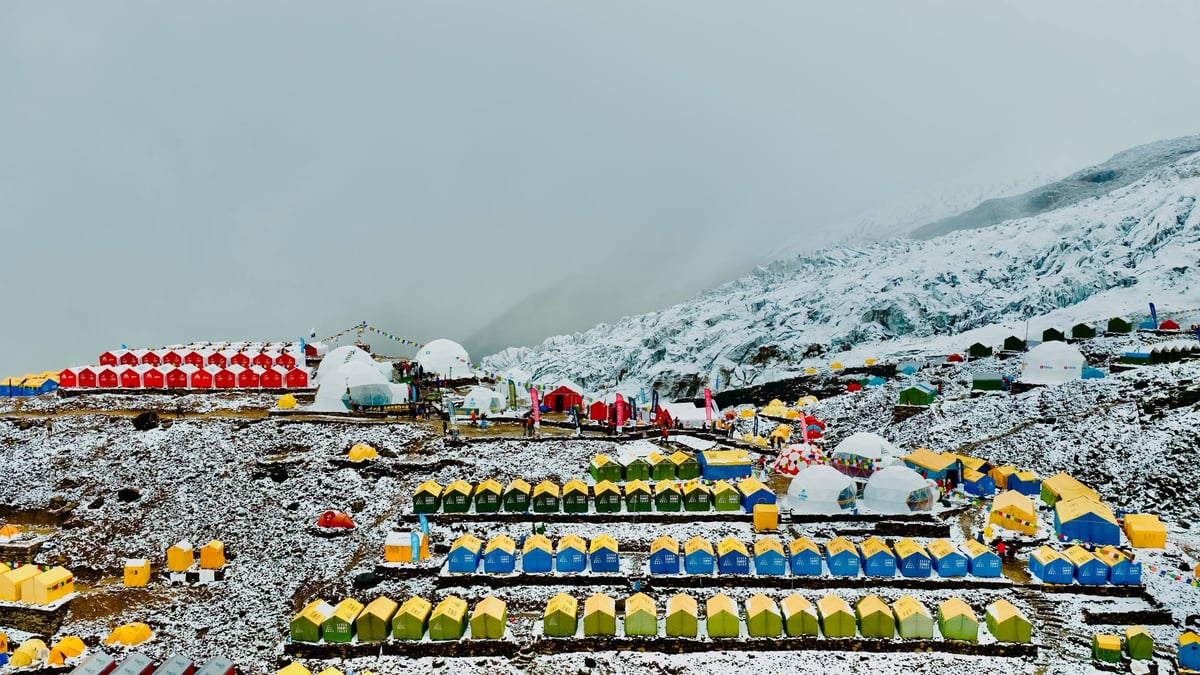
Autumn climbing season is in full swing but difficult weather conditions due to a deep depression from the Bay of Bengal heading towards Nepal From 24-27 September poses a danger to more than 1,000 climbers and guides below the world’s eighth-highest mountain.
Despite the catastrophic flood last month in an adjacent valley in the Nepal Himalaya, a record number of international climbers are on Mt Manaslu (8,163m) which is an ‘autumn peak’ that expeditions use to prepare and acclimatise for spring ascents on Mt Everest.
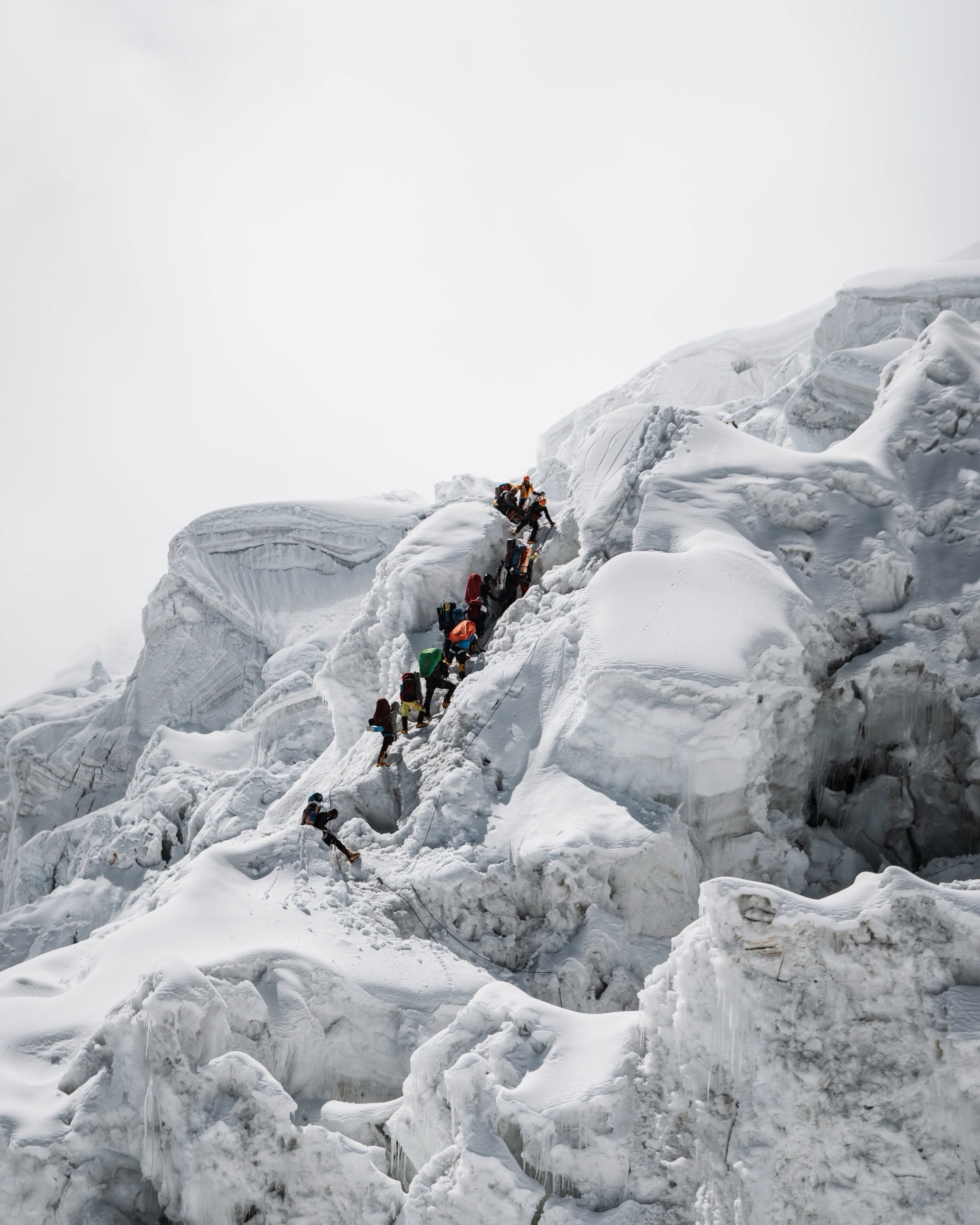
However, the season has not begun well. On 20 September, an avalanche at Camp III killed two climbers, German national Dhruba Jyoti Guha and his Nepali guide Phursemba Sherpa. Last week, 50-year-old Singaporean died during an acclimatisation descent at 6,000m, and Nepali guide Tashi Sherpa, 20, was asphyxiated by generator exhaust in his tent at base camp.
“Strong winds and relentless snowfall have forced climbers to reassess summit plans and return from Camps I and II to base camp,” writes Miles Sherpa, from the Summit Force team at Manaslu. Indeed, the incoming late monsoon storm system is expected to dump even more snow on a mountain which is already avalanche-prone.
Manaslu has garnered massive attention this season, with 480 permits issued to foreigners – more than on Mt Everest during this year’s very crowded spring season on Mt Everest. In addition there are 500 Nepali high altitude guides and support staff. The Mountaineering Division of the government collected $1.479 million in just climbing fees.
Altogether, 55 expedition teams comprising 432 male and 147 female climbers are in 11 of Nepal’s other peaks this season. Thirty four climbers from four teams are on Dhaulagiri I, while Mt Danga attracted 16 climbers from two teams. There are also climbers on Makalu I, Gangapurna West, Thorung Peak, Norbu Khang, Annapurna IV, Chamlang, Baruntse and Lamjung Himal. They are all said to be hunkering down for the bad weather forecast to start Thursday.
The first Manaslu summit of the season was on 17 September, and Expedition Operators Association team of Nepali climbers fixed ropes to the summit, opening the way for awaiting climbers. However, an avalanche the day before buried their ropes and climbing equipment.
To assess the current snow and route conditions across the mountain, experienced Sherpa teams made a trip toward Camp I, and they reported up to 80cm of snow at Camps I and II.
Meteorologists have warned of a low-pressure system that entered the east India coastline on Tuesday morning and is expected to dump heavy rain and snow in central and western Nepal over the weekend. Some forecast models have projected between 400mm and 740mm of rainfall, and blizzard conditions in the higher reaches.
Even so, the eventual track of the storm system is still uncertain as it faces a stronger than usual westerly jet stream. A similar cyclone last year fizzled out by the time it reached Nepal.
“The priority is team safety, snowpack stability, avalanche conditions, and real-time mountain observations rather than a reliance on forecast models”, writes Halung Dorchi Sherpa, from the Summit Force team.
Because weather conditions are worsening and unclear, climbers are still trying to reach the summit of Makalu on Tuesday and Wednesday before the weather system blows in. To ensure that all teams safely summit, many climbers expect to have no rest days after their rotation to Camp III.
Dawa Sherpa, from Seven Summit Treks, writes from Base Camp, “For now, our teams are carefully monitoring the mountain, assessing conditions at every stage, and preparing to make the most of any safe opportunity that the weather provides.”
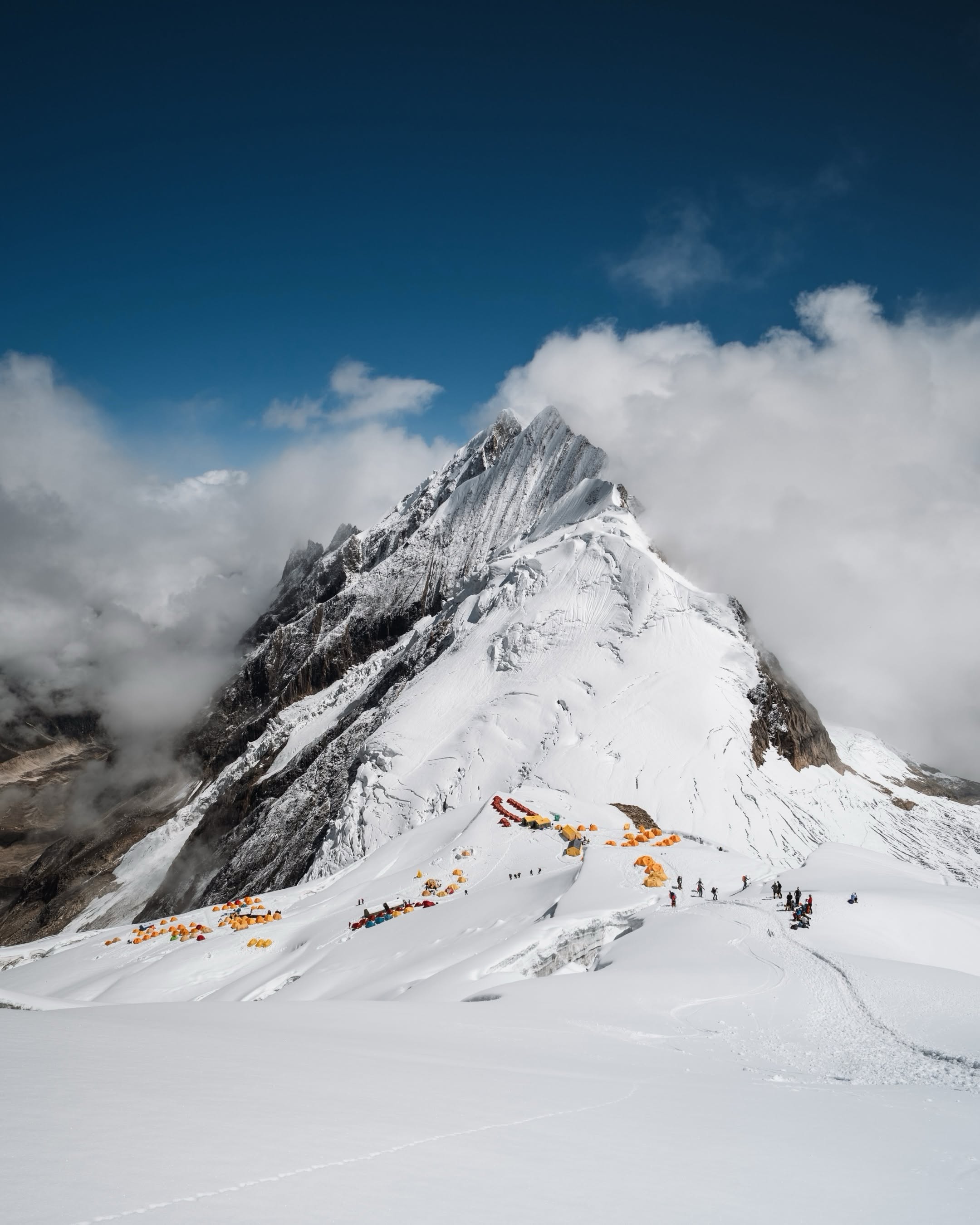
The short window of favourable weather may force climbers to attempt the summit all at the same time, creating a traffic jam on the knife-like summit ridge of Manaslu and other mountains.
The lead expedition guide, Lakpa Sherpa, shares his sentiment: “Patience is our greatest strength and the mountain will decide when the time is right.”