
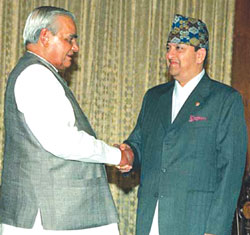
 India's Hindu right which has been traditionally sympathetic to the monarchy and opposed to Nepal going secular is split about Nepal policy.
There are differences in approach between the Rastriya Swayamsevak Sangh (RSS) and the Bharatiya Janata Party (BJP). about the political approach to Nepal. The RSS is reassessing its past policy on the future of the monarchy and say putting all their eggs in the royal basket was not a wise move. Besides being a Hindu king, they believed only the king could fight the Maoists. Now, senior RSS leaders admit the erosion of the king's credibility in Nepal has damaged them as well.
We depended on proximity with the king for our influence, now with the king gone we have lost our strength on the ground," one senior RSS leader told us.
Despite this, the RSS would like the institution of monarchy to remain. While more radical groups in the Vishwa Hindu Parishad still hope for an active monarchy, most in the Hindu right in India know that the days of an assertive king are gone.
"We would be quite happy if the institution remains, it is a symbol of unity and is the only Hindu monarchy in the world. We know Gyanendra and Paras are unacceptable but then the grandson formula could work," says an RSS leader who has tracked Nepal for decades.
BJP leaders, including Atal Bihari Vajpayee, have said they will not actively push for retention of monarchy, and will decide on their stance based on the public mood in Nepal. The rightwing in India has kept the channels of communication open with king Gyanendra who has met three intermediaries in the past few months: a former minister from Tamil Nadu close to the RSS, a journalist with a Delhi-based pro-BJP paper, and a former intelligence official.
All have returned with the impression that the king is relatively calm but at a loss about what steps to take. It appears he has been advised that a four month retreat, possibly a pilgrimage to India, would be in his interest as this would take the sting off criticism that he is obstructing elections.