
Ajita Khadka was nine-years-old at the time, and after helping her mother do the dishes remembers getting out of the house to go over to a neighbour to ask for a flowering plant for the family garden.
It was a bright clear afternoon on 6 September 2003 in Jyamire village of Sindhupalchok, the monsoon was taking a break, and Ajita remembers thinking how beautiful the flower would look on their porch.
Over on the other side of the village at the Janata School, Ajita’s father, the journalist and teacher Gyanendra Khadka, 32 at the time, had finished addressing a group of parents and guardians. Suddenly, two men in shorts sprang up, and wielding pistols and hand grenades, grabbed him roughly, and led him away.
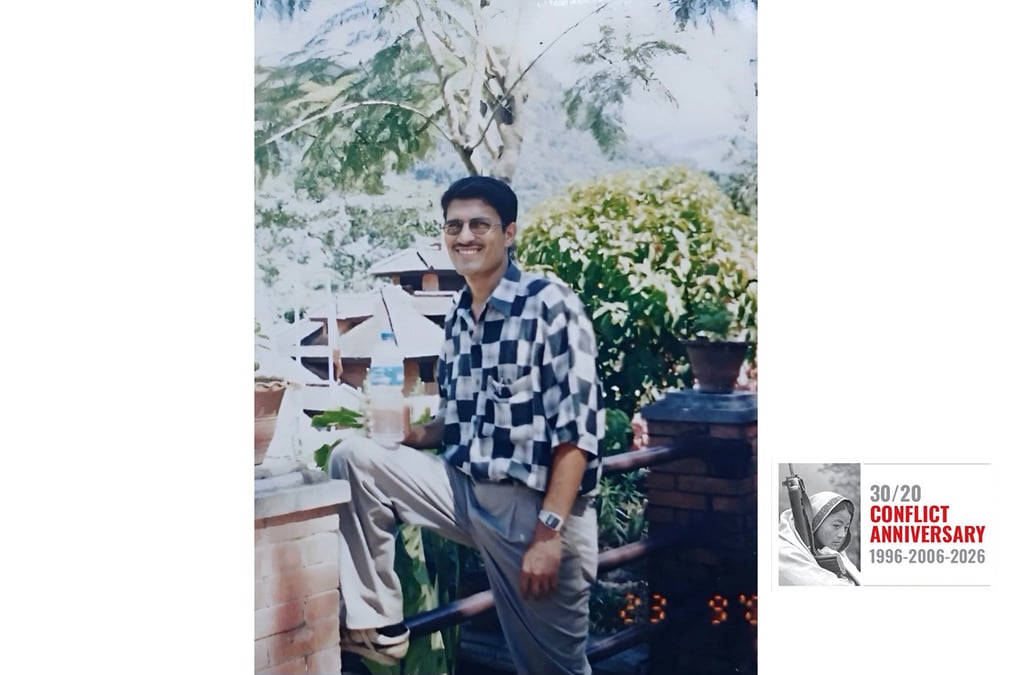
Ajita had just stepped outside her front gate, when she saw her father, wearing a green check shirt and white trousers, being taken down the path by the armed Maoists. His hands were tied behind his back with a rope.
In a heavy, trembling voice, Gyanendra glanced at his daughter and said: “I’ll be back soon.”
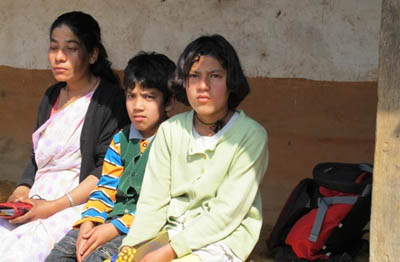
Ajita ran back into the house in panic, and told her mother, Mithila, what she had just witnessed. “My mother let out a visceral scream, and raced down the path after them,” recalls Ajita, who was so terrified that she hid in the cowshed.
By the time Mithila caught up with the Maoists, they had tied her husband to a volleyball pole, and forced her to watch as one of the assailants pulled out a long khukri knife. Then she fainted.
Gyanendra’s close friend and fellow-journalist Yubaraj Puri heard what had happened, and rushed to the site. “The blood was mixed with the dirt at his feet, and when I got closer I saw that his head had been nearly sliced off. It was dangling from his neck.”
Ajita finally found the courage to enter the house, where her mother was still unconscious. Relatives and neighbours gathered around to offer words of comfort.
“Deep inside, I was still hoping desperately that I would wake up from what felt like a nightmare and find my family whole again,” says Ajita, who as the eldest daughter now had to take care of her 5-year-old sister Asmita and 3-year-old brother Aswin. Gyanendra’s father, Bishnu Bahadur Khadka, a retired army man, was in total shock.
Being a reporter, Yubaraj Puri immediately headed down to Melamchi to file the story about the murder of Gyanendra Khadka, who reported for the RSS news agency, and to inform the Federation of Nepalese Journalists (FNJ) in Kathmandu.
The Maoists had threatened villagers not to remove the body, and it was still there the next day when Yubaraj thought he should document the crime. There was a Maoist ‘charge sheet’ attached to Gyanendra’s body, which accused him of spying for the state.
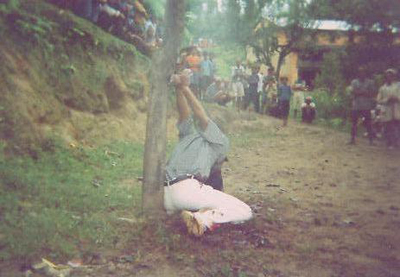
“I borrowed a camera and took five photos,” Yubaraj remembers. “My hands were trembling so much and it was difficult to keep the camera still.”
It would take another day for Gyanendra’s body to be taken down to be cremated by the banks of the Indrawati. Yubaraj Puri’s graphic photo was all over national newspapers that week and was on the cover of the FNJ’s annual report – but without his photo credit.
He faced threats himself, and joined a newspaper in Kathmandu, returning to his town only after the 2006 ceasefire. The first time his name appeared with the photo was when it was published in the book, A People War, in 2008.
Nine journalists were killed during the Maoist insurgency from 1996-2006: five by the state and four by the Maoists. More than 17,000 Nepalis lost their lives during those ten years.
Shortly after the murder, armed Maoists visited the Khadka home and threatened his family, forcing them into silence. Neighbours and villagers were also cowed down by the terror, no one dared question why a much-liked teacher and a respected journalist had been so brutally executed.
Mithila was 30 when her husband was killed, and says in the book, People After War, “I just hope no other Nepali will have to suffer a tragedy like ours. I hope there will now be peace in the country.”
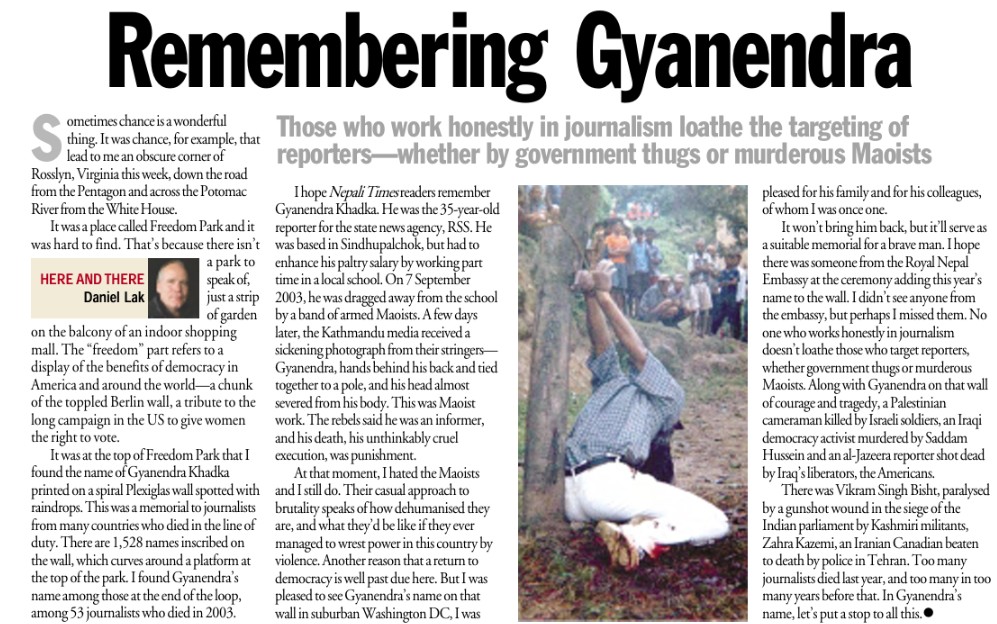
Many still remember Gyanendra Khadka as a dedicated teacher and an independent journalist at a time when schools and media were caught in the crossfire from both sides of the conflict. The Khadka family never really recovered from the trauma and fear.
“In the long run, my father’s murder altered the course of my family’s life forever,” Ajita says. “Beyond the emotional void, his absence meant navigating childhood without him, which was painful.”
Till today, the weight of the loss still affects every aspect of the family’s life. Ajita says festivals are painful reminders of her father. Seeing other children with their fathers makes her emotional. “Father’s Day has been the biggest trigger for me," she adds. “I wished the day would simply vanish from the calendar.”
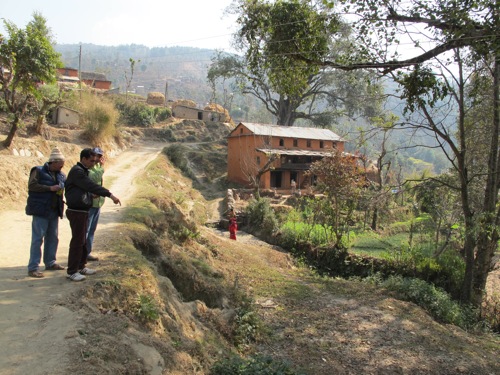
For years, the family never went near the volleyball court where Gyanendra was beheaded, and they would take a longer path so they did not have to be reminded of the violence. Because the place he was killed is next to the temple of Devisthan, her father’s murder even shattered Ajita’s faith in God.
She says, “Even now, 23 years later, small things like an old song brings back his memory. To cope, I tried to escape into day dreams and find comfort in sweet memories.”
As a mental health counselor in Australia, Ajita now knows that such behaviour is called ‘dissociation’. Her interest in mental health comes from her own lived experience, and she says there are many families like hers in Nepal who need psychological support from trauma-informed mental health clinicians.
“It is not just about healing past grief but about preventing the devastating secondary impacts of unaddressed trauma,” she says.
Ajita’s siblings are now 27 and 25 years old, and they do not want to dwell in the past. Time has not healed, the pain still runs deep. “Not speaking about our grief has left us feeling isolated, which is why I want to contribute to mental health services in Nepal for families like ours,” she adds.
No one was ever charged for the murder of Gyanendra Khadka, but in 2004 the Maoist area commander for Sindhupalchok was Agni Sapkota, who went on to become Speaker of Parliament. Last year, the Supreme Court ordered a criminal investigation against him for his alleged involvement in abduction and murder in Kavre of local politician Arjun Bahadur Lama in 2005.
Does Ajita want to know who killed her father? “Part of me wants to know who they were, and why that order was given, and ask: was it necessary to take a life? But another part of me thinks, what’s the point?”
Ajita is now the same age as her father was when he was killed. She lost faith in Nepal’s politics when the Maoists were elected into government in 2008, and ruled in various coalition governments till last year. But after the March 2026 election that put a young government in charge, she is more hopeful about the country’s future.
She adds, “What happened cannot be undone, but no one should ever have to pay with their life for simply seeking the truth, educating others or doing their job. No family should ever have to carry the heavy, lifelong burden of that loss.”