
|
|
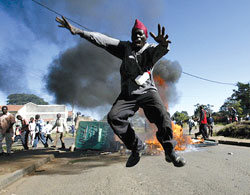
Kenya's rich cultural tapestry, wonderful scenery, and astonishing wildlife had been calling us for years. Why fate dictated we'd arrive just before a stolen election plunged the country into chaos is another matter altogether.
Perhaps I'm drawn to such crises after so many years of bad politics in Nepal. Holidaying in a country sans political turmoil might be like going cold-turkey. Worse still, there's reason to suspect civil strife follows the Hand around, as riots erupt with disturbing frequency wherever he goes. If word of this got out I could be banned from entire continents.
Arriving in Nairobi ten days before the event initially seemed lucky. With Christmas, elections on 27 December and the New Year in the air the mood was festive and upbeat. Political rallies looked like celebrations and while touring the central highlands, a landscape so lovely as to insure optimism, any chance of violence seemed very remote indeed. Kenyans are a mature, engaging people, sophisticated in their social dealings and proud of their country's diversity and stability. Many went to great lengths in explaining that no matter which side won, violence was a thing of the past.
Such charming if ultimately misguided idealism reminded me of Nepal in the early 1990s, when folks still trusted their leaders. Later on, as the election went terribly wrong, Kenya looked ever more familiar.
Kibaki Thani, the incumbent, won the country's first free vote five years ago, unseating the classic African Big Man, Daniel arap Moi, who had clung to power for 24 years. Kibaki's achievements include a booming economy, better roads, greatly improved security (the capital is no longer referred to as Nairobbery) and free primary education. Meanwhile, rampant cronyism favoring his fellow Kikuyu, increased taxation, and skyrocketing commodity prices had badly tarnished his image. Pre-election polls indicated a dead heat with the opposition leader, Raila Odinga, a member of the Luo tribe from western Kenya. His promise of a more inclusive polity had caught the imagination of many who resent the Kikuyus' political and economic domination.
A nagging sense of d?j? vu took hold as we arrived in the port city of Mombasa on Election Day. The coastal areas are infused with strong Omani Arab and Indian cultural influences, adhere to Islam, and despite bringing in much of the country's revenue, are far removed from political power concentrated in the Christian highlands. We soon fell in with some highly motivated citizens who frequent the hotel bar (these are African Muslims, after all), and their tales of unbridled nepotism and corruption in the Kibaki cabinet had me feeling right at home.