
|
|
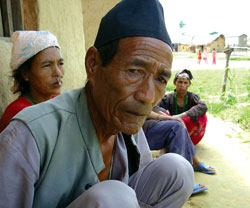
Baisali Buda and her four children lived on the edge of poverty in Mugu's Birat VDC. They had just a little land, but their remote, rugged village was home. Then Maoist cadres started coming around, making increasingly unaffordable demands. Eventually, four years ago, Buda and her family fled to the relative safety of the city.
But life in the tiny shack in the camp for internally displaced people in Rajhena is even harder. "I wish we'd settled in India and never returned, though it is not easy there either" says Buda.
There are nearly a quarter of a million internally displaced people in Nepal, says the international Internal Displacement Monitoring Centre (IDMC). Buda and many like her were innocent bystanders who just gave up, or refused to support the armed rebels. But an equal number of internally displaced people are former political workers of the NC, the UML, and the RPP. Their safe return will be a factor in whether all parties can campaign fairly for elections to the constituent assembly.
"The local Maoists locked our houses and took away our farms, and they will kill me if I go back," 72-year-old Kesar Bahadur Shaha from Jajarkot told us. A Nepali Congress worker, Shaha was constantly harassed, and his 45-year-old wife Ganga was abducted and severely beaten up. His young daughter couldn't handle living with the constant Maoist threats and intimidation, and succumbed to heart disease.
Over 200 people living higgledy-piggledy in the camp are waiting for the local Maoist leaders from Mugu, Dailekh, Jajarkot, and other surrounding districts to come to them and give them written assurance that they will not be harmed in any way. The Maoist leadership publicly says that internally displaced people should be reintegrated unconditionally in their home villages. But camp residents are far from convinced that the local Mugu-based cadres, used to extortion and living on other people's property, will welcome them warmly.