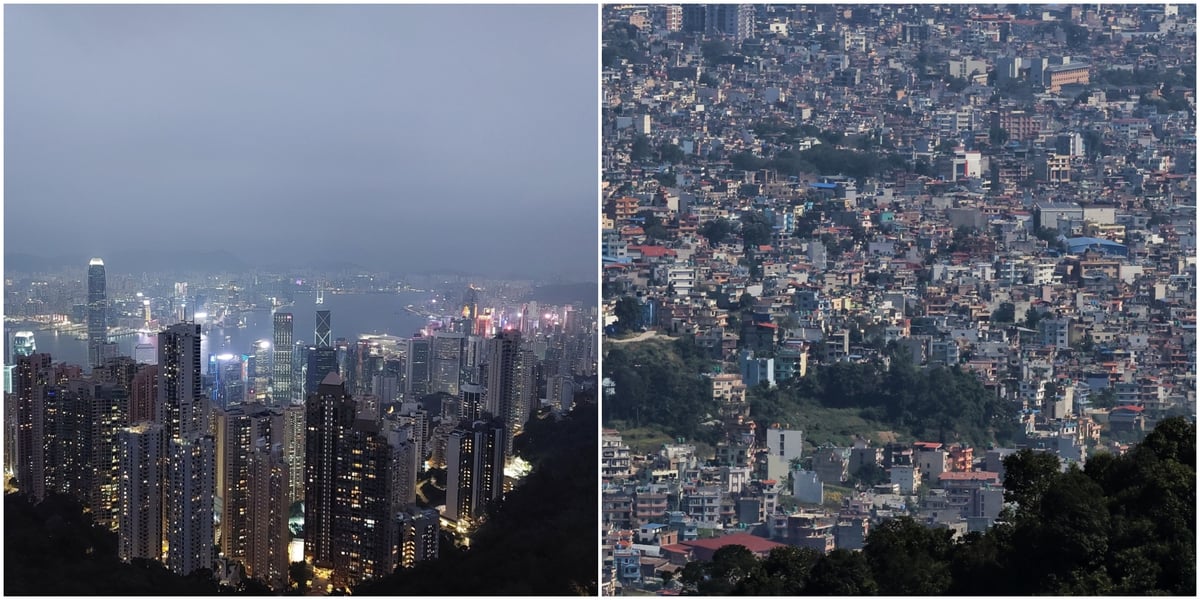
The first trip one of us undertook to Kathmandu was two months ago, for the Nepal Economic Forum.
The forum showed the diversity of thought, richness of culture, and resilience of national character that defined the Nepali people. Some of the interlocutors that this country of 30 million cannot be reduced to its capital region.
A 30,000 strong Nepali diaspora resides and works in Hong Kong, many in the hospitality and service sectors. Their professionalism, congeniality, and linguistic dexterity render them a much-needed component of the city’s workforce.
Such a relationship between our two economies is by not incidental: it is historically rooted in the legacy of the British rule in Hong Kong and the presence of Gurkha soldiers, who served in the territory for five decades, between 1948-1997.
As Nepal looks to engage the world on renewed terms of “developmental autonomy”, in the words of its Foreign Minister Shisir Khanal. Hong Kong is uniquely positioned to serve as a constructive interlocutor and partner for the country.
As an open and advanced economy, Hong Kong has established and adapted to historical trade winds. As Nepal seeks to formalise and harness the full dividends from its cross-border trade with India and China, challenges such as transaction hurdles and under-utilisation of zero-tariff quotas demand more attention to system designs underpinning the flow of goods.
Hong Kong-based lawyers and supply chain experts can provide grounded advice on how Nepali merchants can make use of the Chinese market, especially on specialty goods such as coffee and high-value raw and plant-based medical materials, which serve as core ingredients of traditional Chinese medicines.
The Special Administrative Region is well-suited to provide legal and regulatory counsel to Nepali trading companies looking to grasp and engage China better. It should also facilitate closer communication and liaison between private Chinese capital seeking to invest in overseas destinations especially in the healthcare, recreation, and tourism industries, and projects in Nepal, whilst upholding the crucial quality and standards that ensure genuine buy-in from the local community.
Separately, Nepal’s M2 is over 120% of its GDP, with credit extended to the private sector over 95% of its GDP. These numbers speak to a level of vibrancy and maturity in the country’s financial sector that far exceeds the average at its level of GDP per capita. The rapid growth in banking and digital finance over the past decade provides ample room for partnerships between the Hong Kong Monetary Authority and the Nepal Rastra Bank, especially on technological innovations vis-à-vis micro-finance and developmental loans.
Economics and finance are of course of interest on the macro-level, but the litmus test for the durability of any bilateral relationship must rest with the human, micro-level. Indeed, these two dimensions are mutually complementary.
PEOPLE-TO-PEOPLE
This is where people-to-people exchanges have a pivotal role to play.
Five of the world’s top 100 universities located in Hong Kong, so there exists much room for deeper synergy at both university and high-school levels. An increased number of Hong Kong government scholarships within the Belt and Road Initiative quota, and an active push for private capital to match state funding, would enable bright talent from Nepal to enrol in these institutions.
Through their stay in the city, they can also experience and understand the Greater Bay Area and the rest of China from up close, and comprehend the ways by which China overcame its developmental challenges.
We must also encourage more Hong Kong youth to travel to Nepal, and gain a deeper understanding of its wondrous history, demographic fortitude, and socio-religious pluralism that have long shaped the country’s trajectory and place in the world.
A short walk in Patan – where the two of us first had a conversation – would reveal the harmonious syncretism that embodies the best of the Nepali worldview on religions. In the thousand-year-old temples and myriads of alleyways, Buddhism and Hinduism can and will live on, in ways that are not dissimilar from the celebration of a diverse range of religions in Hong Kong.
As Hong Kong reorients itself towards the Global South and aims to re-engage with the world after a few challenging years, we believe firmly that Hong Kong fills a crucial niche in bridging East and South Asia – bringing together China and the Indian subcontinent.
Sujeev Shakya is Sujeev Shakya is Chair of Nepal Economic Forum and Convenor of the Himalayan Future Forum. Brian Wong is assistant professor in Philosophy at the University of Hong Kong.