
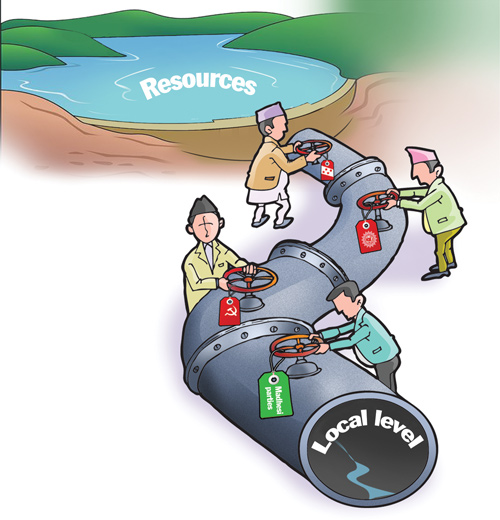
We have promulgated a new constitution, but the peace process is not complete until its main provisions are implemented. And a critical element of it is federalism.
Politicians in Nepal tend to postpone intractable problems and that is what they have done with federalism, citizenship, delineation of constituencies, and other contentious issues in the constitution.
And even within disputes about federalism, the standoff concerns the demarcation of five disputed districts in the plains provinces and restructuring at the local level. Madhesi parties rejected the seven-province model, but supported the new coalition of Nepali Congress (NC) and CPN (Maoist –Centre) on a condition of amendments to the Constitution that addressed their demands.
However, even the new government hasn’t registered the amendment proposal in the Parliament as yet.
Prime Minister and Maoist Chair Pushpa Kamal Dahal has been blocked by the UML from pursuing the amendments because it is against Jhapa, Morang and Sunsari becoming a part of the eastern Tarai province.
The UML is exacting revenge on Dahal for abandoning the coalition it lead. He needs the UML’s help if the amendments are to be registered. After all, he promised internal and external forces that he would push the amendments through. He will probably take the amendment proposal to the Parliament before he departs for New Delhi on 15 September, his first international trip after becoming Prime Minister.
On the other hand, the proposal for 565 local level units under the three-tier government put forward by the Local Level Restructuring Commission (LLRC) is also disputed. The Maoists haven’t expressed their preference either way, but the NC has strongly objected. It wants the number of elected local units increased to 1,300 because it argues that people get their services mainly at the local level.
The UML, which swept the last local elections 20 years ago, says the number of local level units proposed by the LLRC is high and should be lowered. The Madhes-based parties have emphasised more rights to provinces by curbing rights of local level units. The debate is now between whether Nepal should have centralised governance within federal units, or decentralised local governments.