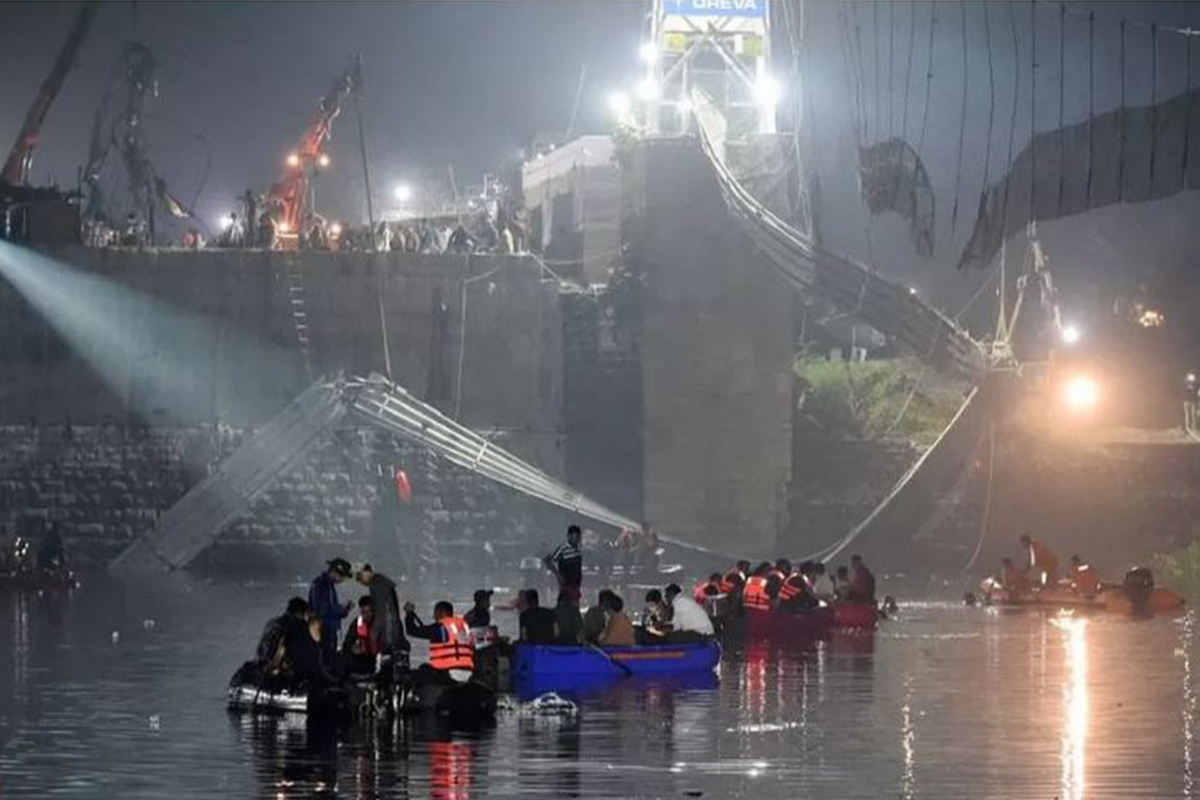
On 30 October, a pedestrian bridge collapsed in the western Indian state of Gujarat, killing 141 people, most of them women, children and the elderly. Built during the British colonial period, the 137-year-old suspension bridge had reopened just five days earlier following repairs.
Overcrowding and hasty repairs were cited as the reasons for the tragedy, and this has prompted an assessment of Nepal’s own 9,767 pedestrian suspension bridges, used by millions of people every day all over the country. Their maintenance is often an afterthought and in many instances, they are in a dilapidated state after damage from floods and landslides.
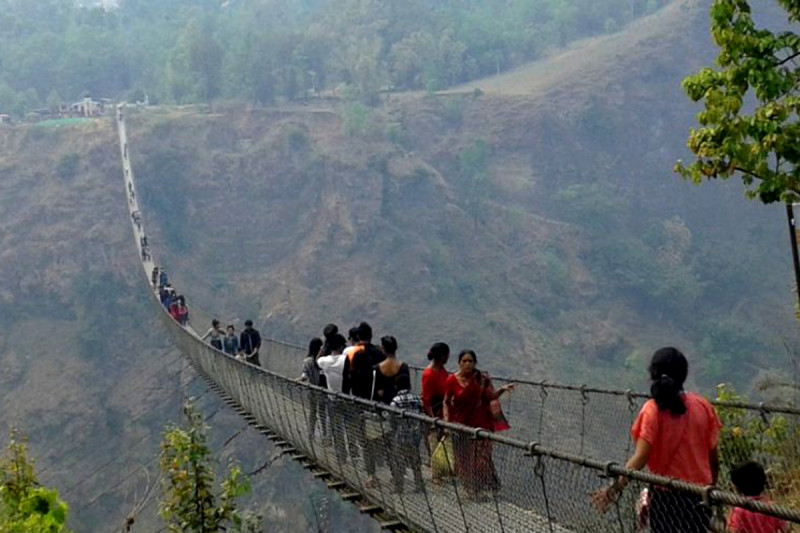
There has also been a spurt of bridge-building over scenic Himalayan gorges connecting far-flung communities that have themselves become tourist attractions and selfie-spots. During festival time, there is also dangerous overcrowding of some of these bridges.
The construction and upkeep of Nepal’s infrastructure have never been a priority with inherent corruption and mismanagement of allocated funds being the norm rather than the exception. In fact, it is often easier for authorities to build newer sub-standard structure instead of maintaining old ones.
Read also: Building bridges
“If a suspension bridge is not regularly maintained, it can collapse,” says construction expert Narendra Raj Joshi. “There has also been no study of broken or non-functioning bridges, so repairs have not been carried out properly.”
“There is no chance of accidents like the Gujarat bridge collapse happening in Nepal,” says Pravesh Regmi, Engineer of the Suspension Bridge Department under the Ministry of Urban Development. “The bridges from the 1960s have a lifespan of 50 years.”
Many bridges in Nepal are now nearing their design lifespan, and pose a reason for concern. Besides age, they lack proper maintenance and study. And these become particularly dangerous during festivals and pilgrimages when hundreds of people cross them at the same time.
Pedestrian bridges are vital in connecting many villages in remote and roadless parts of Nepal. In addition to accessibility, bridges help get farm produce to market, transport the sick, and are important for children to attend school. Often times, they are the only way to do so in rural Nepal. They also allow connection to tourist destinations and religious places.