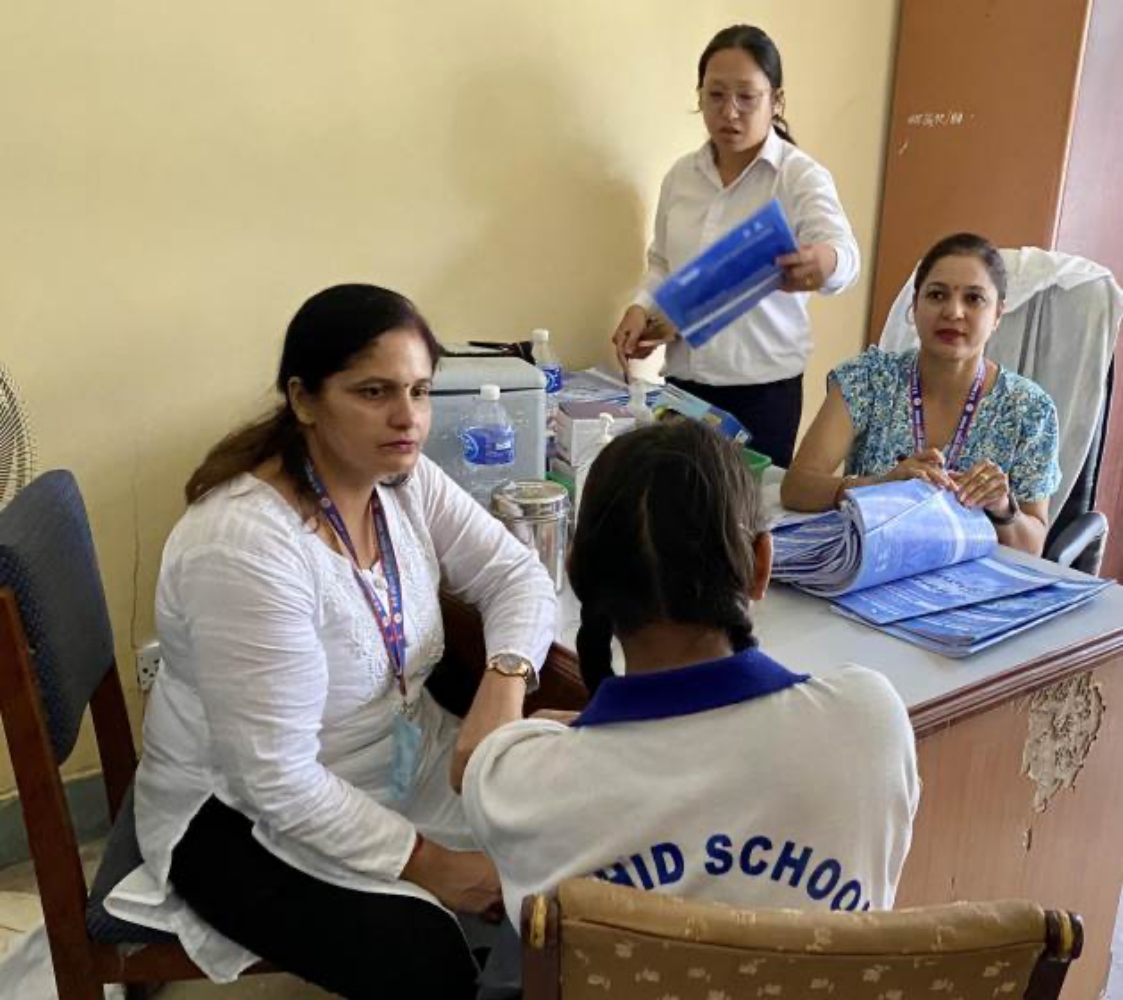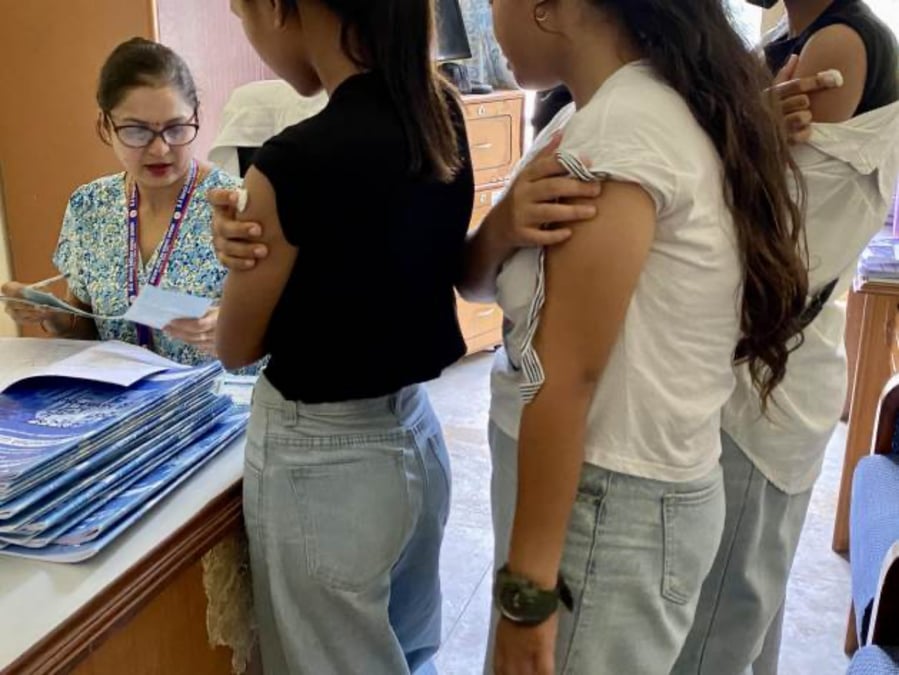
As Dipak Subedi was organising a vaccination programme against the human papillomavirus (HPV) in Chitwan’s Bharatpur he was getting phone calls from neighbouring districts asking if he had extra doses available — people were willing to travel for hours to get their girls vaccinated against HPV, which causes cervical cancer, the deadliest form of cancer for women in Nepal.
Callers had heard about the campaign, which started in 2022, after the city posted the news on its Facebook page, says Subedi, senior public health officer and chief of the Bharatpur public health promotion section. Unfortunately he had no extra doses to meet the demand. “With such demand if the HPV vaccine was to be included in our regular vaccination programme we could get more than 90% coverage,” he adds in an interview in his office in Bharatpur, a city of 370,000 best known for its location near Chitwan National Park.
Most people approached for this article who were connected to the Bharatpur campaign, or to previous small-scale pilot projects in Nepal, noted similar high demand. In recent years the Nepal Government has pledged repeatedly to provide the HPV vaccine for national distribution but has yet to do so.
Earlier this month a national campaign moved a step closer when the child health and immunisation section of the health department submitted a request to the global vaccine alliance GAVI for 1.6 million doses. The response should be known by September; if positive, vaccination could start in 2024.
Cervical cancer is the fourth most common form of cancer among women globally and the leading cause of cancer-related deaths for women in 36 countries in Africa, Asia and Latin America. The World Health Organisation (WHO) reported recently that 604,000 new cases of cervical cancer were reported globally in 2020 and that 342,000 women died from the disease – a staggering 90% of the new cases and deaths occurred in low and middle-income countries.
HPV is the virus that causes most cases of cervical cancer and is responsible for the majority of sexually transmitted infections of the reproductive system. The HPV vaccine has been shown to prevent up to 90% of HPV-related cancers and pre-cancerous injuries. WHO says that eradicating cervical cancer will require vaccinating 90% of all girls worldwide by the age of 15.
The burden of the disease in Asia is high. In 2020, China and India alone accounted for 40% of global cervical deaths (17% and 23% respectively), according to The Lancet journal. In Nepal, there were an estimated 14.2 cases per 100,000 women in 2020, versus the WHO target for 2030 of less than 4.0. The disease kills about 1,500 women in the country each year, reports the HPV Information Centre.
In 2020, researchers predicted that without any intervention, a total of 170,600 women in Nepal would die from cervical cancer by 2070 and 318,855 by 2120. But according to the UN Population Fund, HPV vaccination could prevent nearly 38,737 cervical cancer deaths in Nepal by 2070, and 165,115 by 2120.
About 400-500 new cases are diagnosed at the BP Koirala Cancer Hospital in Bharatpur alone every year, says Asmita Rana, the head of the hospital’s department of cancer prevention control and research.
Rana is managing the vaccination campaign that includes Bharatpur and two other municipalities, distributing 12,500 doses to girls ages 11-13, two doses each. While the first phase was a big success, the second one has faltered, she says. That’s mainly because phase one was implemented at the community level (schools and health facilities) by municipal staff. Phase two was centred around the hospital, meaning that caregivers (school officials and/or parents) had to take time to transport children to and from the facility.
Asked what she has learned from the campaign, Rana says she would do all phases through schools next time to ensure participation. “That would be a more appropriate way to follow up those girls… rather than at the health facilities.”
The second learning is raising awareness ahead of time, adds Rana. “From my experience I can say that if we do an awareness programme ahead of time — tell them something about the vaccine, about HPV, and the effectiveness of the vaccine for preventing cancer, then they will be quite positive and participating.”
Even if people are initially sceptical, when parents learn that the vaccine prevents their daughters from getting cervical cancer in the future and is free of cost, most are convinced, she adds.
The vaccine is available at private health facilities in Nepal but two doses costs around Rs10,000 ($76). The country’s per capita income was about $1,300 in 2022. Neighbouring India started producing its own vaccine, Cervavac, in 2022. Its price is $4.88-$9.76 for two doses. Bhutan, Sri Lanka and the Maldives have also launched national vaccination programmes while Bangladesh has done pilot projects.