
The Guru of Love, and also how life has been since his first short story collection, Arresting God in Kathmandu, catapulted the Nepali author to literary fame around the world last year.
 Can you say something about the process of writing The Guru of Love?
My daughter Shahzadi had just been born, and somehow the overwhelming energy of her birth transferred to the writing process. The novel finished in about ten months. That sounds fast, but I think that this novel was a culmination of two 'practice novels' I had written earlier, which allowed me to understand the form in my own terms. While writing those, I was influenced by preconceptions of how a novel ought to be written-partly garnered from bad "how to write a novel" books-so I was overly concerned with plot. With The Guru, I followed the 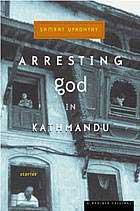 character, like I do in my stories. The novel was written without a plot sketch.
The idea of a tutor having an affair with his tutee came from my being in the teaching profession, where this happens all the time, with dire consequences for both parties. As I'm always interested in putting my characters in trouble, this seemed like a good way to do it. I placed them in the wider canvas of the jana andolan-a fascinating period for me as my formative years were spent in Panchayat's repressive atmosphere. I became interested in the gap where the old was dying and the new was about to be born: the troubles of the protagonist echoed the troubles of the nation in impressionistic, not-so-tangible 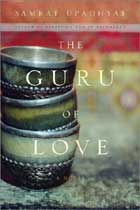 ways. The novel became an exploration of the dance between the private and the political, where they meet and where they drift apart.
Writing the novel was more taxing than writing my earlier story collection, Arresting God in Kathmandu. But the novel didn't go through the same extensive revision process-my wife Babita, my agent, and my editor thought it was complete as it was. It merely went through some copy editing before it was published.
In your stories, your characters often turn to illicit love and sex amid emotional turmoil. Your novel's protagonist has an extramarital affair. Why are you drawn towards such transgressions?
As they say, only trouble is interesting in fiction. Trouble can galvanize an awareness of parts of ourselves we hadn't considered before. Trouble makes us realize the value of pain and the value of happiness, how transitory both are, and how life is a constant negotiation between the two. Love, in all its myriad forms, has always been of interest to me. Illicit love in particular fascinates me because it violates the traditional boundaries to which we become attached and take for granted. The indiscretion of my characters, especially of the novel's main character, leads to a maddening mixture of pain and happiness, where the two merge and are hard to separate, and so the transgression becomes an almost-spiritual experience.
This interplay between the erotic and the spiritual seems to me is a fundamental part of our universal psyche, but is not often addressed or attended to, especially in our culture, where the erotic is publicly shunned in favor of over-religiosity.
The protagonist's wife, who asks her husband's lover to move in as a second wife, sounds very strong.
The protagonist Ramchandra's wife Goma's evolution as the novel's strongest character was a very pleasurable aspect of writing the book. I have been working with the concept of "reversal," where I make the character or situation move in exactly the opposite direction than I had initially planned. If I think a character is going to act a certain way, I ask myself, "What possibilities open up if I make the character act differently than how I expect him or her to act?" This thwarts predictability. Initially Goma seeks refuge in her maiti, but later, instead of resigning herself to her husband's infidelity, she gains control by "demanding" Malati into the same bedroom with her husband. Goma shows the complexity with which women must negotiate their existence in our culture.  You have fans around the world. You've earned the Whiting Award, and many Nepalis feel genuinely proud of your achievement. Are you enjoying your celebrity status?
Yes, I am. Although the basic elements of my life haven't changed-I still struggle with my writing, prepare for my classes, wash the dishes, paint with my daughter-I have become a recognizable name for many lovers of literature. Sometimes I see my name in print as if it were someone else. After Arresting God came out, I was flipping through an interview of Amitav Ghosh. In answer to a question about which South Asian authors he admired, Ghosh mentioned my name! Only my name! So it's been wonderful in many ways.