
 MIN RATNA BAJRACHARYA |
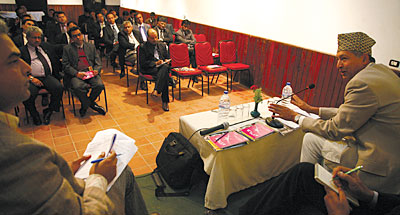
If there is one thing everyone agrees on, it is that the Nepali economy has major structural problems that, if not fixed urgently, will lead to a larger crisis. At a Himalmedia interaction on Monday with Nepal Rastra Bank Governor Yubaraj Khatiwada, top bankers blamed the liquidity shortage in the market on political uncertainty undermining confidence in the formal banking sector.
"It is not yet a crisis, but the liquidity crunch has gone on for too long," warned Himalayan Bank's Ashok Rana, also the newly elected chairman of the Nepal Bankers' Association. "There are worrying signs that market sentiment is eroding because of inconsistent policies and political uncertainty."
Government moves to tighten regulations are seen to be affecting domestic deposits as well as remittances, with people preferring to stash cash at home. The delayed budget froze state expenditure, contributing to the cash shortage.
Ironically, one of the main causes of the cash crunch appears to be that Rastra Bank and the Ministry of Finance are trying to implement rules that conform to Nepal's international obligations under the Basel 2 agreement, rules designed to curb anti-money laundering and terrorism as well as corruption.
Explained Khatiwada: "A lot of this has to do with Nepal trying to be in compliance with international financial norms. We are in a transition to transparency. This is pushing cash away from core banking."
Because of the indiscriminate licensing of new banks in the past, Khatiwada is under pressure from the IMF and others to rein in the banking sector. Analysts say it has been tempting for the new governor to take some populist and hasty decisions which haven't exactly boosted the confidence of depositors and investors.
"The problem creators are not being singled out," complained one banker. "Rastra Bank is punishing everyone. The central bank's role is to be a regulator, not to micro-manage banks with directives on interest rate spreads or CEO salary caps."
Khatiwada appears to be aware of the criticism and adopted a conciliatory tone during Monday's discussions, clearly trying to calm a growing sense of foreboding among senior bankers.
He said he has been trying to send a "psychological message" that the banking sector must be protected from the real estate bubble. However, he suggested that housing was going through self-correction. He also declared that state spending was picking up and that new rules to allow government to open accounts in private banks were being mulled. The economy, according to the governor, is growing at a "reasonable" rate of five per cent and the balance of payments has been brought down from Rs 20 billion last year to Rs 4 billion this year.