
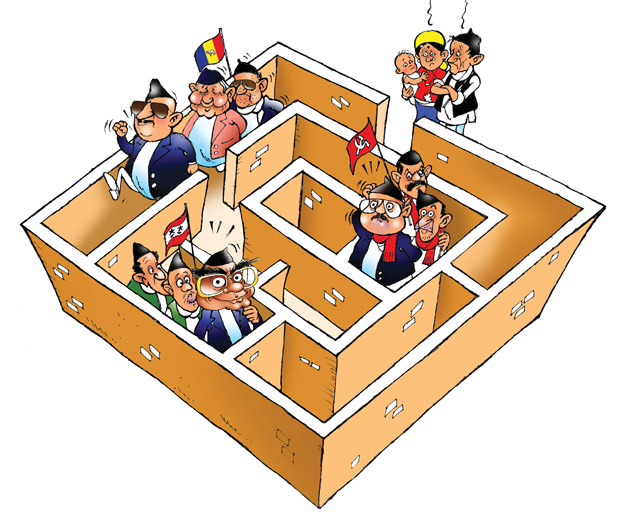
Nepal’s electoral politics was thrown off-kilter by the surprise alliance between the Maoist-Centre and the UML. The aftershocks are still being felt with only three weeks to go for voting, and as candidates filed their nominations for the second phase on Thursday.
Provincial and parliamentary elections on 26 November and 7 December will be a milestone in more ways than one: it is the first election under the new federal constitution and marks the end of the peace process that began after the ceasefire in 2006. It should usher in an era of stability, reform and inclusiveness, but the fact that most of the same personalities from 20 years ago are in the fray, including politicians who have been ministers and prime ministers multiple times, does not arouse much hope. In many areas, tainted candidates with questionable, and even criminal, backgrounds have been nominated.
The NC was caught off-guard by the UML-Maoist alliance, and its main intention now is to stop the UML from gaining a majority in the new parliament. But its strategy of allying with the RPP and the RJPN frayed as senior party members fought bruising battles for candidacies. There was a tussle between whether the NC’s Krishna Sitaula or the RPP’s Rajendra Lingden stand from Jhapa. The NC’s Bimalendra Nidhi also fought it out with Rajendra Mahato from the same Province 2 constituency. The NC’s strategy of allying with the RPP (even while the Maoists are still in government while partnering with the opposition) has led to the biggest government in Nepal’s history with 64 ministers.