
|
|
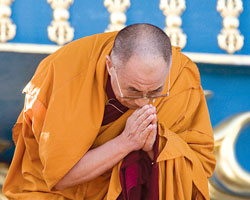
As the world reacts to China's crackdown in Tibet, one country is conspicuous by both its centrality to the drama and its reticence over it. India, the land of asylum for the Dalai Lama and the angry young hotheads of the Tibetan Youth Congress, finds itself on the horns of a dilemma.
On one hand, India is a democracy with a long tradition of allowing peaceful protest, including against foreign countries when their leaders come visiting. It provided refuge to the Dalai Lama when he fled Chinese occupation of Tibet in 1959, granted asylum (and eventually Indian citizenship) to more than 110,000 Tibetan refugees, and permitted them to create a government-in-exile (albeit one that India does not recognise) in the picturesque Himalayan hill town of Dharamsala.
On the other hand, India has been cultivating better relations with China, which humiliated India in a brief border war in 1962. Though their bitter border dispute remains unresolved, and China has been a vital ally and military supplier to India's enemies in Pakistan, bilateral relations have grown warmer in recent years.
China has now overtaken the US as India's largest single trading partner. Tourism is thriving. Indian information technology firms have opened offices in Shanghai, and Infosys's headquarters in Bangalore recruited nine Chinese this year. India has no desire to jeopardise any of this.
India's government has attempted to draw a distinction between its humanitarian obligations as an asylum country and its political responsibilities as a friend of China. The Dalai Lama and his followers are given a respected place but told not to conduct "political activities" on Indian soil.
When young Tibetan radicals staged a march to Lhasa from Indian soil, the Indian police stopped them well before they got to the Tibetan border, detaining 100. When Tibetan demonstrators outside the Chinese Embassy in New Delhi attacked the premises, the Indian government stepped up its protection for the Chinese diplomats.
The Dalai Lama's curious position has complicated India's diplomatic dance with China. He is simultaneously the most visible spiritual leader of a worldwide community of believers, a role that India honours, and a political leader, a role that India permits but rejects in its own dealings with him.