
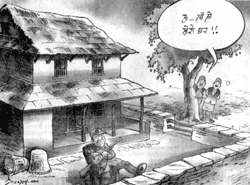
 The peace process has been on for four months now. The 12-point agreement between the seven-party alliance and the Maoists reassured the people that the movement would successfully bring down the authoritarian rule of the king and reinstate full democracy. It was the people's struggle that eventually brought King Gyanendra to his knees on 24 April.
The government formed through the 'People's Movement' and the restored parliament now faces the challenge and responsibility of bringing lasting peace. The parliament's declaration on 18 May extensively cut down the king's power, and transferred it instead to the prime minister and the parliamentary speaker.
Then the political parties and the Maoists declared ceasefires, formed committees, signed a code of conduct, the 8-point agreement, and formed the interim constitution draft committee.
Now for any peace process to work, there has to be trust between the people and the leadership. And this trust can only be built if there is coordination between the most rural areas, various government departments, and if problems of the conflict victims are addressed. Ignoring the wounds of the conflict and trying to establish peace through the upper levels of power alone will be like building castles in the sand.