
|
|
| LEFT ALONE: Sunamati, whose husband is missing since the war. |
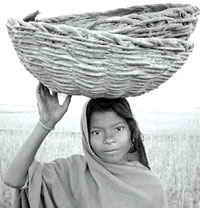
Deepa Pandey lives in Surkhet, Pushpa Chaudhary is from Kailali, Sita Thapa is in Rautahat and Maiya Mijar lives in Dhading. What they have in common is that they are all women in their mid-20s who suffered during the war and are now running small businesses to take care of their families.
It was mostly non-combatants who were affected by the conflict, and above all women. Tens of thousands of families were displaced and many ended up being women-headed because they lost their husbands. Many families also now have disabled breadwinners, and have the added medical burden of taking care of them.
Deepa was caught in a crossfire in 2003 and a bullet hit her back, turning her into a paraplegic. Her husband took a second wife two years later, and she now has to take care of her children and extended family. Pushpa's husband was killed in 2002, and she lives with six other family members including two children. She is a landless kamaiya but has some unregistered land. Sita's husband disappeared after being arrested five years ago, she now depends on her parents for support. Maiya's son is missing and she has to meet the medical expenses of her husband who was injured in the neck during an attack on their village in 2003.
All four women are now beneficiaries of an initiative by the International Committee of the Red Cross (ICRC) and the Nepal Red Cross Society to help women whose livelihoods have been severely affected by the war with income-generating activities. The effort gives the women back some lost dignity by restoring household incomes so that the entire family benefits.