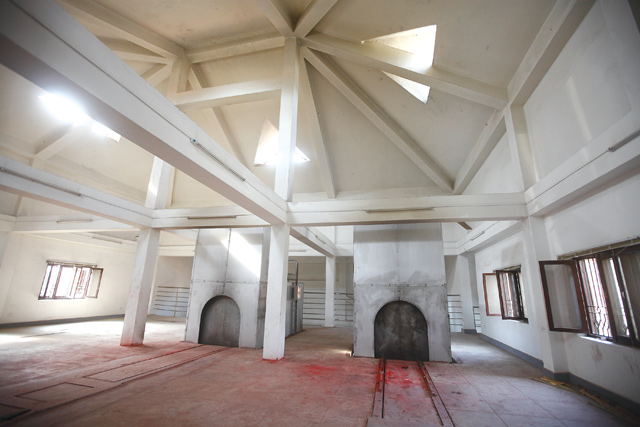
Since going into operation four months ago, Nepal’s first and much-delayed electric crematorium at Pasupatinath has already held funerals for 849 people. This is an encouraging figure, given dire predictions that culturally-conservative Nepalis would not like to abandon the rituals of the traditional wood pyre.
However, given the lower cost of electric cremations, the number should have been higher. By not using the electric crematorium, for instance, relatives of Prime Minister Sushil Koirala squandered an opportunity to set an example for others when he died in February.
“It is difficult to convince those who are very traditional in their beliefs to accept a new practice like electric cremation,” says Govinda Tandon of the Pashupati Area Development Trust (PADT). “But if the people around them accept the practice and it becomes a norm, mindsets will gradually change.”
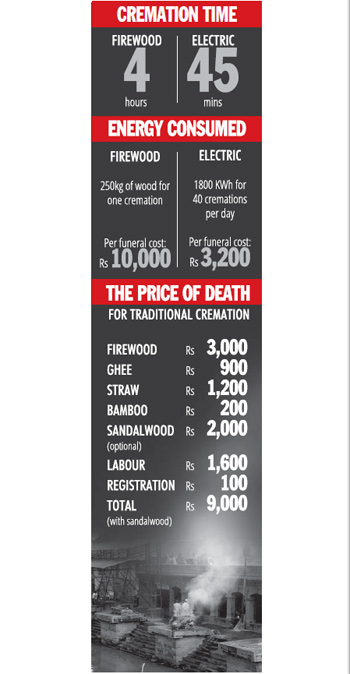
While a traditional cremation can cost Rs 10,000-50,000, an electric cremation costs only Rs 3,200. In addition to cost savings, an electric funeral is less time-consuming and takes only 45 minutes compared to four hours for a traditional cremation. The electric furnace is also environment-friendly, since 250 kg of logs are needed for each pyre and half-burnt remains of the dead are often dumped into the Bagmati.
Yadab Pradhan, a mourner at the crematorium this week said: “When more people come forward to try this, society will accept electronic cremation.” Keeping cultural sensitivities in mind, the trust built the crematorium south of Pashupati and along the banks of the holy Bagmati River as it is believed that anyone who dies or is cremated at Pasupati bypasses purgatory and goes directly to heaven.