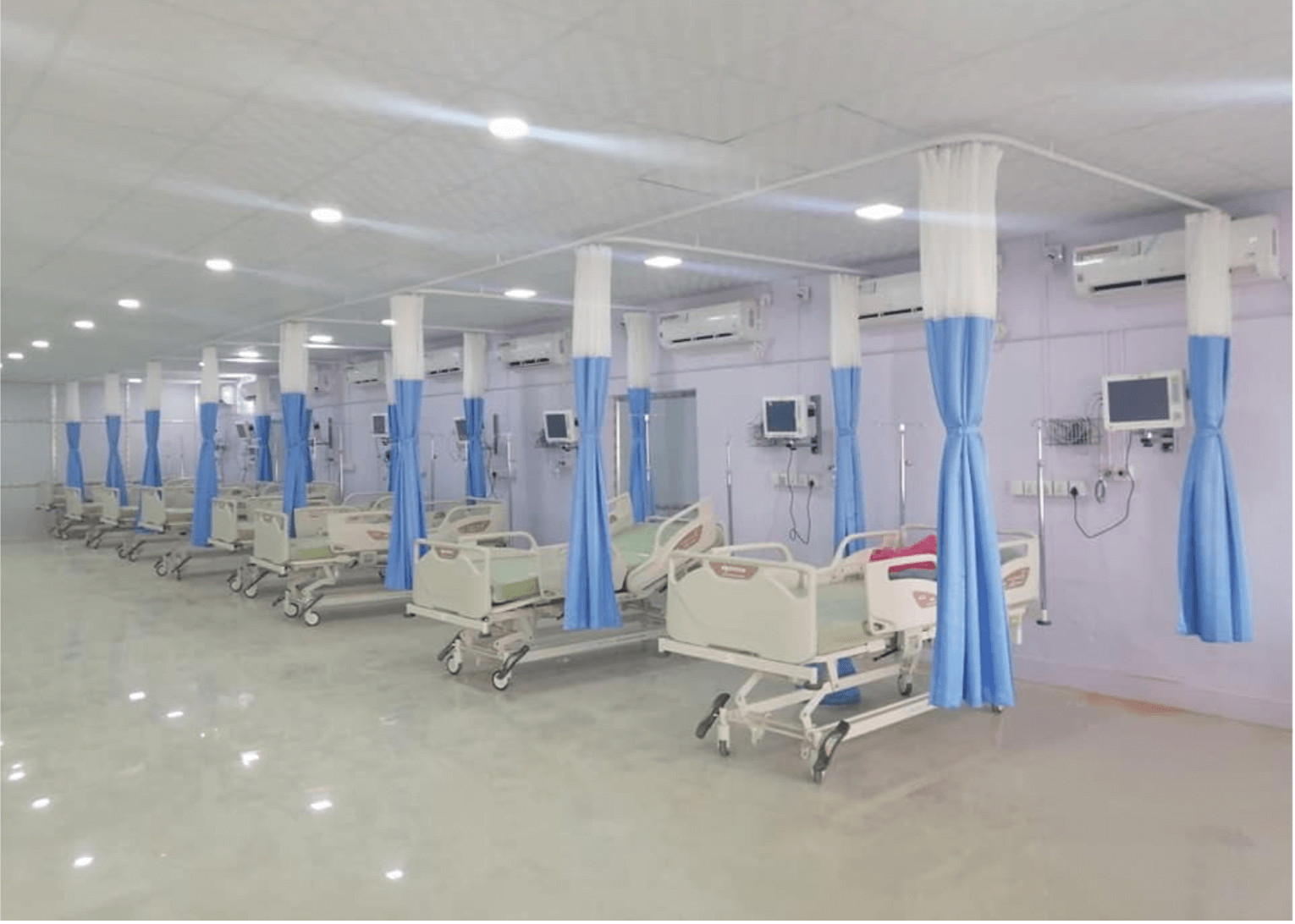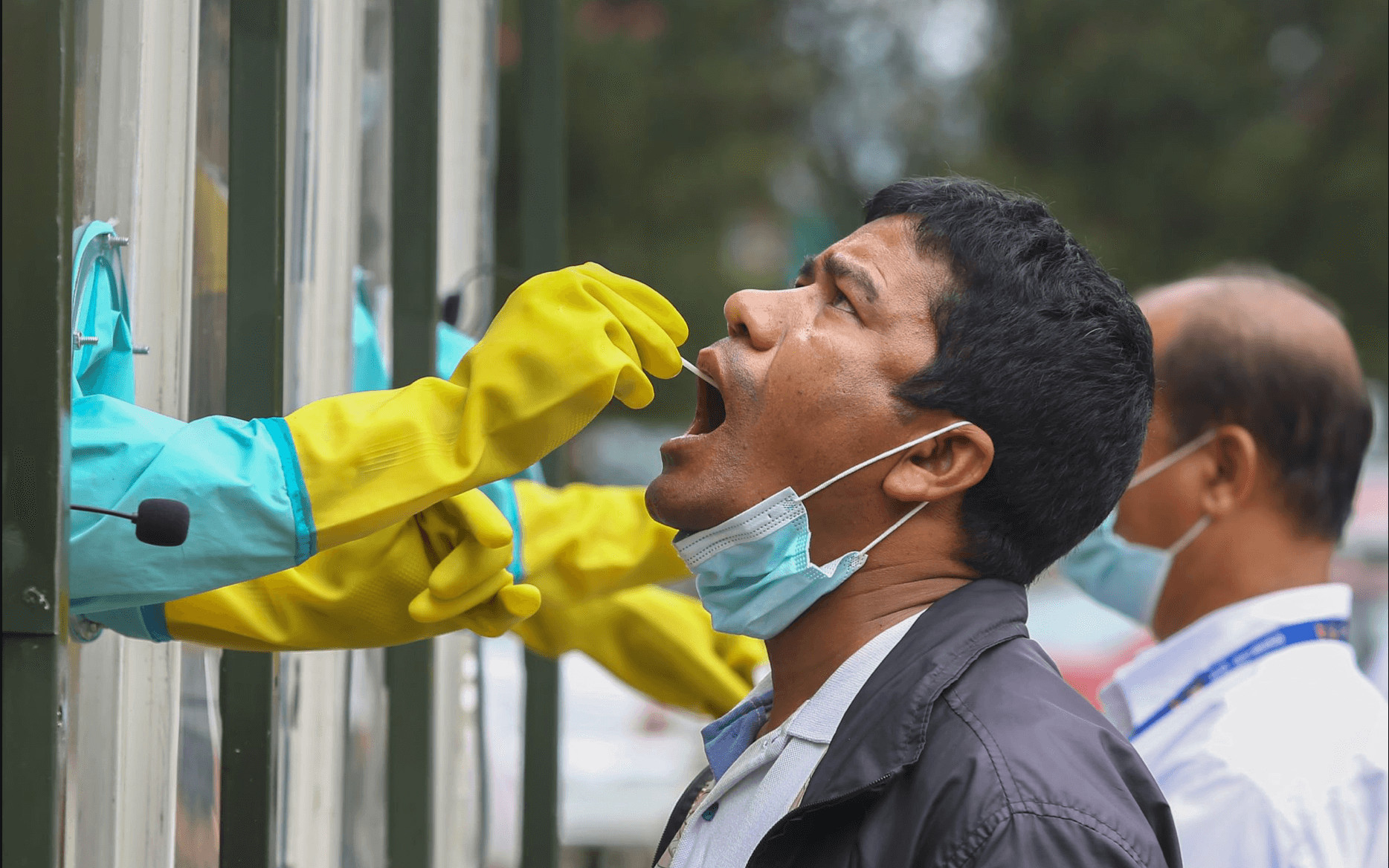
As government and private hospitals in Kathmandu fill up with Covid-19 patients, some of them are offering rented hotel rooms or home care to meet the surge of the seriously sick.
Even then, these extensions of the hospitals can only cater to patients with milder symptoms, and there is no room in the ICUs if their condition gets worse.
On Monday, the Ministry of Health announced that all remaining government hospitals in Kathmandu Valley would be converted to Covid-19 centres, and all ICU beds and ventilators would be consolidated.
It has also officially now allowed hospitals to start moving patients with mild symptoms to hotels in Kathmandu, but their rooms would not be allowed to have non-coronavirus guests. The Ministry also announced that hospitals would be allowed to perform only emergency surgeries for now,
After it got filled up with SARS-CoV-2 patients, Star Hospital in Lalitpur came up with the ‘Housepital’ service under which it sends people with mild symptoms to self-isolate at home, provide regular tele-consultation three times a day vitals monitoring, blood tests and dietary and psychiatric consultations.
The basic care package costs Rs12,500, while a more advanced treatment that includes essential medical kits and hands-on care is Rs30,000 for 14 days of isolation.
“There has been a steady increase in people coming for our Housepital service, we now get about three patients a day,” says Pratikchya Dhakal of Star Hospital, adding that in case of complication, individuals are admitted to the hospital if a bed is available.
This puts expensive ICU treatment and even Housepitals beyond the spending capacity of most Nepalis. But proper care can be provided also at homes for those self-isolating (still the majority of Covid-19 cases in Kathmandu Valley).
Ideally, asymptomatic or mildly symptomatic people self-isolating at homes should have a separate room and a bathroom. The patient should confine themselves in their room, wash their own utensils, wear mask while going to the toilet and sanitise it after use and wipe door and other handles.
Individuals need to keep track of their temperature and symptoms, measure oxygen saturation level if possible, take paracetamol for body ache and fever and make sure to eat nutritious food. One must be aware of danger signs: oxygen level below 93, chest pain, difficulty in breathing and blue tint to lips and limbs.
“None of what is happening now is unexpected, and we did have quite a while to prepare but it was not well planned. Now it is extremely difficult for all of us,” says Rakshya Pande of Pulmonary and Critical Care at HAMS hospital in Kathmandu. “None-the-less, if asymptomatic and mild symptomatic people follow safe home isolation, it will help break the chain of transmission.”
Some asymptomatic people who have tested positive but live in crowded joint family homes have now started moving to hotels for self-isolation. The Hotel Association Nepal has designated 80 of its properties in Kathmandu as quarantine hotels at Rs5,000 per night, and at Rs7,000 if two people share a room. Occupants get meals four times a day, with no tax or service charge.
Some hospitals that had filled up to capacity had already also started renting rooms in nearby hotels for their mildly symptomatic patients. Others are offering home isolation with consultation by visiting nurses and doctors.
For all intents and purposes, Kathmandu has now reached a saturation point for Covid-19 patients, and with Dasain and winter approaching, the dangers will multiply. Even the government seems to now have thrown up its hands, and left it up to citizens to take care of themselves.
“We are now in a situation where symptomatic patients are being sent home, and rationing hospital beds, oxygen and ventilators, that is like being caught between the devil and the deep blue sea,” says Buddha Basnyat, a physician at the Patan Academy of Health Sciences.