
 MIRKO MANCINELLI |
Poverty is evident wherever one goes in Nepal, and the capital is no exception. The street kids of Kathmandu are perhaps the most obvious signs of this malaise: Child Workers in Nepal (CWIN) estimates there are around 5,000 street children working and living on the streets of Nepal.
This number continues to grow, with roughly 300 to 500 children leaving home every year for a variety of reasons. Some do so because of abusive, alcoholic parents, maltreatment at home, peer influence, and the temptation to earn more money. But life on the streets is hard, especially for younger children, and as a consequence they often end up taking drugs, abusing alcohol, and even suffering sexual abuse at the hands of locals and foreign tourists.
Peer pressure is one reason for drug taking among street children. A 2002 report by CWIN detailed the devastation: "The consequences of alcohol and drug use on street children's lives range from acute and chronic health and emotional problems to disruption in interpersonal relationships, school failure, social marginalisation and criminal behaviour."
Drugs, in particular, are often taken by street children to help them forget about their problems and overcome hunger. The most commonly used are cannabis, heroin, opium, glue, boot polish, and petrol. The generosity of tourists may only perpetuate the vicious cycle of abuse.
The situation of street children in Kathmandu may seem almost beyond repair at first glance. But there are grups in the capital helping get children off the streets.
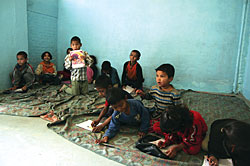
HELP/Nepal, for instance, has established a home for street children near Pashupati. Hamro Ghar? provides a warm, safe and welcoming environment where street children can sleep, shower, eat, study, receive medical care, and play with other children their own age.