
|
|
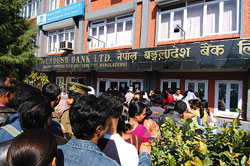
The circumstances surrounding the recent run on Nepal Bangladesh Bank speak volumes about the legal and bureaucratic hurdles in regulating the financial sector. The basic mechanisms of checks-and-balances are weak and the scope for corruption, immense.
Five years ago, the Nepal National Act gave Nepal Rastra Bank the mandate to develop the financial sector and protect the interests of individual depositors in banks and financial institutions. Rastra Bank's governor was well within his rights to decide to take over management of Nepal Bangladesh Bank when it became evident that the NBB group's mismanagement was risking the savings of ordinary depositors.
The run on the bank happened not because of this assessment, but because the takeover plan was leaked in advance, and a flurry of meetings between NBB officials and the Patan Appellate Court judge resulted in him ordering the central bank to stop any proposed action. Ordinary depositors heard about the court's decision and, now really fearing for their investments, started queuing up from 5AM the next day to withdraw their savings. In less than an hour, over a billion rupees was withdrawn.
The situation might be stable now, but there has to be an investigation into the interim court order by the Law Council if the safeguarding roles of the NRB and the National Insurance Committee are to be strengthened.
This latest incident raises questions about the social and moral responsibilities of banking entrepreneurs and legal institutions. How did the bank's managing director come up with over
Rs 2 billion when it was supposed to be in a serious financial crisis? How much further does the authority of the central bank extend past asking for the resignation of key figures and taking over the management of a bank in trouble?
For example, when the Rastra Bank sought to penalise the chairman of Kumari Bank for expenses of nearly Rs 30 million not backed by receipts, the Appellate and Supreme Courts ordered it to not take any action. The Supreme Court also ordered NRB to back off when it was preparing to act against Nepal Development Bank and its board of directors.