
With Dasain right around the corner, we are already hearing cries of “Chet!” from rooftops as swooping kite fights engage in full-scale war over Kathmandu’s skies.
Until recently, interest in kite flying among youth was declining as they spent more time on screens. It took the Covid-19 lockdown with social distancing for kites to soar again. This year, kites have taken to the skies even earlier, taking advantage of fresh afternoon breezes.
“Parents may not yet imagine that one day their children may ask, ‘What is a kite?’” says Nirmal Man Tuladhar, an academic and a kite aficionado.
Tuladhar lists four social beliefs that uphold Nepal’s kite-flying culture: kite-flying sends a message to Indra, the god of rain, requesting him to turn the monsoon off as the rice fields have enough water. Kites bring prosperity to the family, it is a symbolic way of reaching and honouring dead ancestors, and it guides recently released souls to heaven.
“I don’t think kite flying as a culture is disappearing in Nepal. People will always return to it,” says Priya Joshi, who began hosting annual kite-fighting get-togethers exclusively for women.
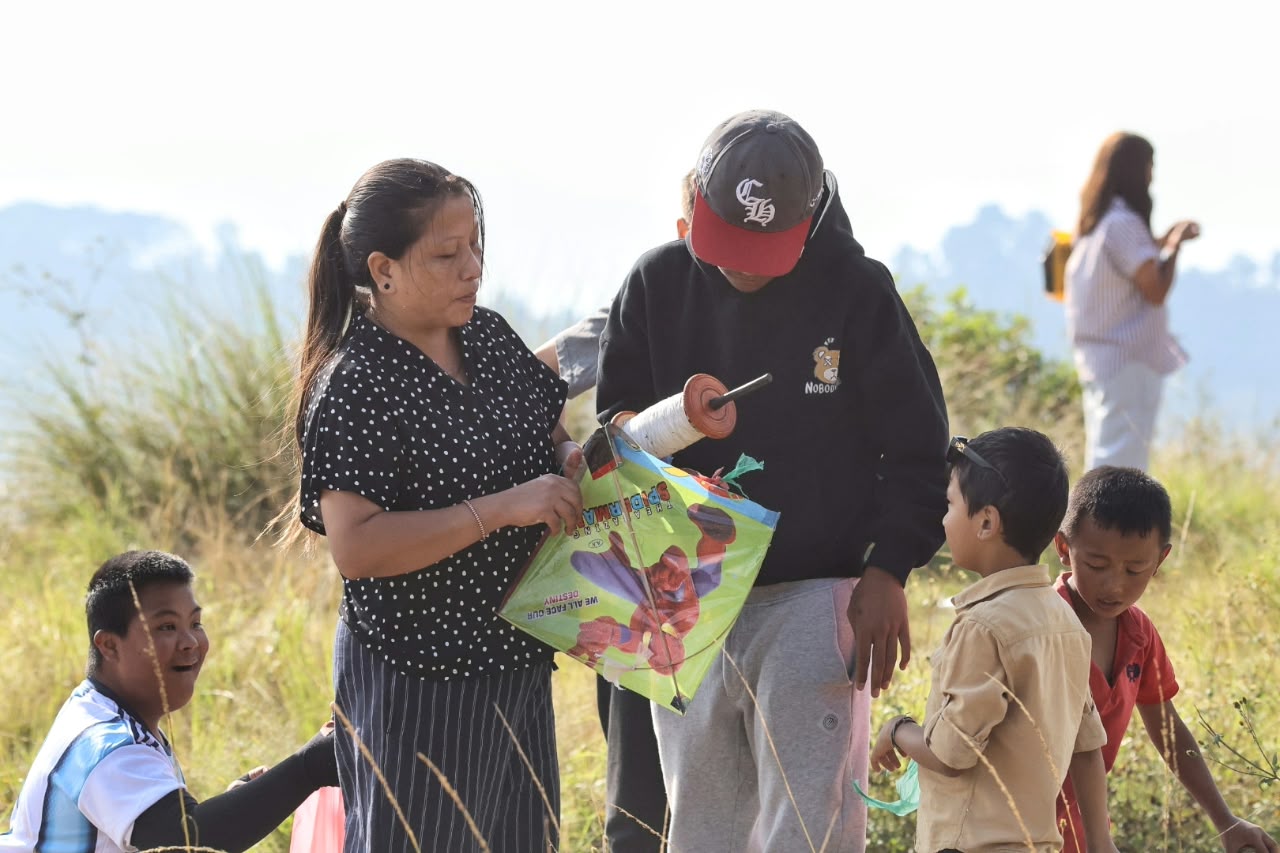
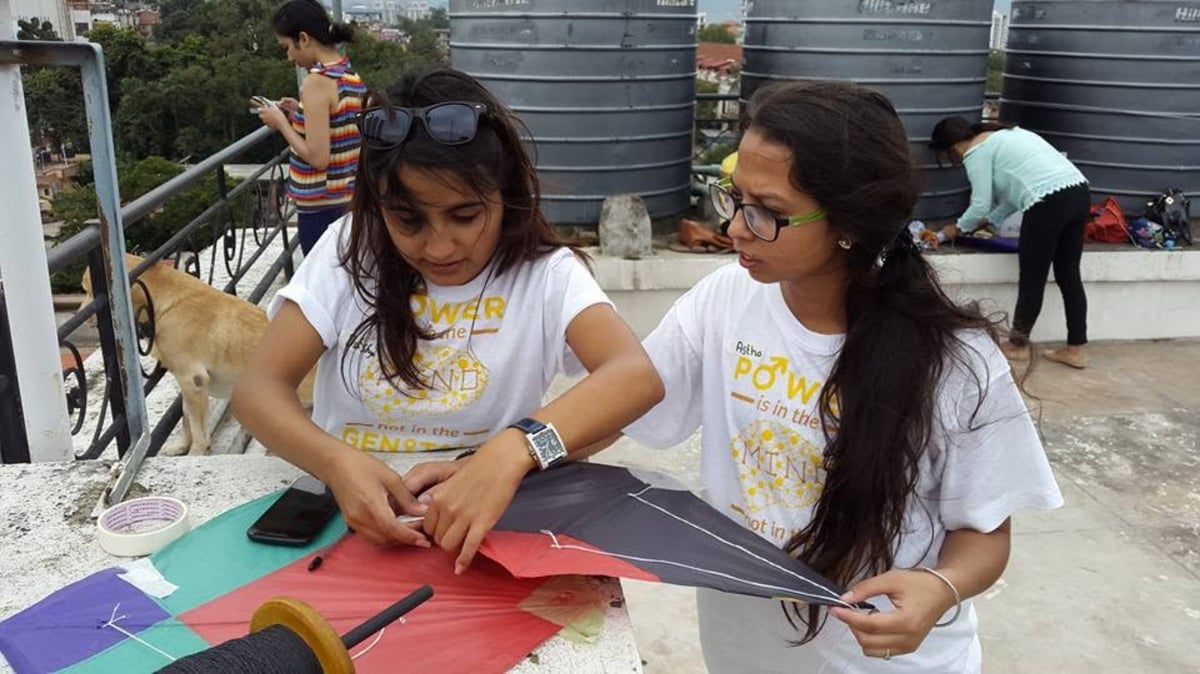
Maker Keti’s All Girls Changa Party has been happening annually for ten years and is taking place this year too on 17 October.
“Social media has really helped bring people who share the same love for kite-fighting together. It is very important for the older generation to pass along the culture to younger ones,” she adds.
Joshi notes that the number of women who fly kites is still low since young girls aren’t encouraged to take it up as boys are. Many girls simply watch their brothers and fathers enjoy kite flying even if they want to be a part of it.
“I love the feeling of the wind pushing against the kite as it sails. It’s a different kind of feeling of freedom, and I wanted more women to share the same joy I experience,” says Joshi, whose love for kites came from her father who spent Dasain on the roof taking on neighbourhood kites to fight.
Usual kite-fighting events are not usually a friendly space for newbies, especially women. “I wanted to create a space where no one is belittling another for their lack of experience, and it is just pure fun,” says Joshi, who uses kite-fighting as a tool to subtly empower women.
“Many refuse at first, out of fear of public embarrassment. But when they build up their confidence and try it, they realise it’s not that difficult. Ultimately, as they fly their kites, they have the time of their lives and seeing that is the best feeling.”
Along with women, young boys and girls aged 7 or less are also invited to the All Girls Changa Party.
KITECNIC
Kite-flying is an art. A kite stays aloft because wind pushes against its angled surface to create an upward force called lift, which overcomes gravity. Acting parallel to the wind is drag, a resistant force on the kite. When the four forces of lift, drag, gravity, and tension (from the string) cancel each other out, they are in equilibrium, and the kite sails.
While Western kite-fliers are content with watching their kites serenely glide through the sky, the Nepali style is especially aggressive. Nepalis don’t just fly kites, they make the kites kill enemy kites, and have lots of fun doing it.
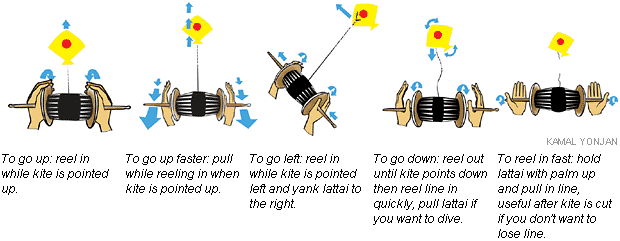
It all starts on the home’s rooftop, waiting for the perfect breeze. The ‘lattai’ unspools quickly as the kite is released. Pulling makes the kite soar vertically, letting out the string gives it horizontal distance. When the kite points in a desired direction, pulling the lattai makes it move that way.
The lines of a fighter kite have to be specially armoured with majha, a sharp, abrasive substance made with ground glass applied with starch, making the string act like a saw to cut clean through the lines of other kites. When a kite line is cut, the victors triumphantly shout “Chet!” while the vanquished have to reel in what is left of their line. The ultimate goal is to be the last kite flying in the sky.
Flying kites has always been a socially and culturally significant part of Nepali culture during Dasain, and it is important that this intangible heritage is preserved.
Says Joshi: “I hope that more children and women get excited about kite-flying. You don’t have to be the best. Giving yourself some grace, learning, and having fun is all that matters.”
Kite glossary
Majha: line armour
Mandali: stone on string used to prey on low-fliers
Kakaa: string at point where it is tied to kite
Phuin: show-off kite aerobatics
Tthini: launching kite by co-pilot
Lappa: stall
Hi-chait: cut kite
Gwankh: paperweight to give kite lateral balance
Ghumaure: kite that tumbles when reeled out
Tiktike: sluggish side-by-side movement of kite
Chakchake: kite with attention deficit disorder
Tauke: kite with pattern on top quadrant
Babache: kite with bottom half of a different colour
Dariwal: kite with symmetrical pattern on bottom left and right
Dharke: kite with stripes
Puchhare: kite with tail
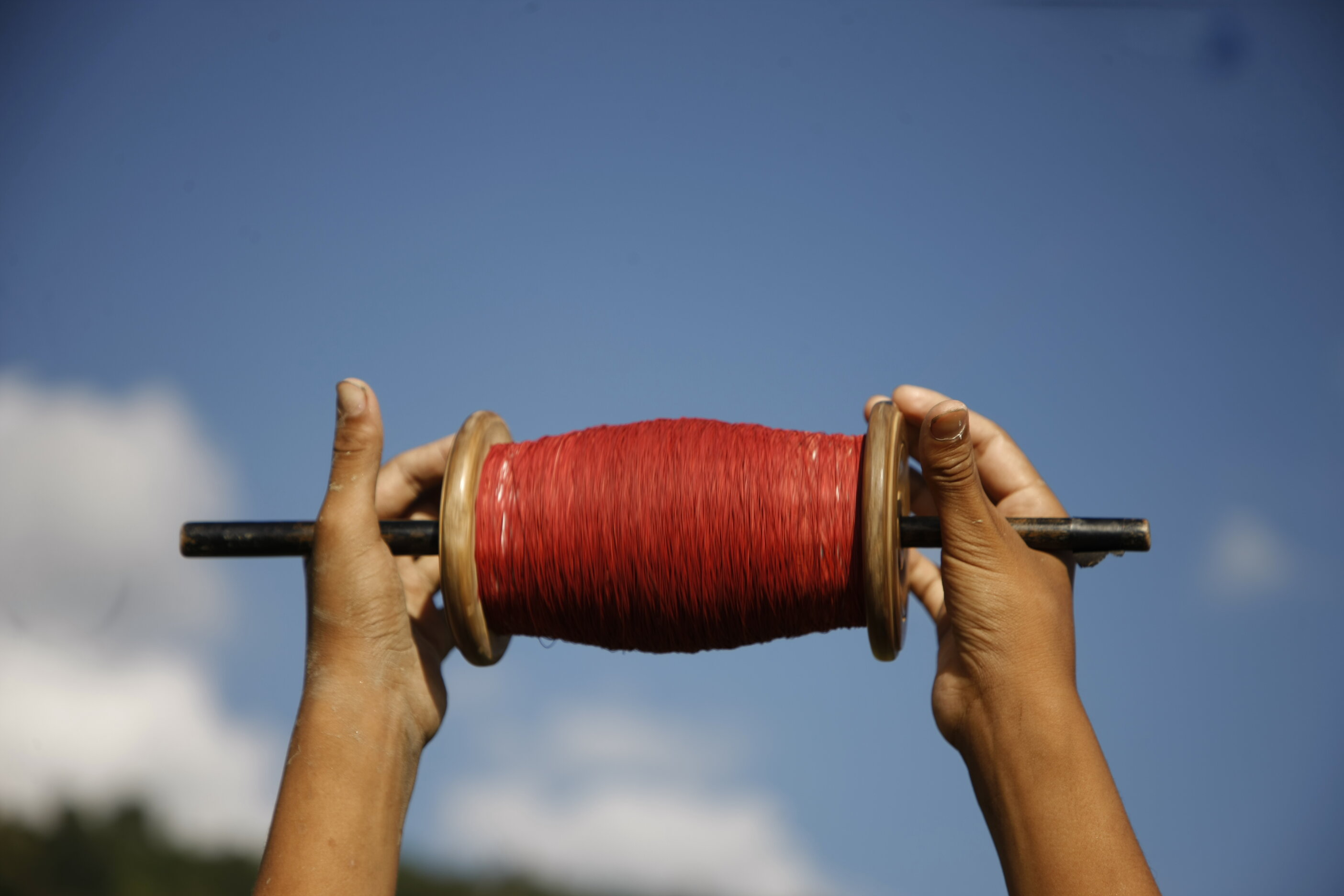
Lattai: thread reel