 SRI LANKA: Tamil Tiger guerrilla trains other women at a drill in Jaffna in 2005. GEMUNU AMARASINGHE
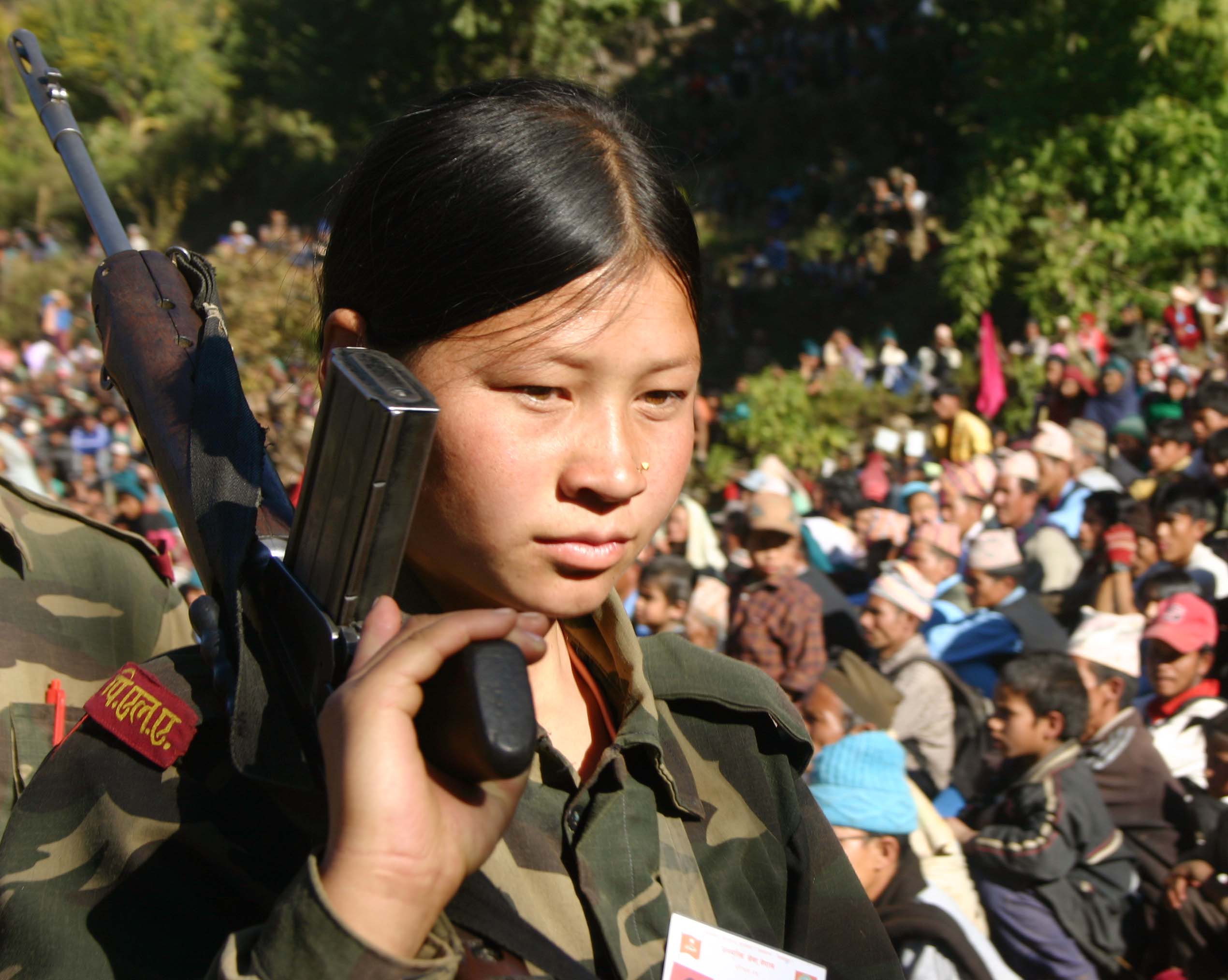 NEPAL: A Maoist woman guerrilla at a mass meeting in Bhabang, Rukum in 2004. KUMAR SHRESTHA
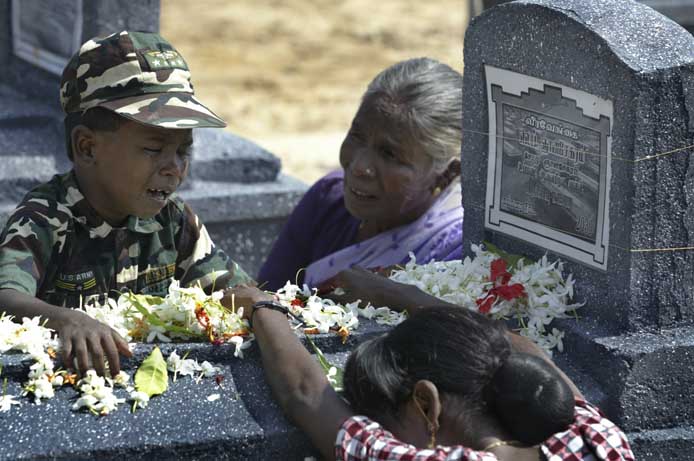
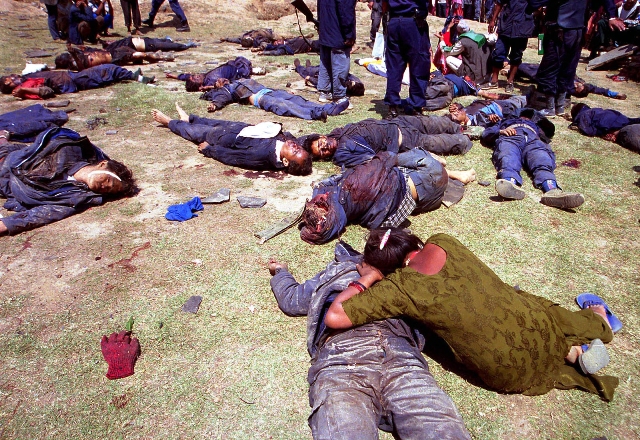
Few are unaffected when they visit the exhibition of photographs of the Sri Lanka war by Gemunu Amarasinghe. There are pictures of a young boy in a make-believe US Army combat fatigue with this mother at his father’s grave, clouds of flies at a morgue where the bodies of civilians lie scattered, a group of women break down in front of a headless body, a ditch full of the corpses of massacred villagers many of them with their hands tied behind their backs.
Amarasinghe took pictures of the Sri Lanka conflict between 1995-2006, and his lens is sharply focussed on the civilian victims of the war that took 120,000 lives over 25 years. Amarasinghe now works for AP in Nepal and has taken strikingly dramatic pictures like the haunting one of the Gadimai massacre of water buffaloes that went around the world. His work now takes him frequently across South Asia and into Afghanistan.
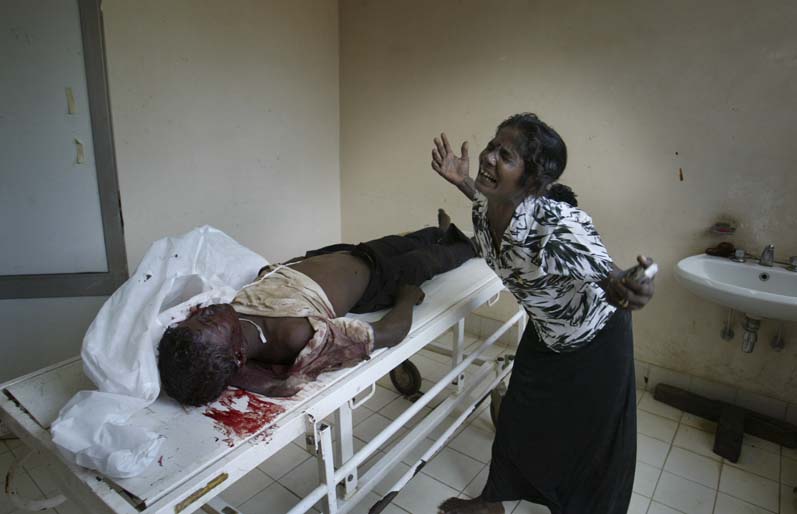 SRI LANKA: Rani Rajan weeps as she sees the remains of her brother Pakiyarasa Baskaran at a morgue in northeastern town of Trincomalee in 2006. GEMUNU AMARASINGHE
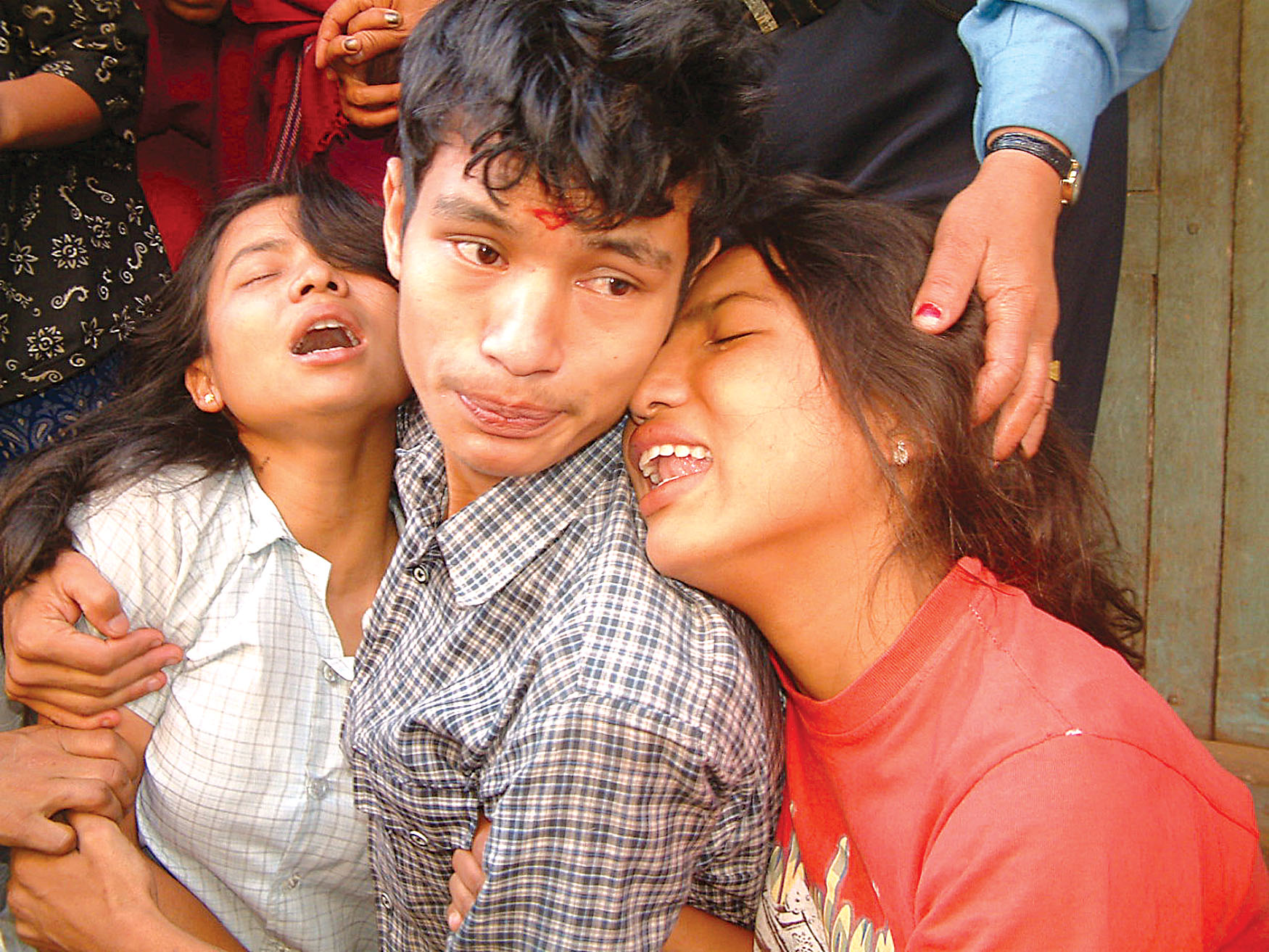 NEPAL: A brother comforts his two sisters after their father was killed in Bhaktapur in 2005. SURESH SAIJU
Thirty of Amarasinghe’s photographs are on display in Kathmandu amidst the images of the Nepal conflict from the book, ‘A People War’. The juxtaposition of the Sri Lanka pictures with the photographs of the Nepal conflict evoke strong emotions that transcends boundaries, and highlights the universality of images of suffering and pain.
“What I wanted to do was show the war from the point of view of the civilian victims,” said Amarasinghe at the inauguration of the exhibit last week, “by humanizing the war, you can show that people are more than just statistics.”