The young traders from Patan had started walking out at 8 o’clock on Friday morning to join the citizens’ peace rally at Basantapur, giving themselves an hour to get there. At Kopundole they found the main road to the bridge blocked by Maoists. There was a tense standoff, bricks were hurled, and some of the people in the front were beaten with sticks.
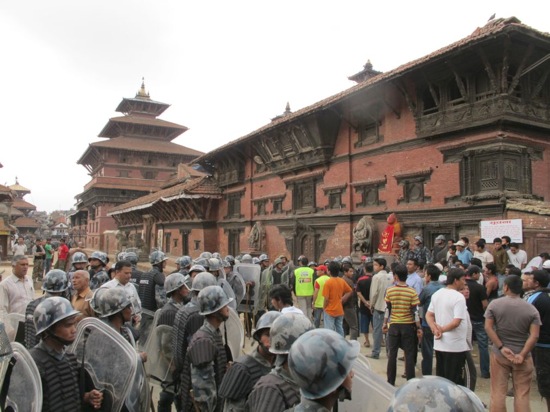
The police arrived and set up a buffer. After a while, the Patan resistance team walked back to Mangal Bajaar. There, they spotted a pickup flying a red flag. They got the occupants to alight, and started tipping the truck over. Local shopkeepers, frustrated and angry over the prolonged closure, lent a hand and managed to topple the car. A victory cheer went up, and the crowd soon grew and people started chanting anti-Maoist slogans. This was going to be a pratikar by anti-pratikarwallahs against pratikar-karis, a counter-resistence by resisters against the resistance.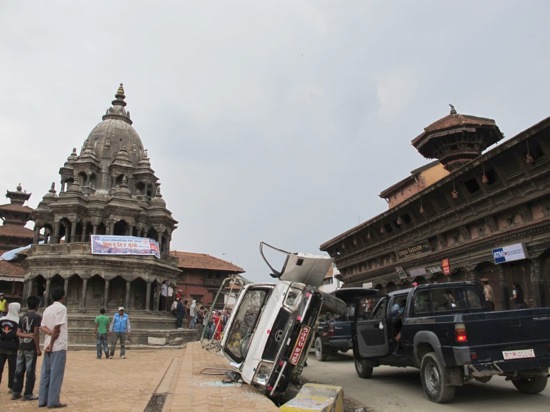
A group of swarthy Maoists in sleeveless T-shirts armed with chains and iron rods came running in from the Lagankhel and chased the unarmed protesters away. Some climbed the parapet of the Taleju Bell and started ringing it: a traditional alarm from the Malla period rung only before impending invasions or other crises. The bell didn’t seem to be in optimum form because it had no resonance emitting only a blunt metallic sound.
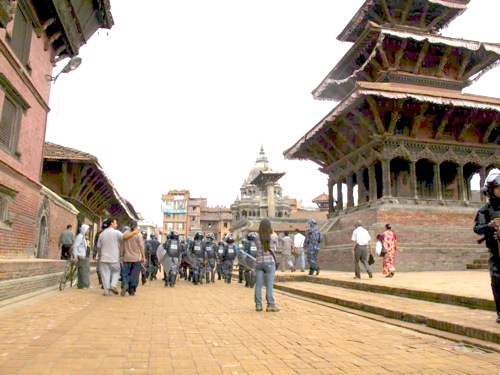
The police soon arrived and started separating the two groups. The Maoists were chased back to Lagankhel and the locals were pushed into the alleys leading to Mangahiti, Bhimsen Temple and Gabahal where they set up defensive barricades and stockpiled bricks. Ward members were conferring in Newari about setting up a warning system in case the Maoists came house-to-house to find the resistance. Patan is where revolutions are born. In 1990, King Birendra is said to have decided it was over for the autocratic monarchy when he saw the red flags over Patan rooftops from a helicopter. In this protest, the Maoists didn’t seem to have the sympathy of the locals.