When you cry wolf too often about a Himalayan catastrophe, people may tune out
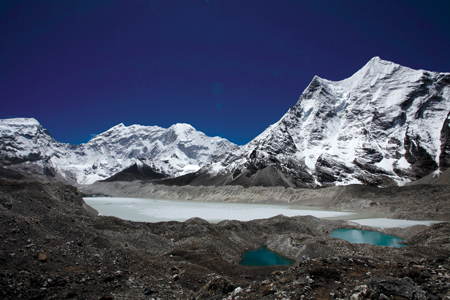 SEEING IS BELIEVING: Despite stark evidence of glacier retreat like Imja (below), scientists warn against raising undue alarm. Pic: BIKRAM RAI
Jack Ives doesn’t suffer fools and he has encountered many during his colourful career pushing the mountain agenda at the Rio Summit in 1992, through the International Year of Mountains in 2002, right down to the present.
A British-born Canadian, Ives was part of the group of experts that oversaw in 1975 meetings that led to the establishment of the International Centre for Mountain Development (ICIMOD) in Kathmandu. In his 45 years of research in the Himalaya, Pamir, and Yunnan, Ives has relentlessly struggled against sloppy science, alarmist academics and a sensationalist media crying wolf.
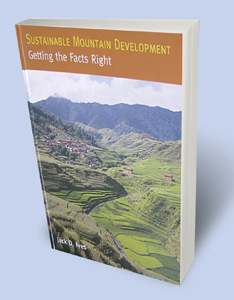
Now, Ives has decided to put together a personalised account of the people and mountains he has been acquainted with and the sometimes epic struggle to get the sustainable development of fragile mountain areas of the world recognised by governments and international organisations.
The book is an autobiographical travelogue and takes frequent detours to tell stories from places like Darjeeling, Lhasa, the Caucasus, Kathmandu or Khumbu. Although at times quixotic, Ives uses a breezy story-telling style to communicate a serious message: don’t exaggerate, overdramatise, and spread confusion about what is happening to the mountains.
Among Ives’ revealing anecdotes is one about a fracas in 1975 between India and Pakistan over where ICIMOD should be located. India wanted Simla and Pakistan was gunning for Gilgit and since they couldn’t agree, Kathmandu got selected.
Getting the fact right is Ives’ main mantra, and it is applicable equally to scientists, journalists, policymakers, and donor agencies. Ives has spent a lifetime battling pseudo-science and alarmist mountain myths. The first was in the early 1980s at a conference in Mohonk in Canada where he helped debunk the myth of Himalayan degradation which had predicted that the mountains would turn into desert and the soil erosion would cause catastrophic floods downstream.
The theory became fashionable after the publication of Erik Eckholm’s 1976 book, Losing Ground. It was picked up by agencies like the World Bank, which predicted in 1979 that given the rate of deforestation there would be no accessible forests remaining in the Himalaya by 2000. Ives and other researchers went on to prove through empirical research in Kakani and Khumbu in Nepal that far from being washed down to the sea, Himalayan slopes were being carefully manicured and maintained by wise farmers.