
 Pic: Gopen Rai
The health of a nation is often judged by the quality and reach of its health service. Some industrialised countries like the United States ail within because medical treatment is too expensive, and out of reach of many. On the other hand, there are low-income countries like Sri Lanka and Cuba which have universal, free and quality health care.
Every four years at election time in the United States, health care reform becomes a make-or-break agenda item, as it will in the run-up to November. America’s medical-industrial complex, which includes private insurance companies, do not like reform because it will reduce health costs and eat into their profits.
It is not surprising, therefore, that health care has become such a political hot potato in Nepal as well. The medical mafia and its political patrons in government and the legislature have investments in private hospitals and the lucrative medical education sector, and they are against any attempt to regulate private health care. As in every other arena of Nepal’s public life, the fox is guarding the chicken coop.
The rot is so deep that the Minister of Health and the State Minister of Health and Population (both from Tarai districts with abysmal statistics for physical wellbeing of citizens) have been blatantly demanding kickbacks from the poor. With the clock ticking on their time in office, last week they openly asked for kickbacks of up to 50 per cent in return for approval of annual government grants that 23 community hospitals across rural Nepal are entitled to.
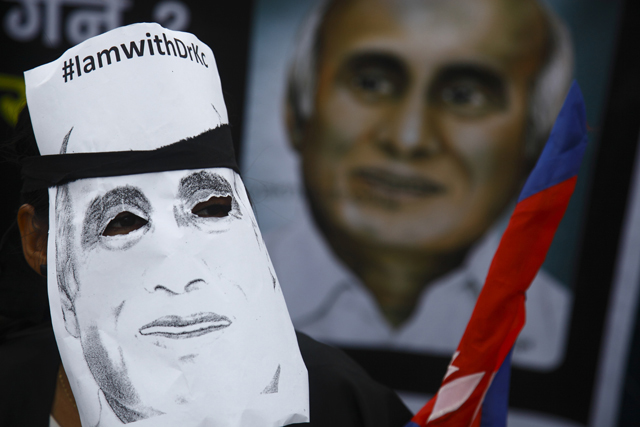
Corruption has corroded every facet of government, but it is when it afflicts health care that kleptocracy kills. Stealing money from hospitals is akin to murder. Outraged by all this, Nepal’s Gandhian physician, Govinda KC, has been on a lifelong crusade to make health care affordable and accessible to Nepal’s 30 million people. On Tuesday, he is on the tenth day of his eighth hunger strike, with a list of long-standing demands that have either been ignored or only partially fulfilled after previous satyagrahas.
Needless to say, the medical mafia and its political comrades-in-crime have been trying their best to discredit him, obstruct his fast at the Tribhuvan University Teaching Hospital, and even gone as far as to try to deprive the frail KC of medical attention. It is ironical that top political leaders who have visited the Federal Alliance ‘hunger’ strikers at Tundikhel do not have the intestinal fortitude to call on KC, even to show concern for a doctor who is risking his life for the people.