
Kesang Tseten's new documentary investigates the disappearance of Nepal's foremost anthropologist 20 years ago
KUNDA DIXIT
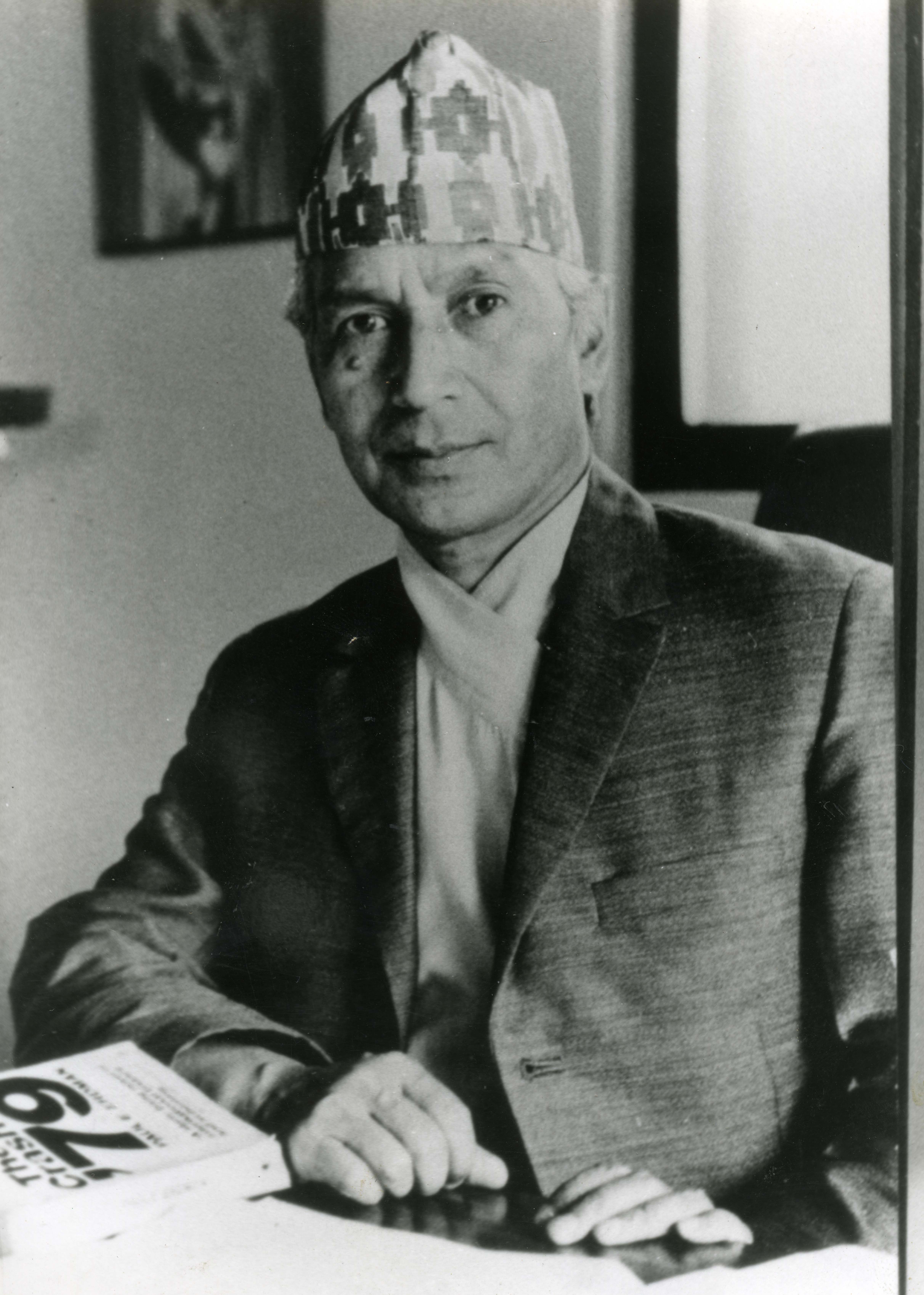 Dor Bahadur Bista
In 1995, Nepal's pioneer anthropologist and crusader against the caste system vanished without trace. As with many such mysterious disappearances, there have been conspiracy theories but no plausible explanation. And no sign of the man.
Now, documentary maker Kesang Tseten has tried to piece together clues from Bista's early years in a Chhetri family in Kathmandu, his fieldwork as an anthropologist, his work in Jumla which brought him in direct confrontation with locals, and then re-tracing Bista's last steps in January 1995. Tseten has retrieved archival audio and film, interviewed family, friends and contemporaries for a gripping cinematic portrayal of the man.
Tseten tells the story through Bista's friend and colleague, Basanta Thapa the former editor of Himal magazine. Thapa starts and ends in the holy Indian town of Haridwar showing a faded black and white picture of Bista to sadhus in a futile attempt to find him. Haridwar was where he was rumoured to be last seen.
The young Dor Bahadur was a rebel, we find out, and had serious disagreements with his father about Brahmanical rituals. But he kept his outrage in check to conform to his family status. It was only after his first book, People of Nepal came out in 1967 and he was tagged as an 'anti-national' that he became radicalised.
He railed against Brahmanism, seeing it as the root of Nepal’s underdevelopment. The seeds of his book Fatalism and Development began germinating in his mind, and Bista admits in an interview with American anthropologist Jim Fisher that he knew the book would be controversial. In fact, he says it was his intention to provoke a debate and shake things up.
His thesis was that ‘Brahmanical brainwashing’ made most Nepalis fatalistic, they accepted their status because they were told it was pre-ordained in a previous life or by a divine power. The caste system thus destroyed the initiative in citizens to carve out their own destiny.
Needless to say, such beliefs brought Bista in direct confrontation with members of his own family, the royal palace (for saying that Nepal's kings were descendants of Magars) and upper caste elders in Jumla where he retreated in 1991 to build a model caste-free commune in the village of Chaudabisa.