Tara Air upgrades fleet with factory new Twin Otters
For 50 years the Twin Otter has been the Land Rover of the air in Nepal, operating out of rugged dirt runways in the Himalaya flying boldly forth where no other plane dared to go.
But as the road network spread and airfields went out of operation, many predicted that the Twin Otter’s days were numbered. Indeed, Nepal Airlines, which once had 12 Twin Otters in its fleet now has only two airworthy ones left.
Despite this, airlines are still serving remote airfields with Twin Otters some of which are 35 years old, and the workhorses are still going strong.
 Photos: Kunda Dixit
Just as the the newest Land Rover SUV is a completely different machine from the vintage British Army Land Rovers plying as public transport from Dharan to Dhankuta, the Twin Otter has also got a makeover with a new model.
De Havilland Canada manufactured nearly 900 Twin Otters since 1964, but stopped making them in 1988. In 2007, the Canadian aviation maintenance company Viking bought the type certificate for the Twin Otter and restarted the production line with an upgraded version of the plane.
The airframe remains the same, it also carries 19 passengers. But while the older Twin Otters have analog dials, the DHC-6 400 Series has a full glass cockpit with modern avionics, a state-of-the-art Flight Management System, and an Enhanced Ground Proximity Warning System. In fact, if it wasn’t for its distinctive overhead throttle control, the new Twin Otter cockpit could well be on an Airbus 320. The Series 400 also has more powerful PT6A-34 engines and 800 modifications to improve on the previous models.
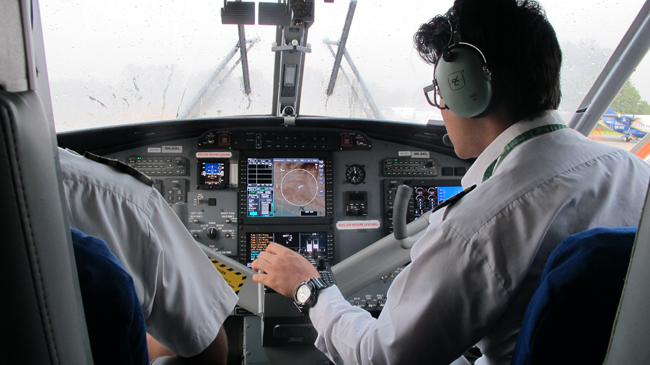
One morning last week at Kathmandu airport, Capt Santosh Shah was preparing his Tara Air DHC-6 400 ‘Kilo Yankee’ for a flight to Lukla. Unlike older Twin Otters, here he was punching coordinates into a keyboard and selecting the route to Lukla from a preprogrammed list of flight plans. One of the four monitors came to life, showing what looked like a Google Earth image of Central Nepal showing waypoints Jiri and Lamjura en route to Lukla. The screen had everything: TCAS traffic warning, terrain warning, weather radar, wind speed.
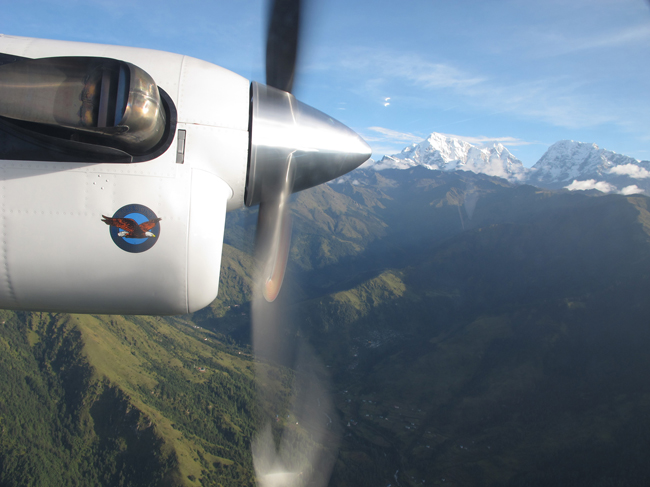
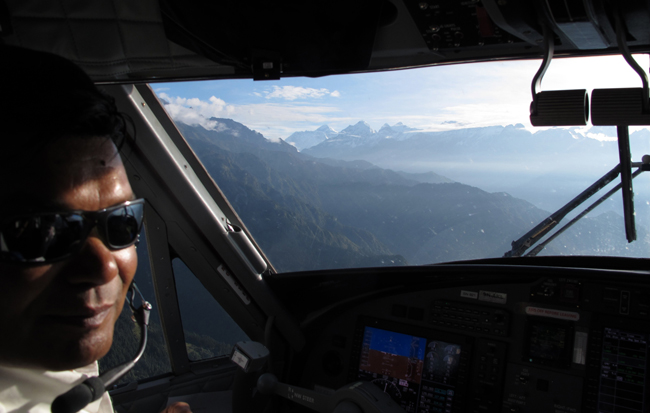 Capt Santosh Shah pilots a brand new DH6-400 Twin Otter of Tara Airlines into Lukla’s Tenzing Hillary Airport on Friday morning with some of the season’s first trekkers in the Everest region.
“It is the same plane, but the instruments are much more advanced, and that makes flying it easier,” says Shah, who used to fly Yeti’s BAe Jetstreams on trunk routes but is even more excited about piloting the Series 400.
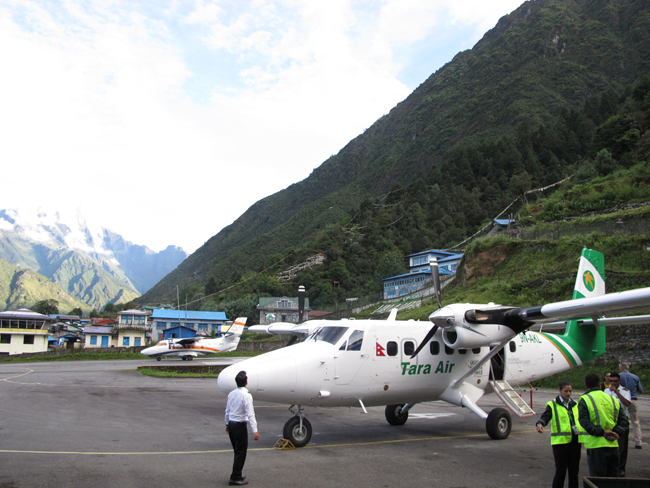
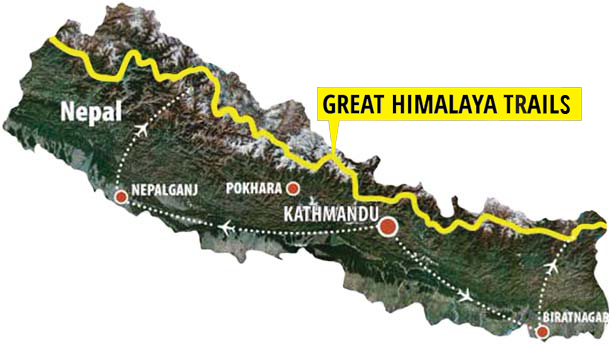
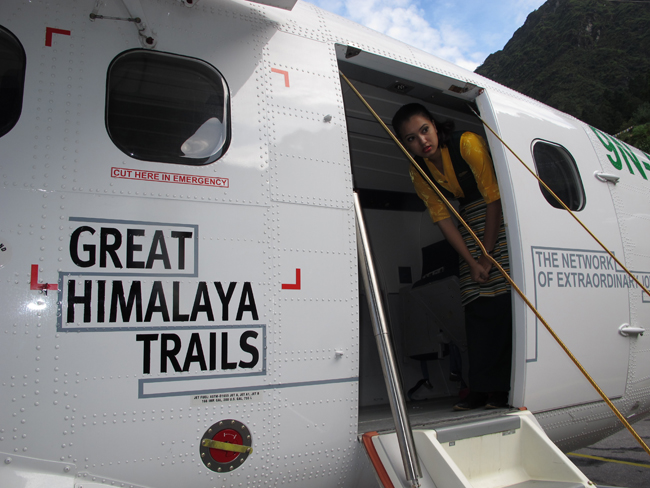
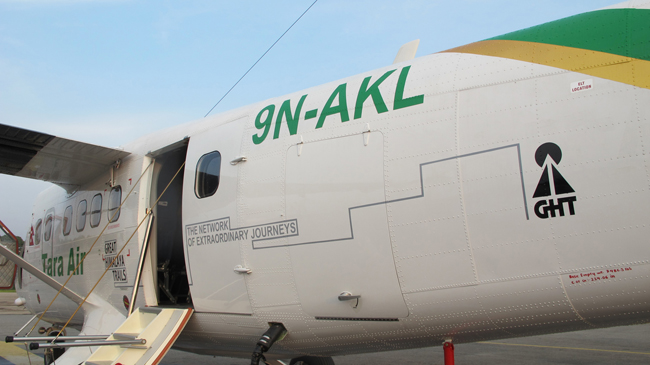
Tara has also given its Viking Twin Otters an attractive new livery in its green and gold colours. It has added the Great Himalaya Trails logo on the side as part of the co-branding exercise to promote quality trekking tourism in Nepal. Tara is adding another 400 Series aircraft soon and plans to overhaul its entire fleet of older Twin Otters with the new model.