Three new books about the Nepal conflict take us back to the horrors of war
--
The occasion was a multiple book launch this week in Kathmandu in which three protagonists who experienced and suffered the war first hand sat on a stage together to reminisce about what it was all for.
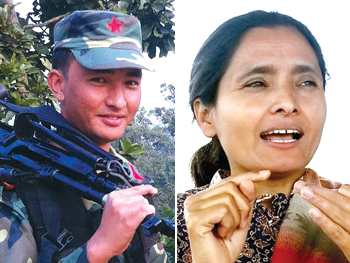
One of them was a committed Maoist child soldier who spent his entire teenage years during the conflict killing and nearly being killed. One was a nurse-turned-health worker who lived through a night of hell caught in the crossfire between the Maoists and the Army. One was a teacher from Rolpa who was detained by the Maoists, interrogated and tortured for 100 days during the war.
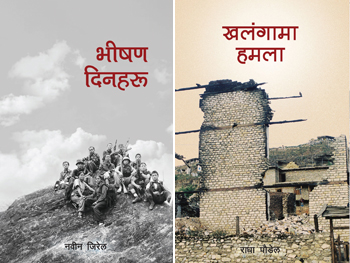
Radha Poudel’s memoir, Khalanga Ma Hamala, relives the minute details of the battle of Jumla and how that close brush with death motivated her to continue to work for the upliftment of the people of Jumla. Narayan Subedi wrote 100 Din Maobadi Kabja Ma, and was a teachers who found himself on the frontlines of the conflict and gives a chilling account of the idealism that drove the revolution. Navin Jirel recounts the memories of his childhood, the battles he fought and his years languishing in a cantonment after the conflict, in his gripping book, Bhisan Dinharu. (See picture)
That the three could share the table to discuss their books without bitterness, rancour and political sloganeering was a sign of how far we have come since the conflict ended six years ago. If time heals, then books like these help the reconciliation process.
But, as Radha Poudel, reminded us, “The end of the war has not meant peace. The roots of the conflict are still there. As long as people are hungry, there will be war.”
The publishers, nepa-laya, had given Subedi the role of moderating a short discussion during the book launch. He said he was so traumatised by what he went through that he waited 10 years to publish his book. Radha Poudel went through similar doubts, but persevered because she thought it was important to tell the story so people understand the true meaning of peace, and value it. She teared up and said in a choking voice: “I had to go back to Jumla and help the people I went there to help.”
Jirel, now 24, said that just as Radha decided to go back to Jumla, he decided to go back to Jiri. He refused integration into the Nepal Army even though he would have got officer rank, because he didn't want to “give and get salutes”. Instead he decided to devote himself to the betterment of the Nepalis he fought for and himself suffered during the war. He said: “I have to give back to Nepal, I have lots to do.”
When Jirel said that he had been afraid to be on stage, Subedi quipped: “I’m the one who should be afraid of you. But let’s not be afraid of each other ever again.”
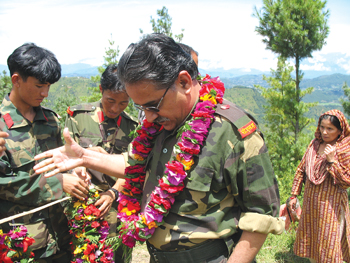 Navin Jirel welcomes Pushpa Kamal Dahal at Kamidanda in Kavre during the conflict.
Navin Jirel was just 12 when his mother died. His brother and sister were sent off to an orphanage and Navin had to go and live with his uncle in Sindhupalchok. He wanted to come back to be with his friends at the school in Jiri, but couldn’t get admitted.
A Maoist he met treated with kindness and respect he never got from his relatives. So, out of despair and frustration, he decided to join the Maoists. They said he was too young, but he got enrolled as a whole timer and within a year had taken military training and served as a battlefield messenger in the attack on Salleri in November 2002. [https://nepalitimes.com/the-nepali-art-of-war]
They had given him a pistol, and Navin writes in the book about how in the heat of battle he got so carried away he fired off a round into the air. He got a stiff reprimand for shooting from behind the lines. The boy was such a dedicated fighter he was promoted. At first they resented it, but seeing what a born warrior he was they admiringly called him “Phuchhe Commander”. “Finally I got friendship, and a sense of belonging and I found it enjoyable,”Navin recalls.
After that, Navin took part in the attacks on Bhakunde Besi, Sindhuli, Bandipur and Siraha. By age 18 he was such an effective guerrilla that he was in a select commando force. “I was addicted to war,” Navin now recalls, “during the ceasefire periods, I used to miss the sound of gunfire and wanted desperately to get back into action.”
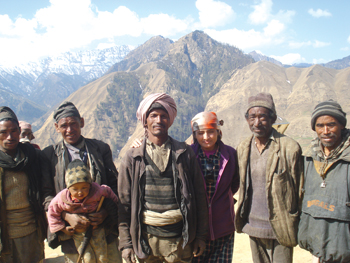 THOSE WERE THE DAYS: Radha Poudel (centre, left) with village elders in a remote part of Jumla in 2002.