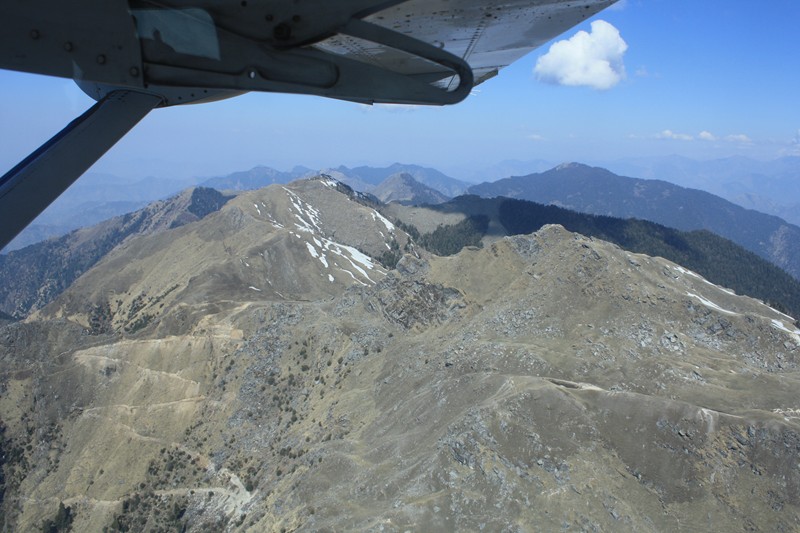
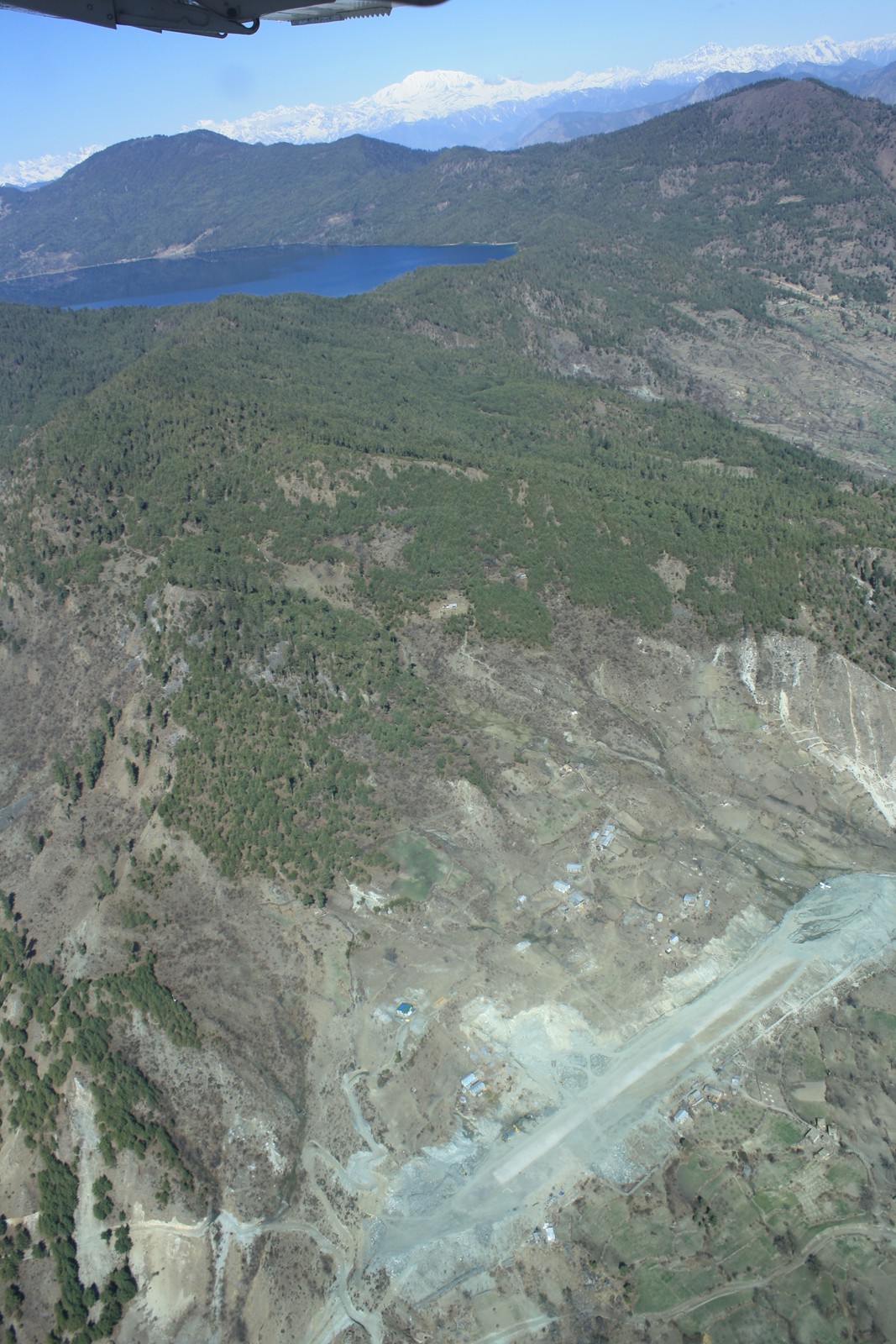
 AIR HEAD: Roads and airports have arrived at once remote-Rara lake, making the national park more accessible.
There are many reasons the trans-Karnali remains left behind, and some of them became glaringly apparent during a recent trip out west to Mugu district.
First is inaccessibility. More than one-third of Nepal’s area is in the Karnali, but less than one-tenth of the country’s population lives here. Villages are scattered across this exceedingly rugged, arid land. Roads are now being built, but most district capitals like Gamgadi, Manma, Dunai, Simikot and Jumla till two years ago used to be connected to the rest of Nepal only by flights to Nepalganj or Surkhet.
Formerly-royal Nepal Airlines has long abdicated its role of providing subsidised travel for people. Today the only thing still subsidized by the
state is the grain air-lifted to the chronically food deficit districts in what the World Food Program describes as the largest sustained airlift of food during peacetime anywhere in the world. Private helicopter operators and private airlines have cornered the lucrative market for government food contracts, and there is much talk here of a nefarious nexus between higher-ups in Kathmandu and airline bosses to keep the Karnali dependent so everyone gets his share.
Private airlines have stepped in to service remote area airports, but prefer cargo charters because they can earn more money. Tara Air (formerly Yeti) used to dominate, but now has been displaced by Goma Air which was started by pilots and staff who defected from Tara.
Strange, but most airlines that serve the Karnali seem to have the names of women: Tara, Goma, Sita. And there is a bitter dogfight going on over the Karnali skies between Tara and Goma with dark rumours that the fare agitation was provoked by one against the other.
Anywhere else in the world the competition would have meant that prices go down, but here in Karnali, they went up, which is why the women of Jumla went on warpath and closed down the airport. Then the district all-party committee got into the act because the populism dividend of raising slogans against private airlines was too tempting to ignore.