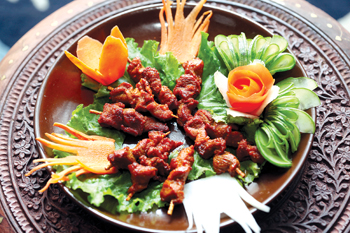
Built in 1890 by Prime Minister Bir Shumsher, Lal Durbar is one of the very few Rana palaces that retains its original grandeur. After being converted into Hotel Yak and Yeti in 1977, the palace is home to thousands of travellers every year and serves Nepali meals to hundreds of hungry diners at its namesake restaurant.
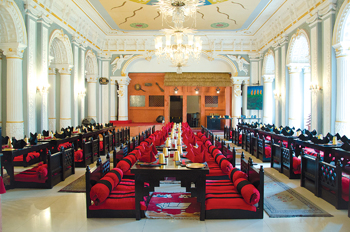
Located on the ground floor, Lal Durbar Restaurant used to be a theatre and traces of yore can still be seen in the high-rising, spacious platform. The snow white marble floor, a large crystal chandelier hanging down from a 30 feet ceiling painted in colourful zodiac signs, and ornate glass mirrors give guests a true sense of how it must have felt like being in Bir Shumsher’s palace. When we reached the restaurant at 8pm, the last of the motley song-dance troupe was performing at one corner of the hall while a few tourists occupied the open bar nearby, taking snaps. When the last troupe departed so did the tourists, leaving the two of us in full command of the empty, but opulent hall.
The head waiter recommended the six (Rs 1,200) or twelve course (Rs 1,800) meals for us. Nepali eating habit generally consists of a plethora of snacks with drinks, followed by the main meal; sweets or yoghurt are optional, so we settled for the ‘smaller’ course. As we waited for our dinner we ordered a plate of fried potatoes (Rs 200) as starters. The crisp slices of large potatoes, a perennial favourite among diners across the world, with skin intact and a hint of garlic came as a real treat.
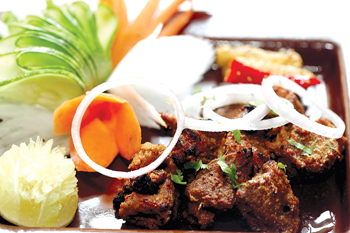
The first of the six courses - a mini meal in itself, enough to satisfy most diners - was an assortment of hors d’oeuvre, a Newari specialty: beaten rice, boneless mutton barbeque, boiled egg, spinach, and freshly made chutney, an inevitable addition in every Nepali meal. The rest of the course included kidney beans, fried spicy mushrooms, our choice of bread, momos, kwanti, and then the usual rice-daal-vegetables.