
Tucked into a building just steps from the iconic Boudhanath Stupa, Licchavi House is a new cultural centre for visitors to explore and engage with the arts. The space is founded by Dzongsar Jamyang Khyentse Rinpoche, colloquially known as Khyentse Norbu, a highly respected Buddhist teacher, author, and artist who creates works blending traditional Buddhist philosophy with contemporary culture.
Originally from Bhutan, Khyentse Norbu spends much of his time in Nepal, especially in the sacred Boudhanath. Khyentse Norbu is also the founder of Siddhartha’s Intent, an organisation dedicated to spreading his teachings and publications, and sharing Buddhadharma activities worldwide.
Licchavi House serves as an extension of this mission, not only through spiritual teaching but also via artistic and cultural mediums, and last weekend ran a community production retelling the story of the origin of Kathmandu Valley in Manjushree’s Sword and the Hidden Lotus.
Directed by Dechen Dolkar, the play had a contemporary theatrical approach with modern fashion, iPhones, and TikTok incorporated into a narrative set thousand of years ago. “These days, if you want to connect with young people, you need to speak their language,” said the director.
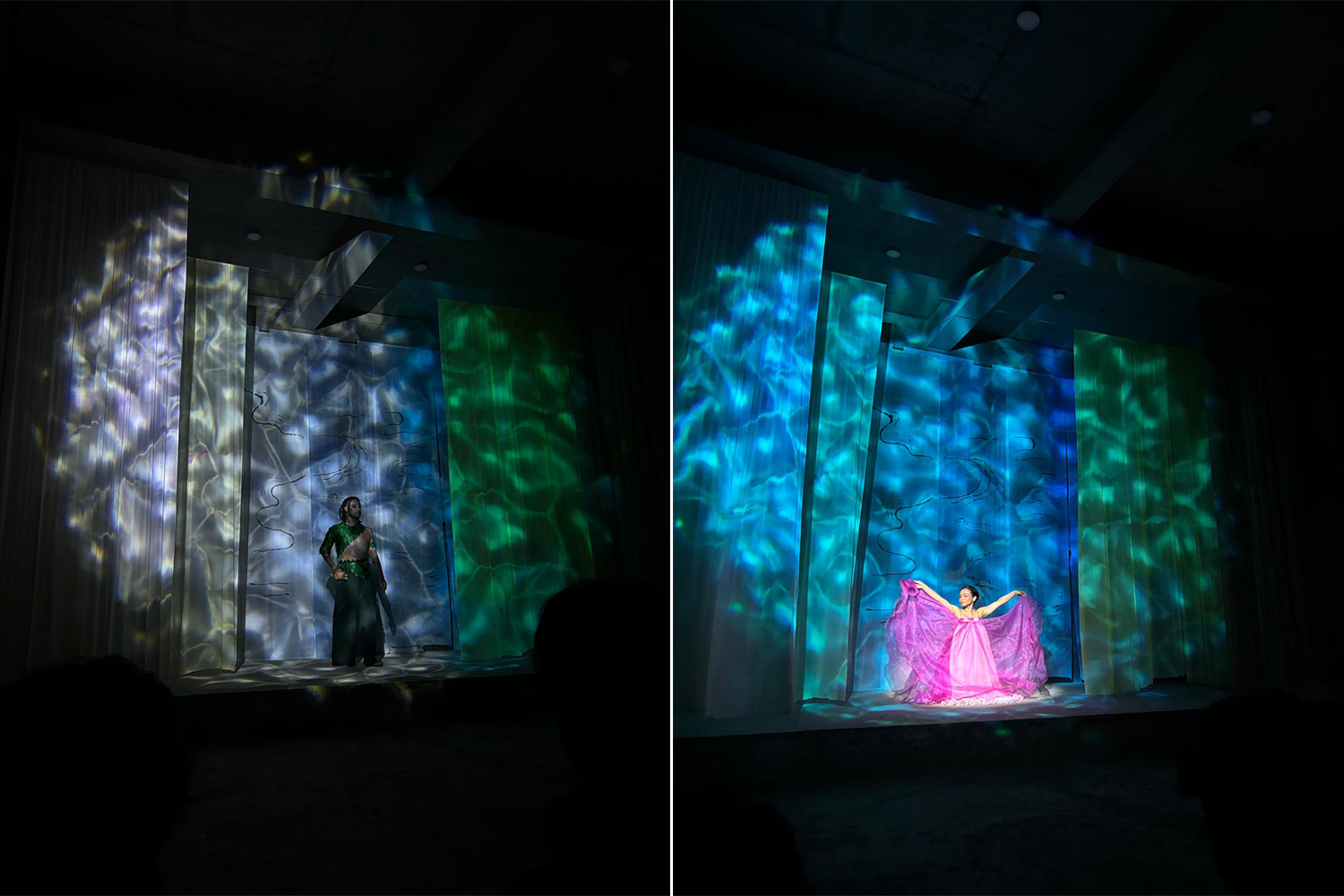
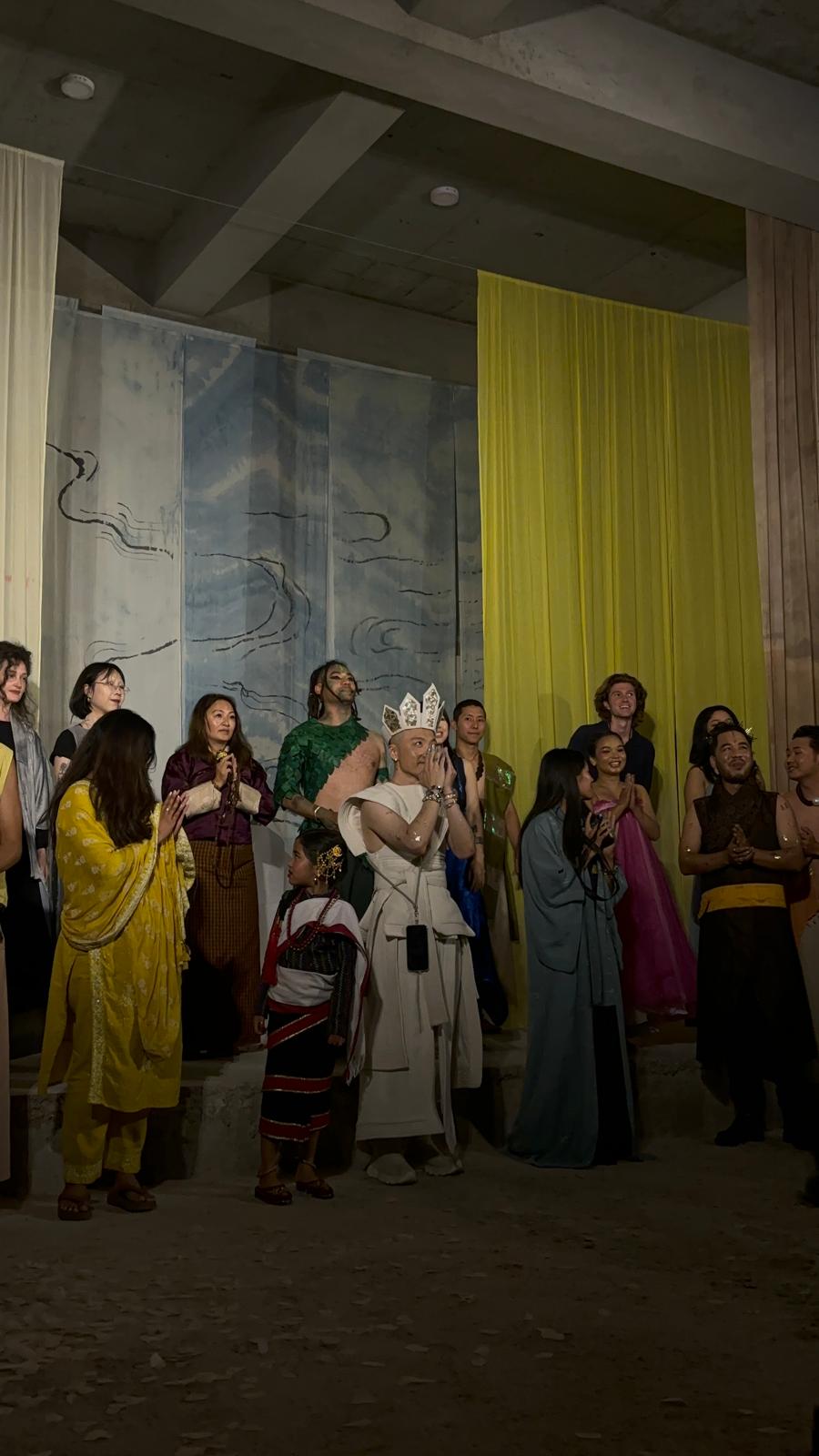
While the broader vision for Licchavi House comes from Rinpoche, the cast, crew, and creative team behind the play were all young artists, reflecting his intention for the space to serve as a platform for exploration and connection. The actors were all community members involved in the cultural space, either as audience or volunteers. Although amateur, their commitment to telling a classic tale was endearing.
A narrator in the form of a naga, or water serpent, guided the story with a captivating presence, subtly elongating his speech to echo the hiss of his character. The protagonist, Manjushree, appeared in a sharply tailored white suit, his body painted in gold and silver, blending the sacred with the modern.
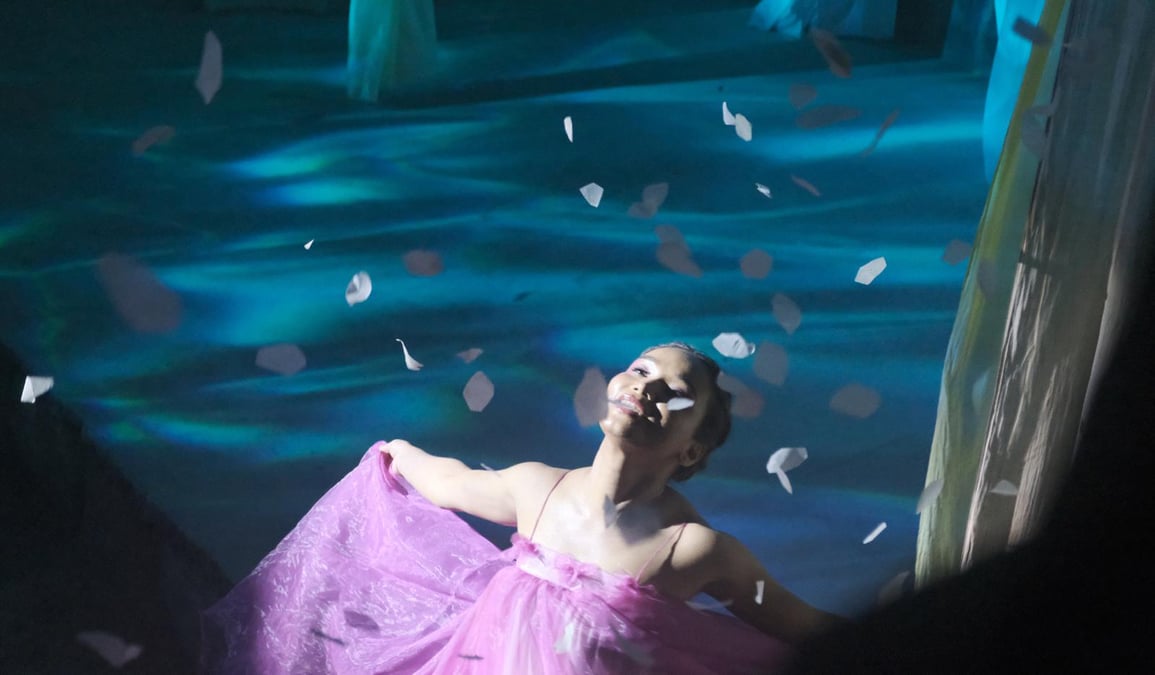
The lotus itself was personified by a young woman in a flowing pink gown. As she danced and spun around the room, colourful projections surrounded her and flower petals rained from the stage ceiling, drawing the audience into the mythical world.
These artistic choices were often made by the actors themselves, as they had the freedom to choose their own movements and behaviours.
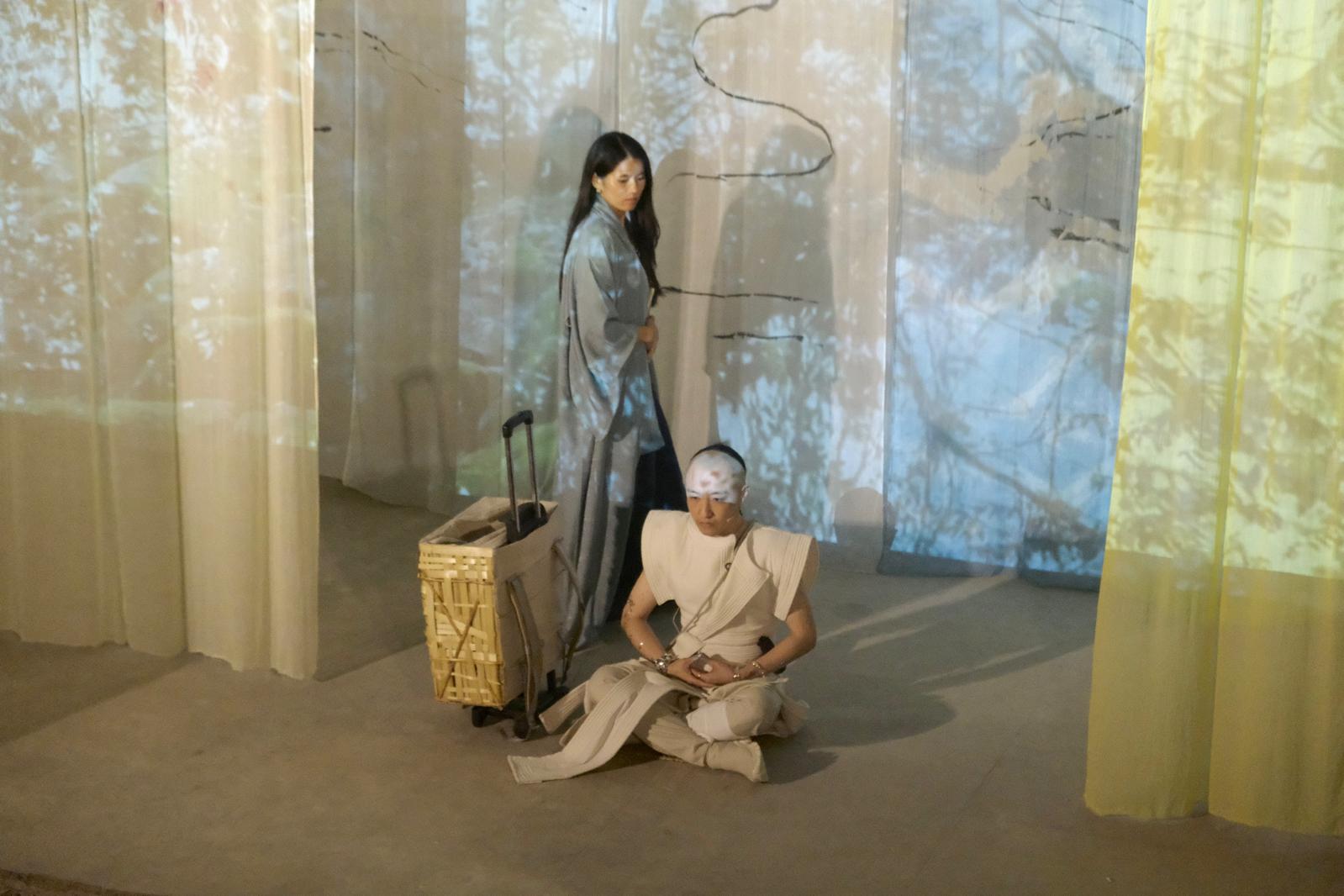
At the end, the play depicts the present-day Kathmandu: a woman filming a TikTok dance in front of the Boudhanath Stupa and foreign tourists walking through the city. According to Dolkar, this was not intended as a critique of development, but rather as “a celebration of Kathmandu as it is right now.”
Ultimately, Manjushree’s Sword and the Hidden Lotus was a community project that celebrated Kathmandu as it was and as it is.
The initiative of Licchavi House began in 2022, and as construction moves toward completion, one can expect it to host more cultural events, and become a space for young innovation and collaboration. As Nepal changes and modernises, so too will its art and culture.
Says Dolkar, “Audiences can look forward to many more plays like this to come.””
Licchivi House
Boudha Rd, Kathmandu 44600